

Commentary
Thomas de Waal
{
  "authors": [
    "Thomas de Waal"
  ],
  "type": "legacyinthemedia",
  "centerAffiliationAll": "dc",
  "centers": [
    "Carnegie Endowment for International Peace",
    "Carnegie Europe",
    "Carnegie Russia Eurasia Center"
  ],
  "collections": [],
  "englishNewsletterAll": "ctw",
  "nonEnglishNewsletterAll": "",
  "primaryCenter": "Carnegie Europe",
  "programAffiliation": "russia",
  "programs": [
    "Russia and Eurasia"
  ],
  "projects": [],
  "regions": [
    "Caucasus",
    "Russia"
  ],
  "topics": [
    "Security"
  ]
}
Source: Getty
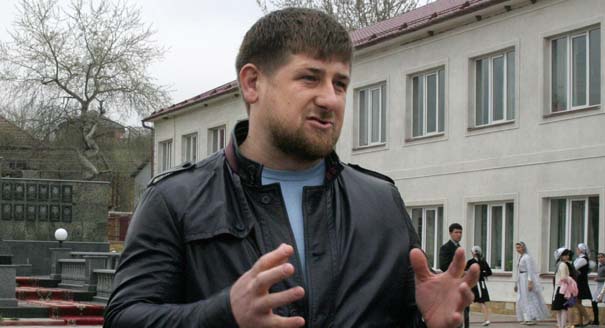
Russia’s North Caucasus is in the grip of a low-intensity civil war and Moscow’s current policy of building up Chechen leader Ramzan Kadyrov has not succeeded in preventing the spread of violence.
Source: The National Interest

Who do local leaders blame for the Islamist violence? The answer may surprise you: the United States. Mikhail Alexseev, a Russian scholar now working at San Diego University, presented a fascinating paper on this phenomenon at the recent Program on New Approaches to Research and Security in Eurasia conference (PONARS) in Washington.
Alexseev cited Chechen leader Ramzan Kadyrov’s statement in June 2009 that Washington was “the control center” of the Islamic insurgency in the North Caucasus (raising chuckles from the DC audience, who probably thought they had already heard every accusation thrown at their town.) Kadyrov is predictably outrageous but he was echoed by the more moderate president of Ingushetia, Yunus-Bek Yevkurov who accused British and U.S “special services” of sponsoring fatwas in the region so as “to break Russia apart, the same way the Soviet Union was broken apart.” Next door in Kabardino-Balkaria, the deputy interior minister gave voice to similar conspiracy theories.
The federal center is not bothering to correct this narrative, perhaps because some Moscow politicians, cynically or naively, harbor similar sentiments. We should recall the strange speech made by then-President Vladimir Putin after the Beslan tragedy in 2004 in which he identified the roots of the bloodshed in the end of the Soviet Union and the designs of unspecified enemies abroad (rather than the more obvious local catastrophe visited on Chechnya next door). Judging by opinion polls, most Russians think the same way. In a VTsIOM poll conducted in September 2008, respondents across Russia were asked what U.S. goals were in the North Caucasus and 60 percent answered, “military and strategic interests and deployment of military bases.”
Alexseev identified two reasons for anti-Americanism in the region itself. One is the international isolation of the North Caucasus. There is virtually no foreign investment or European presence here and very little contact even with the Muslim world. The region is like a sealed room with no windows and the locals are inclined to stick to old Cold War narratives. This combines with a more recent driver of anti-Western sentiment, the 2008 war in Georgia, during which many North Caucasians were persuaded that the United States was behind the Georgian attack on South Ossetia.
From a rational perspective this is all, of course, crazy. The North Caucasus is Russia’s gravest security problem and it is failing to cope with it. The approach of the Sochi Winter Olympics in 2014 increases the need for Russia to get a grip on the situation. However, violence has increased in the last year, especially in Chechnya. The recent militant attacks on Ramzan Kadyrov’s home village of Tsentoroi and the Chechen parliament in Grozny were strong symbolic blows against Kadyrov’s claim to have fulfilled his side of the “Chechenization” bargain he did with Putin and stabilize the republic. Alexander Khloponin, the new economic governor-general drafted in from Siberia to create jobs has also predictably failed to overcome the obstructions of local clan leaders such as Kadyrov. If it is to halt a further slide into disaster, Russia needs help. Logically that means drawing on some of the new reserves of trust built up by the “reset” and asking for U.S. assistance in intelligence gathering, tightening borders and employing new counterinsurgency practices.
Instead, the irrational prevails. The Russian leadership continues to build up Kadyrov, even though he looks increasingly more dangerous to their interests than pro-Western Chechen nationalists like Aslan Maskhadov and Akhmed Zakayev they spent years persecuting. Kadyrov’s latest reward is the reopening of international air travel in and out of Grozny airport. Meanwhile, brave individuals who are trying to make the Chechen despot accountable are being harassed. The human-rights activist Oleg Orlov, who has spent years working on behalf of ordinary North Caucasians, is currently being prosecuted for having “slandered” Kadyrov.
Georgia, which also needs stability on its northern border, is also playing the irrational card. The Georgian government has embarked on a new policy of embracing the North Caucasus, which to Russian eyes looks like a strategy to divide it from the rest of Russia. President Saakashvili unilaterally announced a visa-free regime for the North Caucasian republics and made a speech at the United Nations about his vision of a “united Caucasus,” north and south. The sentiments would have been laudable from the mouth of a poet or even a businessman. Coming from the president of Georgia, they only stoked Russian paranoia and Russian-Georgian tensions.
Unreason is the new order here until someone decides it’s time to turn the page.

Senior Fellow, Carnegie Europe
Thomas de Waal is a senior fellow at Carnegie Europe, specializing in Eastern Europe and the Caucasus.
Recent Work
Thomas de Waal
Thomas de Waal
In an interview, Sergei Melkonian discusses Armenia’s and Azerbaijan’s careful balancing act among the United States, Israel, and Iran.

Armenak Tokmajyan

Just look at Iraq in 1991.

Marwan Muasher

Baku may allow radical nationalists to publicly discuss “reunification” with Azeri Iranians, but the president and key officials prefer not to comment publicly on the protests in Iran.

Bashir Kitachaev
The country’s leadership is increasingly uneasy about multiple challenges from the Levant to the South Caucasus.
Armenak Tokmajyan
In an interview, Daniela Richterova speaks about her book on Czechoslovakia’s Cold War ties to Palestinian groups and others.

Michael Young