• Research
  • Diwan
  • About
  • Experts
Carnegie Middle East logoCarnegie lettermark logo
PalestineSyria
{
  "authors": [
    "Marwan Muasher"
  ],
  "type": "legacyinthemedia",
  "centerAffiliationAll": "dc",
  "centers": [
    "Carnegie Endowment for International Peace",
    "Carnegie Europe",
    "Malcolm H. Kerr Carnegie Middle East Center",
    "Carnegie Russia Eurasia Center"
  ],
  "collections": [
    "Arab Awakening"
  ],
  "englishNewsletterAll": "menaTransitions",
  "nonEnglishNewsletterAll": "",
  "primaryCenter": "Carnegie Endowment for International Peace",
  "programAffiliation": "MEP",
  "programs": [
    "Middle East"
  ],
  "projects": [
    "Eurasia in Transition"
  ],
  "regions": [
    "Middle East",
    "North Africa",
    "Egypt",
    "Jordan",
    "Gulf",
    "Levant",
    "Maghreb"
  ],
  "topics": [
    "Political Reform"
  ]
}
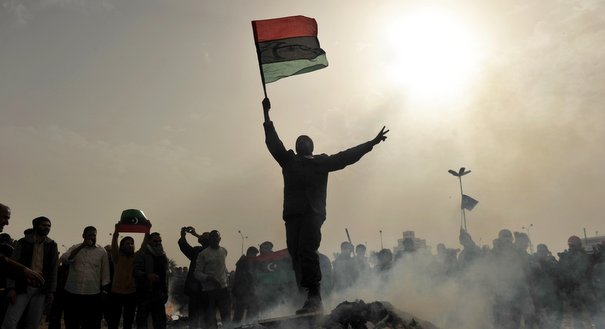
Source: Getty

In The Media

How to Achieve Real Reform in the Arab World

The status quo in the Arab world is unsustainable. Arab regimes have a choice: They can either lead a reform process from above or watch it take place in the streets below.

Link Copied
By Marwan Muasher
Published on Feb 2, 2011
Project hero Image

Project

Eurasia in Transition

Learn More

Source: Washington Post

How to Achieve Real Reform in the Arab WorldThe demands for change sweeping across the Arab world are the manifestation of unrest that has festered for years. The status quo is unsustainable. Arab regimes have a choice: They can either lead a reform process from above or watch it take place in the streets below.

So far, Arab leaders' reactions to recent events have been thoroughly disappointing. President Mubarak agreed to step down following the next election, but this is too little too late. And in Jordan it is not clear yet if the change in prime ministers will accelerate reforms or not. There is a strong inclination to look at the protesters' wants in purely economic terms - that economic conditions sparked the protests, so offer quick fixes by raising salaries and reducing prices of everyday goods. Such thinking has worked in the past, but serious attention must be paid to fixing governance problems. Putting off reforms will only lead to more protests.
 
When I was deputy prime minister of Jordan, I led a national, inclusive effort to produce a 10-year plan for political, economic and social reform. The Jordanian National Agenda provided a blueprint for moving the ball forward in gradual and serious ways. It didn't rely on rhetoric but laid out specific programs with clear deadlines, how they fit into the budget and how results could be measured.
 
Under this plan, Jordanian laws were to change in ways that would open up elections, improve freedom of the press and reduce bias against women - in other words, creating meritocracies. Little surprise that an entrenched political elite shot down these efforts.
 
Today, lip service to reform will not be enough. Arabs no longer trust in their governments' abilities to deliver better management of political and economic matters. Action must be taken to appease an increasingly skeptical public. Arab governments should start by acknowledging reality and putting their countries on a track of political reform.
 
The Arab world suffers from an entrenched political elite. This layer of society was created by regimes to prop up their rule; leaders fashioned rentier systems and bought loyalty with favors. These ossified elites, not wanting to give up their lives of privilege, are resisting political reforms from below and, in many instances, also opposing the leaders who enriched them when these leaders contemplate reforms. The worst thing that could happen for Arabs and their leaders is if elites continue telling leaders not to worry, we're not Tunisia, cosmetic changes and handouts can fix the situation.
 
If they are to maintain power, Arab leaders need to institute real and sustained political reform processes - gradually, because democracy doesn't happen overnight and things must not be done in ways that shock the system.
 
Arab countries, including Egypt and Jordan, need to start by building stronger parliaments. This can happen only with changes to electoral laws that make elections more fair and parliaments more representative. Today, most Arab parliaments work on providing services; they need to gradually begin exercising their oversight role and monitoring government actions.
 
Next, more checks and balances must be implemented. No single body or person should have excessive power. The executive is simply too dominant in the Arab world. By developing the legislative wing and establishing judicial independence, both branches can then offer sufficient checks and balances to the system. This will also help fight corruption.
 
Another area in dire need of reform is education - not so much the quantity but the quality. Arab children are not taught to question or consider different ways of thinking, leaving entire generations raised to believe that good citizens are measured by their loyalty to government and that diversity and critical thinking are treasonous. Education must teach tolerance and critical thinking.
 
These political reforms are necessary for balanced economic growth. Liberalization without political reform has meant that the fruits of economic growth have not been enjoyed by average citizens - the business elite are the only winners. Arabs have thus come to regard globalization and economic liberalization very negatively. But we are in a situation where sustainable growth can't happen without political changes.
 
Arabs might not be calling for democracy as it's known in the West, but they are demanding better rule of law, equitable treatment and far less corruption. These things can't happen without political reform. Arab leaders need to understand that if they want to maintain power, they have to share it. Otherwise, what is happening in Egypt won't stay in Egypt.

About the Author

Marwan Muasher

Vice President for Studies

Marwan Muasher is vice president for studies at Carnegie, where he oversees research in Washington and Beirut on the Middle East. Muasher served as foreign minister (2002–2004) and deputy prime minister (2004–2005) of Jordan, and his career has spanned the areas of diplomacy, development, civil society, and communications.

    Recent Work

  • Other
    Unpacking Trump’s National Security Strategy
      • Cecily Brewer
      • +18

      James M. Acton, Saskia Brechenmacher, Cecily Brewer, …

  • Q&A
    The Widespread Fallout of Israel’s Qatar Strikes
      • Andrew Leber
      • +1

      Amr Hamzawy, Andrew Leber, Marwan Muasher, …

Marwan Muasher
Vice President for Studies
Marwan Muasher
Political ReformMiddle EastNorth AfricaEgyptJordanGulfLevantMaghreb

Carnegie does not take institutional positions on public policy issues; the views represented herein are those of the author(s) and do not necessarily reflect the views of Carnegie, its staff, or its trustees.

More Work from Malcolm H. Kerr Carnegie Middle East Center

  • Commentary
    Diwan
    Axis of Resistance or Suicide?

    As Iran defends its interests in the region and its regime’s survival, it may push Hezbollah into the abyss.

      Michael Young

  • Commentary
    Diwan
    When Football Is More Than Football

    The recent African Cup of Nations tournament in Morocco touched on issues that largely transcended the sport.

      Issam Kayssi, Yasmine Zarhloule

  • GCC foreign minister meeting in Kuwait City on June 2, 2025
    Article
    Can the Gulf Cooperation Council Transcend Its Divisions?

    Without structural reform, the organization, which is racked by internal rivalries, risks sliding into irrelevance.

      Hesham Alghannam

  • Commentary
    Diwan
    Kurdish Nationalism Rears its Head in Syria

    A recent offensive by Damascus and the Kurds’ abandonment by Arab allies have left a sense of betrayal.

      Wladimir van Wilgenburg

  • Commentary
    The Middle East’s Promising Gen Z

    Fifteen years after the Arab uprisings, a new generation is mobilizing behind an inclusive growth model, and has the technical savvy to lead an economic transformation that works for all.

      Jihad Azour

Get more news and analysis from
Malcolm H. Kerr Carnegie Middle East Center
Carnegie Middle East logo, white
  • Research
  • Diwan
  • About
  • Experts
  • Projects
  • Events
  • Contact
  • Careers
  • Privacy
  • For Media
Get more news and analysis from
Malcolm H. Kerr Carnegie Middle East Center
© 2026 Carnegie Endowment for International Peace. All rights reserved.











