

Paper
Gilles Dorronsoro
{
  "authors": [
    "Gilles Dorronsoro"
  ],
  "type": "legacyinthemedia",
  "centerAffiliationAll": "dc",
  "centers": [
    "Carnegie Endowment for International Peace"
  ],
  "collections": [],
  "englishNewsletterAll": "ctw",
  "nonEnglishNewsletterAll": "",
  "primaryCenter": "Carnegie Endowment for International Peace",
  "programAffiliation": "SAP",
  "programs": [
    "South Asia"
  ],
  "projects": [],
  "regions": [
    "South Asia",
    "Afghanistan"
  ],
  "topics": [
    "Security",
    "Military",
    "Foreign Policy"
  ]
}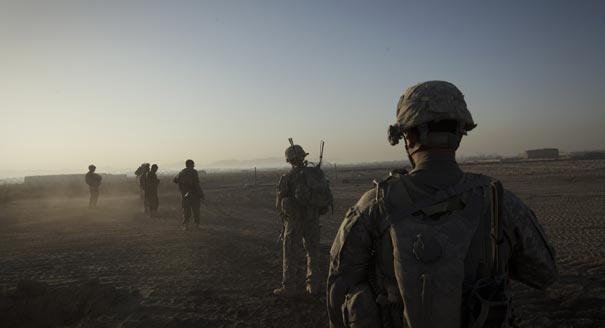
Source: Getty
Considering that the international coalition will have fewer resources in Afghanistan next year, it is time to enter into a meaningful negotiation process with the Taliban.
Source: Politico

Then, the real question is "how the withdrawal is going to impact the negotiations." If the pullout is too important, the risk is to see the Taliban deciding they just have to wait. If the withdrawal is only symbolic, the Taliban and, more importantly, the Pakistani army, which is supporting them, will think the U.S. army is still betting on a military solution. In this case, the military pressure on the coalition will quickly become unbearable. To escape this dilemma, one possible solution is to announce a relatively limited withdrawal (around 10,000 troops) and propose a cease-fire this autumn. This will show that the coalition is determined to leave and is serious about the negotiations, but not willing to exit quickly at any costs.
Former Nonresident Scholar, South Asia Program
Dorronsoro’s research focuses on security and political development in Afghanistan. He was a professor of political science at the Sorbonne in Paris and the Institute of Political Studies of Rennes.
Recent Work
Gilles Dorronsoro
Gilles Dorronsoro
Carnegie does not take institutional positions on public policy issues; the views represented herein are those of the author(s) and do not necessarily reflect the views of Carnegie, its staff, or its trustees.

By failing to address Palestinian representation, the current process is bound to lead to just another temporary arrangement.

Nathan J. Brown

The armed forces champion a form of capitalism that is generating revenue, but its reliance on rent faces diminishing returns, leaving the country with massive sunk costs and deferred returns, deepening dependency on external borrowing.

Yezid Sayigh

Just look at Iraq in 1991.

Marwan Muasher

A coalition of states is seeking to avert a U.S. attack, and Israel is in the forefront of their mind.

Michael Young

Baku may allow radical nationalists to publicly discuss “reunification” with Azeri Iranians, but the president and key officials prefer not to comment publicly on the protests in Iran.

Bashir Kitachaev