

In The Media
Lilia Shevtsova
{
  "authors": [
    "Lilia Shevtsova"
  ],
  "type": "legacyinthemedia",
  "centerAffiliationAll": "",
  "centers": [
    "Carnegie Endowment for International Peace",
    "Carnegie Europe",
    "Carnegie Russia Eurasia Center"
  ],
  "collections": [],
  "englishNewsletterAll": "",
  "nonEnglishNewsletterAll": "",
  "primaryCenter": "Carnegie Russia Eurasia Center",
  "programAffiliation": "",
  "programs": [],
  "projects": [],
  "regions": [
    "Russia"
  ],
  "topics": [
    "Foreign Policy"
  ]
}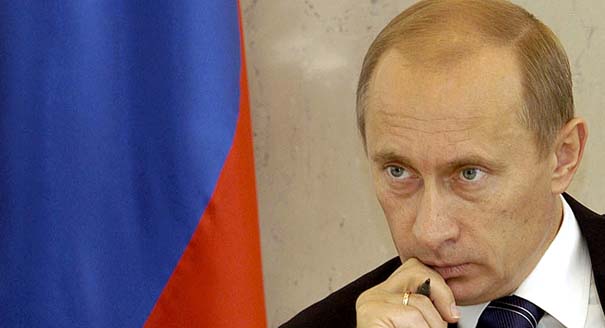
Source: Getty
The plans of Russia’s ruling elite, headed by Prime Minister Vladimir Putin, to retain power face increasing challenges from a crumbling infrastructure, economic stagnation, and growing social unrest.
Source: Foreign Affairs

But the ruling security-services clan, which has usurped power in Russia over the last decade, no longer needs the tandem. Tough times are ahead. The global economic crisis has not spared Russia, public confidence in the authorities is declining, corruption is eating its way through the entire state machine, and social discontent is on the rise.
The ruling group -- which includes Putin's former KGB associates, colleagues from his days working for former St. Petersburg Mayor Anatoly Sobchak, friends from the dacha cooperative Ozero ("Lake" in Russian) near St. Petersburg, and partners in various business projects from the early 1990s -- need a forceful and experienced leader.
At the moment, Putin is the most effective leader in the group of security officers turned bureaucrats and personifies its power. But self-preservation could force the elite to choose a new figure for this role. If there is one thing that the current regime has learned, it is how to change masks and mutate when necessary.
Above all, Putin's return to the Kremlin demonstrates the undisguised desire of members of the ruling clique to run the country for life, gradually transferring control of assets and power to their children and relatives. (In just one example of how this process operates, Sergei Ivanov, Jr., the son of Russian Deputy Prime Minister Sergei Ivanov, was appointed head of the board of one of the country's most powerful banks, Rosselchoz, which is chaired by Dmitry Patrushev, the son of Nikolai Patrushev, the chief of the Russian Security Council.) What is emerging in Russia today is a unique kind of neo-monarchy of Janissaries eager to find a way to perpetuate their power and their families' positions.
The Putin corporation has created a hybrid of the Soviet and czarist power bases, revolving around a trinity of personalized power, total control over assets, and neo-imperialist aspirations, to preserve a sphere of influence in the post-Soviet era. Putin and his cronies, however, have added one additional element that is all their own. Representatives of the security agencies rule the country -- an unprecedented state of affairs in Russia, where they had always been under control of civilian authorities. Today, Russia's government is in the hands not only of the Soviet Union's most secretive agency, the KGB, known for its repressive methods and suspicious mindset, but of people from its middle and provincial levels, known for being particularly archaic and primitive in their outlook. They rose to the top by chance, simply because they were friends or acquaintances of Putin, himself a mediocre KGB officer picked by Boris Yeltsin as a successor because his grey personality seemed to Yeltsin the very embodiment of loyalty. Once chosen, Putin used the same criterion in promoting his favorites to the upper echelons of the Russian bureaucracy.
The mechanisms the Kremlin used to control society during the earlier years of Putin's rule (what some Russia watchers have called the "Putin consensus") have by now exhausted their potential. In particular, these mechanisms centered around contrasting the relative stability and security of Russia under Putin with the tough times of Yeltsin's presidency, buying off the public with money from oil exports, encouraging neo-imperial feelings (often expressed by the state-controlled media as "Russia has risen from its knees"), and taking advantage of the hopes that the public placed on a leader who seemed younger and stronger than Yeltsin.
But the Russian public is starting to feel the many problems that were bubbling beneath the surface: the lack of clear perspective for the future, growing social disparities, and systemic corruption. Perhaps even more worryingly for the Kremlin, many Russians are also starting to realize that Putin's regime is the cause of the bulk of these problems. More than half of those responding to a recent survey by the Levada Center, Russia's most respected independent polling organization, believe that Russia's current administration is stealing more than officials did under Yeltsin. Just under 50 percent said that Russia is moving in "a wrong direction."
To make matters worse, because of economic stagnation and lower state revenues, the authorities have fewer possibilities now for softening the public with handouts; on the contrary, they are being forced to cut social spending. The Kremlin will therefore need to step up its use of repression. This explains, for example, why 60 percent of 2012 state budget is devoted to supporting the army and security agencies and to raising the living standards of those connected to them. The authorities clearly realize that social unrest is inevitable. Responding to the same Levada poll, 25 percent of those surveyed think that people will take to the street. If that should happen, about 21 percent are ready to participate in protests.
But another trend has worked against the regime's use of overt repression: the elite's personal integration into Western society. Members of Russia's ruling cohort live in the West, send their children to Western universities, and keep their money in Western banks. This obliges them to keep the use of force inside Russia within limits, out of fear of ending up as international pariahs.
What can be called Russia's "half-open window" is another factor that helps keep the regime afloat. The window is half open in the sense that people have the freedom to govern their own private lives as they please, so long as they do not meddle in politics. But this delicate arrangement is easier to maintain in times of economic comfort. As the resources and influence of the Kremlin elite start to dwindle, the self-preservation impulse of the authorities will lead them to place increasing pressure on the public, which in turn will begin to show signs of its discontent.
Irreversible -- and ominous -- changes are under way in Russia. The Soviet-era industrial infrastructure is now deteriorating: planes crash, dams burst, old factories close down, submarines sink. The country has not succeeded in building new infrastructure since the Soviet collapse. At the same time, education and health services are also declining. The gap between rich and poor is widening, leading to class conflict. Terrorism has become part of everyday life. Nationalism and xenophobia are spreading fast, especially among young people. The commodities economy is no longer able to guarantee the revenues needed for the authorities to keep the promises they make to the public. Finally, at the local level, the country has seen a mass-scale merger among criminal groups, security agencies, and state authorities.
In short, Russia desperately needs radical change in its government. The public realizes this need, as do people within the ruling class. For now, however, although they understand that Russia is moving toward a dead end, the elite remain cautious. They lack courage and fear that any change might bring chaos; as is, the system allows them to more or less pursue their interests. Plus, many have golden parachutes in the West, meaning that they could board their jets and fly to London or Paris at the first sign of real trouble.
In the meantime, both the system and the country itself will continue to deteriorate. The security clans in the shadows will proceed to privatize the state and battle for assets, and the state as a whole will become increasingly criminalized. This rot could quickly corrode the Putin regime's foundations, ultimately paralyzing the federal government and hindering its ability to address society's most elementary problems.
The signs of this happening are already evident. The existing state institutions either work in their own interests or pretend to work for the good of the people. The public is free to survive as it pleases. Entire regions that have passed the point of no return already live this way, in the sense that they have little hope of achieving any decent standard of living. Young people and active members of society are leaving the country. (About 150,000 members of the middle class and intelligentsia have left Russia over the last three years.) The authorities do not stop the discontented from leaving, evidence of their conscious choice to turn Russia into a country of demoralized and passive citizens incapable of protests and action. In some ways, the process of Russia's crumbling has started: The Kremlin has all but lost control of the North Caucasus, placing power in the hands of loyal sultans, such as Chechen President Ramzan Kadyrov, who introduce their own regimes and receive tributes from Moscow.
Putin's return to the Kremlin means that the ruling class plans to stay forever and is not ready to allow any sort of political opening or so-called Moscow Spring. One could see this as a positive sign: There are no longer any illusions. Thus, future transformation in Russia could come only as the result of a revolution. Russian revolutions, of course, can have dramatic consequences. But Putin's rule offers Russia no other alternative.
This article originally appeared in Foreign Affairs.
Reprinted by permission of FOREIGN AFFAIRS, October 3, 2011. Copyright 2011 by the Council on Foreign Relations, Inc.
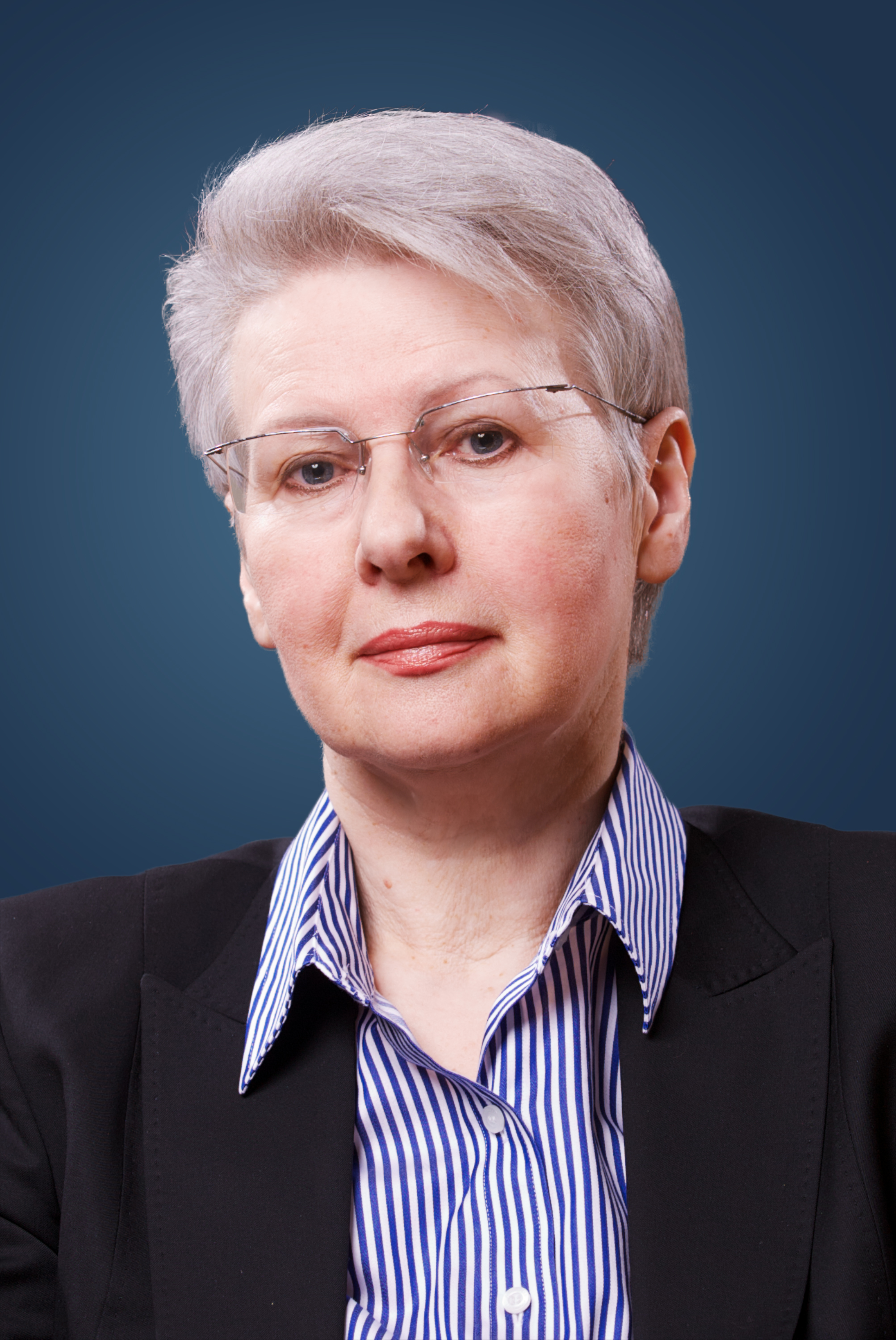
Former Senior Associate, Russian Domestic Politics and Political Institutions Program, Moscow Center
Shevtsova chaired the Russian Domestic Politics and Political Institutions Program at the Carnegie Moscow Center, dividing her time between Carnegie’s offices in Washington, DC, and Moscow. She had been with Carnegie since 1995.
Recent Work
Lilia Shevtsova
Lilia Shevtsova
Carnegie does not take institutional positions on public policy issues; the views represented herein are those of the author(s) and do not necessarily reflect the views of Carnegie, its staff, or its trustees.

By failing to address Palestinian representation, the current process is bound to lead to just another temporary arrangement.

Nathan J. Brown

Just look at Iraq in 1991.

Marwan Muasher

A coalition of states is seeking to avert a U.S. attack, and Israel is in the forefront of their mind.

Michael Young

Baku may allow radical nationalists to publicly discuss “reunification” with Azeri Iranians, but the president and key officials prefer not to comment publicly on the protests in Iran.

Bashir Kitachaev
The country’s leadership is increasingly uneasy about multiple challenges from the Levant to the South Caucasus.

Armenak Tokmajyan