

Other
Michael D. Swaine
{
  "authors": [
    "Michael D. Swaine"
  ],
  "type": "legacyinthemedia",
  "centerAffiliationAll": "dc",
  "centers": [
    "Carnegie Endowment for International Peace",
    "Carnegie China"
  ],
  "collections": [
    "China’s Foreign Relations",
    "U.S.-China Relations"
  ],
  "englishNewsletterAll": "asia",
  "nonEnglishNewsletterAll": "",
  "primaryCenter": "Carnegie China",
  "programAffiliation": "AP",
  "programs": [
    "Asia"
  ],
  "projects": [],
  "regions": [
    "East Asia",
    "China",
    "North America",
    "United States",
    "South Asia",
    "India",
    "Southeast Asia"
  ],
  "topics": [
    "Political Reform",
    "Security",
    "Military",
    "Foreign Policy",
    "Arms Control"
  ]
}
Source: Getty
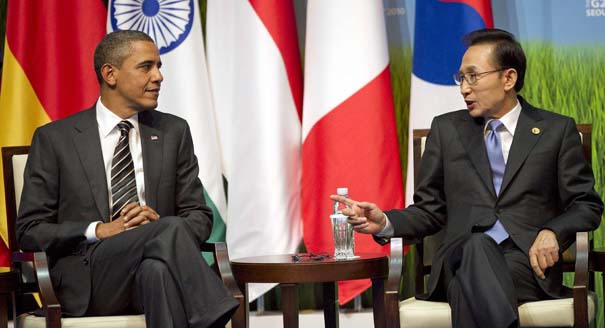
The execution of America’s strategic 'pivot' to Asia, and China's response, are combining to deepen mutual suspicions and potentially destabilize the entire area.
Source: National Interest

At that time, Washington moved decisively away from viewing China ominously as a rising "strategic competitor" (to quote George W. Bush) and toward significant levels of Sino-U.S. cooperation in combating terrorism and dealing with a growing array of common problems, from climate change to global economic instability. This shift brought Washington’s approach back into line with an earlier, long-standing U.S. policy of fostering greater Sino-American engagement while conducting low-key military hedging against the possibility of a future hostile China.
With President Obama and Secretary Clinton's recent trips to the South and Western Pacific, expanding U.S. involvement in multilateral economic and security-related fora, and a strengthening of Washington's traditional military alliances, the United States is now signaling an intention to move back toward the pre-9/11 strategic focus on a rising China. That focus places a premium on explicitly balancing against and constraining Chinese power and influence across the region.
This piece was originally published at the National Interest. Click here to continue reading.

Former Senior Fellow, Asia Program
Swaine was a senior fellow at the Carnegie Endowment for International Peace and one of the most prominent American analysts in Chinese security studies.
Recent Work
Michael D. Swaine
Michael D. Swaine
Carnegie does not take institutional positions on public policy issues; the views represented herein are those of the author(s) and do not necessarily reflect the views of Carnegie, its staff, or its trustees.

In an interview, Rozina Ali discusses her new book on the rise and manifestations of Islamophobia in the United States.

Michael Young

In an interview, Ian Lustick and Eli Clifton discuss their new book on why a prominent ally has so much influence in America.
Michael Young

As the U.S. stumbles in its war with Iran, we are likely to see an acceleration of its disengagement from the region.
Michael Young

Middle Eastern states should welcome an accelerated U.S. disengagement from their region.
Michael Young

In an interview, former ambassador Charles Freeman assesses the Trump administration’s war against Iran.
Michael Young