

Commentary
Judy Dempsey
{
  "authors": [
    "Judy Dempsey"
  ],
  "type": "legacyinthemedia",
  "centerAffiliationAll": "",
  "centers": [
    "Carnegie Endowment for International Peace",
    "Carnegie Europe"
  ],
  "collections": [],
  "englishNewsletterAll": "",
  "nonEnglishNewsletterAll": "",
  "primaryCenter": "Carnegie Europe",
  "programAffiliation": "",
  "programs": [],
  "projects": [],
  "regions": [
    "Asia",
    "Europe"
  ],
  "topics": [
    "Foreign Policy"
  ]
}
Source: Getty
The European Union could make a difference both practically and strategically by putting in place a long-term development strategy for Afghanistan.
Source: New York Times

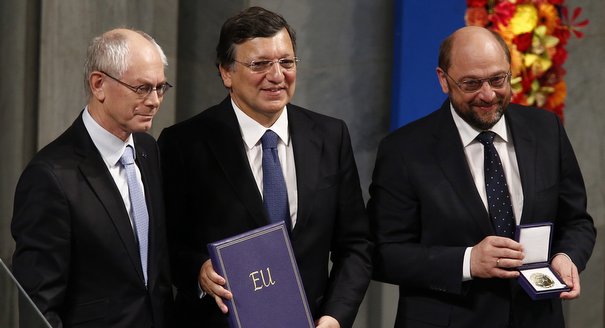
Since the European Coal and Steel Community, a precursor of the Union, was founded soon after World War II, European countries have worked hard to overcome centuries of enmity and war.
The extraordinary lengths to which France and Germany have gone to promote reconciliation have provided a model for other countries seeking rapprochement.The European Union’s promotion of values and its use of soft power have been extremely important for the countries of Eastern and Central Europe. When they joined the Union in 2004, Europe became reunited on the basis of democracy, human rights and stability.
But now it is time for the Union to ensure that the Nobel Peace Prize becomes a motivation to defend values beyond Europe, not just an honor about past achievements.
Afghanistan presents an ideal but difficult opportunity. The reason is that NATO forces are now drawing down, the theme of my latest Letter from Europe. The 102,000-strong force will end its combat mission in 2014. The NATO alliance says it will follow it up with a training mission for the Afghan military and police.
But nongovernmental organizations are concerned that the gains made by women and a younger generation of judges, journalists, lawyers and teachers will be reversed. This is because corruption is endemic, the Taliban and other insurgents oppose human rights and democracy, and the Afghan security forces are too weak to exert control.
The European Union could make a difference by putting in place a long-term development strategy for Afghanistan. This would require a highly disciplined and coordinated relationship with all the nongovernmental organizations involved in Afghanistan. That might be possible only with strong leadership from Brussels. Diplomats based in Afghanistan have seen much of the rivalry between nongovernmental organizations that makes coordination and cooperation difficult.
What happens in Afghanistan is important, not only for Afghans but also for the region. If the European Union were to adopt a radical, long-term development program that would establish a special relationship between locals and experts and that would focus on human rights and economic development, it could — and it’s a big ”could” — show to Afghanistan’s neighbors the relevance of being awarded the Nobel Peace Prize.

Nonresident Senior Fellow, Carnegie Europe
Judy Dempsey is a nonresident senior fellow at Carnegie Europe
Recent Work
Judy Dempsey
Judy Dempsey
Carnegie does not take institutional positions on public policy issues; the views represented herein are those of the author(s) and do not necessarily reflect the views of Carnegie, its staff, or its trustees.

By failing to address Palestinian representation, the current process is bound to lead to just another temporary arrangement.

Nathan J. Brown

Just look at Iraq in 1991.

Marwan Muasher

A coalition of states is seeking to avert a U.S. attack, and Israel is in the forefront of their mind.

Michael Young

Baku may allow radical nationalists to publicly discuss “reunification” with Azeri Iranians, but the president and key officials prefer not to comment publicly on the protests in Iran.

Bashir Kitachaev
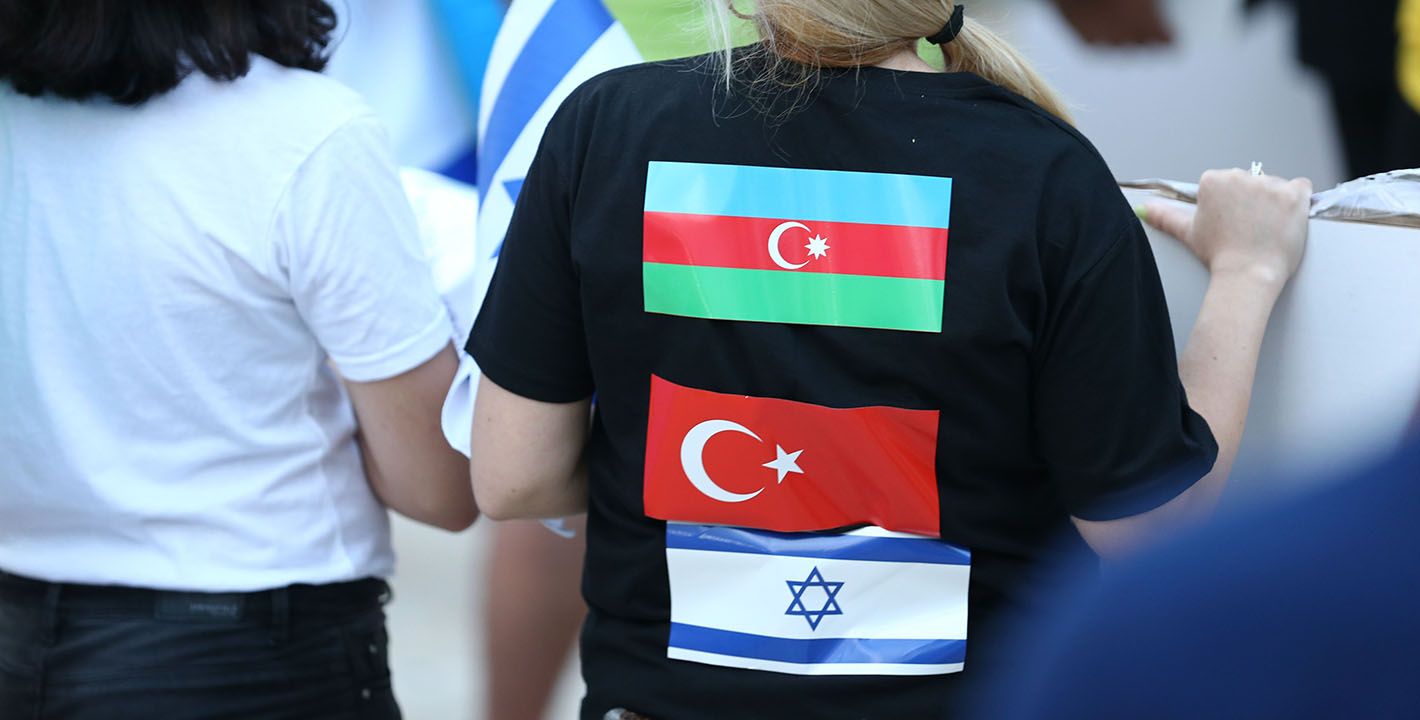
The country’s leadership is increasingly uneasy about multiple challenges from the Levant to the South Caucasus.

Armenak Tokmajyan