

Article
Frederic Grare
{
  "authors": [
    "Frederic Grare"
  ],
  "type": "other",
  "centerAffiliationAll": "dc",
  "centers": [
    "Carnegie Endowment for International Peace"
  ],
  "collections": [],
  "englishNewsletterAll": "ctw",
  "nonEnglishNewsletterAll": "",
  "primaryCenter": "Carnegie Endowment for International Peace",
  "programAffiliation": "SAP",
  "programs": [
    "South Asia"
  ],
  "projects": [],
  "regions": [
    "South Asia",
    "Pakistan"
  ],
  "topics": [
    "Political Reform",
    "Democracy",
    "Security",
    "Military",
    "Civil Society",
    "Foreign Policy"
  ]
}
Source: Getty
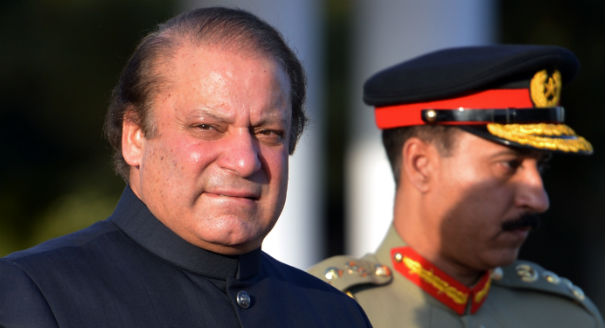
Nawaz Sharif’s biggest challenge will be to improve Pakistan’s security without provoking a military backlash.
Source: International Affairs
This article examines the consequences of Nawaz Sharif's electoral victory in Pakistan's 2013 general election on the country's foreign and security policies. It analyses the relationships the new government is likely to entertain with the military institutions and the judiciary, and tries to identify the potential vulnerabilities of the new authorities.It concludes that the security situation will improve marginally, at best, and that a relatively smooth working relationship with the US, dictated by the constraints of the US withdrawal from Afghanistan, can be anticipated.
Relations with India are likely to constitute the real test of the political freedom enjoyed by Prime Minister Nawaz Sharif vis-à-vis the military. The difficulty will be to calibrate the relationship to avoid provoking a backlash with the military.
The full paper is available for download from International Affairs.

Former Nonresident Senior Fellow, South Asia Program
Frédéric Grare was a nonresident senior fellow at the Carnegie Endowment for International Peace, where his research focuses on Indo-Pacific dynamics, the search for a security architecture, and South Asia Security issues.
Recent Work
Frederic Grare
Frederic Grare
Carnegie does not take institutional positions on public policy issues; the views represented herein are those of the author(s) and do not necessarily reflect the views of Carnegie, its staff, or its trustees.

In an interview, Ian Lustick and Eli Clifton discuss their new book on why a prominent ally has so much influence in America.

Michael Young

By failing to address Palestinian representation, the current process is bound to lead to just another temporary arrangement.

Nathan J. Brown

The armed forces champion a form of capitalism that is generating revenue, but its reliance on rent faces diminishing returns, leaving the country with massive sunk costs and deferred returns, deepening dependency on external borrowing.

Yezid Sayigh

Just look at Iraq in 1991.

Marwan Muasher

A coalition of states is seeking to avert a U.S. attack, and Israel is in the forefront of their mind.
Michael Young