

Research
- +5
Alper Coşkun, Fatih Ceylan, Tacan İldem, …
{
  "authors": [
    "Sinan Ülgen"
  ],
  "type": "legacyinthemedia",
  "centerAffiliationAll": "",
  "centers": [
    "Carnegie Endowment for International Peace",
    "Carnegie Europe",
    "Malcolm H. Kerr Carnegie Middle East Center"
  ],
  "collections": [
    "Turkey’s Transformation",
    "Europe’s Southern Neighborhood"
  ],
  "englishNewsletterAll": "",
  "nonEnglishNewsletterAll": "",
  "primaryCenter": "Carnegie Europe",
  "programAffiliation": "",
  "programs": [],
  "projects": [],
  "regions": [
    "Middle East",
    "Europe",
    "Türkiye",
    "Levant",
    "Syria"
  ],
  "topics": [
    "Security",
    "Military"
  ]
}
Source: Getty
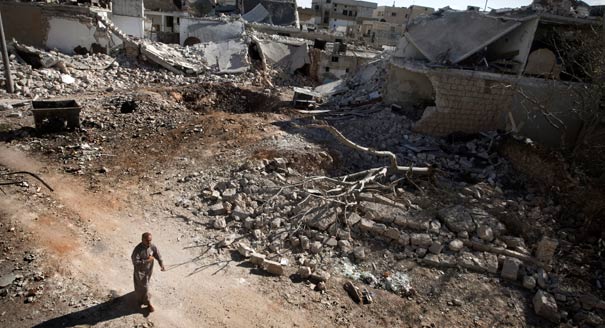
There are serious concerns in Ankara that Turkey’s security could be put at risk by a U.S.-led strike that is too limited in scope.
Source: CNN GPS
Democracy can get in the way of a good war in the Middle East, a reality underscored by the diminishing U.S. public support for intervention in Syria. But the ongoing discussions in Washington over how to respond to Syria’s alleged use of chemical weapons aren’t just being watched closely in Washington and Damascus. In Turkey – Syria’s neighbor and in the vanguard of the struggle against the al-Assad regime – the outcome of deliberations on an attack are critical. Indeed, while the West looks increasingly wary of military action, there are serious concerns in Ankara that Turkey’s security could be put at risk by a U.S.-led strike that is too limited in scope.
Turkey has diligently defended the idea of regime change in Syria prior to the alleged chemical weapons attack. Having rightfully desisted from a unilateral intervention, Turkey has focused its efforts on strengthening the opposition.

Senior Fellow, Carnegie Europe
Sinan Ülgen is a senior fellow at Carnegie Europe in Brussels, where his research focuses on Turkish foreign policy, transatlantic relations, international trade, economic security, and digital policy.
Recent Work

Alper Coşkun, Fatih Ceylan, Tacan İldem, …

As the U.S. stumbles in its war with Iran, we are likely to see an acceleration of its disengagement from the region.

Michael Young
The Zaidi government’s objective to collect weapons is constrained by regional conflict, but it can take certain measures at home.
Ali Al-Mawlawi

Huawei pushed hard to enter the Egyptian data centers market, until the Americans made a better offer.

Angie Omar

The accord represents a pivotal moment in the region to avert a security vacuum in the Gulf.


Azeema Cheema, Mohanad Hage Ali

In an interview, Jason Burke discusses his sweeping account of the “revolutionists” who so shaped the 1970s and early 1980s.
Michael Young