

Commentary
Dmitri Trenin
{
  "authors": [
    "Dmitri Trenin"
  ],
  "type": "commentary",
  "centerAffiliationAll": "",
  "centers": [
    "Carnegie Endowment for International Peace",
    "Carnegie Russia Eurasia Center"
  ],
  "collections": [],
  "englishNewsletterAll": "",
  "nonEnglishNewsletterAll": "",
  "primaryCenter": "Carnegie Russia Eurasia Center",
  "programAffiliation": "",
  "programs": [],
  "projects": [],
  "regions": [
    "Russia",
    "Eastern Europe",
    "Ukraine",
    "Western Europe"
  ],
  "topics": [
    "Security",
    "Foreign Policy"
  ]
}
Source: Getty
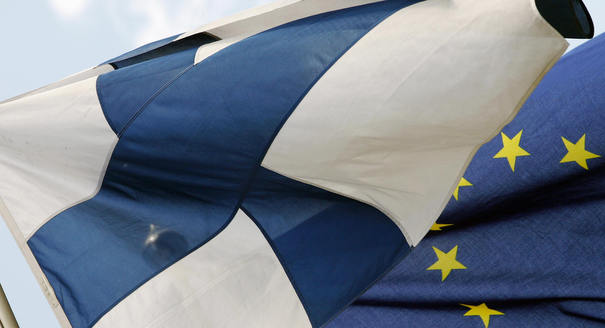
The current situation in Ukraine has intensified the long-simmering debate in Finland about joining NATO.
Any possible compromise in and on Ukraine would leave the country a neutral territory between Russia to the east and NATO to the west. Speaking at the 50th Munich Security Conference last February—it seems like a different epoch now—Zbigniew Brzezinski even spoke about “Finlandization” of Ukraine. A long time ago, my Finnish friends strongly discouraged me from ever using the term, which they treat as derogatory, and I have been keeping my promise ever since.
Inevitably, the current situation in Ukraine has intensified the long-simmering debate in Finland about joining NATO. Proponents of accession argue that membership in the alliance is the only guarantee of Russia's non-intervention. It is not clear, however, why Russia should want to invade Finland, with which it has had excellent relations for close to seventy years now, and which it has learned to respect from the Winter War onward.
That respect is not due to Finland's neutrality, as such, but to Finland's stubborn independence. During the Cold War, it learned to manage the Soviet Union much better than vice versa. After the Cold War, after initial hesitation, Moscow accepted Finland's decision to join the European Union as part of the process of European economic integration. NATO membership, by contrast, would be seen by Russia as the end of Finland's precious strategic independence.
Former Director, Carnegie Moscow Center
Trenin was director of the Carnegie Moscow Center from 2008 to early 2022.
Recent Work
Dmitri Trenin
Dmitri Trenin
Carnegie does not take institutional positions on public policy issues; the views represented herein are those of the author(s) and do not necessarily reflect the views of Carnegie, its staff, or its trustees.

In an interview, Ian Lustick and Eli Clifton discuss their new book on why a prominent ally has so much influence in America.

Michael Young

By failing to address Palestinian representation, the current process is bound to lead to just another temporary arrangement.

Nathan J. Brown

Just look at Iraq in 1991.

Marwan Muasher

A coalition of states is seeking to avert a U.S. attack, and Israel is in the forefront of their mind.
Michael Young

Baku may allow radical nationalists to publicly discuss “reunification” with Azeri Iranians, but the president and key officials prefer not to comment publicly on the protests in Iran.

Bashir Kitachaev