

In The Media
Lilia Shevtsova
{
  "authors": [
    "Lilia Shevtsova"
  ],
  "type": "legacyinthemedia",
  "centerAffiliationAll": "",
  "centers": [
    "Carnegie Endowment for International Peace",
    "Carnegie Russia Eurasia Center"
  ],
  "collections": [],
  "englishNewsletterAll": "",
  "nonEnglishNewsletterAll": "",
  "primaryCenter": "Carnegie Russia Eurasia Center",
  "programAffiliation": "",
  "programs": [],
  "projects": [],
  "regions": [
    "Russia",
    "Eastern Europe",
    "Ukraine",
    "Western Europe"
  ],
  "topics": [
    "Political Reform",
    "Foreign Policy"
  ]
}
Source: Getty
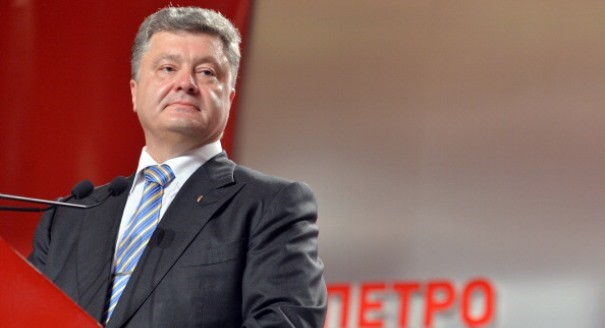
The elections in Ukraine demonstrate that Ukrainians have decisively chosen to turn toward Europe.
Source: American Interest
Yesterday’s presidential election in Ukraine was more than just a demonstration of Ukrainians’ readiness to elect their government democratically. These polls are a watershed moment in Ukrainian history, and they have broader international implications as well. More than 80 percent of Ukrainians (the votes aren’t all in yet, but the picture is clear already) supported candidates who favor Ukrainian sovereignty, independence, territorial integrity, and the unitary state—meaning they support the Western trajectory. In fact, with 85 percent of ballots counted, Petro Poroshenko is leading with 54.5 per cent of vote; the pro-Russian candidates Tihipko and Dobkin together have only 8.58 percent, and the nationalist candidates Yarosh and Tygnibock have about 2 percent each (they also supported Ukraine’s integration with Europe). We can look at this outcome as confirmation of Ukraine’s turn toward the West; that turn, as the voters see it, can guarantee Ukraine’s independent statehood.
That the Ukrainian election took place in spite of ongoing provocations, the forced annexation of Ukrainian territory, the threat of further invasion, and violence in the east by pro-Russian separatists is a victory for Ukrainian society and a sign that it has closed the book on the old regime. This election has legitimated the Maidan, its drive for freedom and dignity, and its longing for a strong and stable Ukrainian national state.The election also marks a defeat for the coalition that sought to turn Ukraine into a failed state. The key player in this coalition is of course the Putin regime, which is using Ukraine as a tool to ensure its own survival. But the Ukrainian crisis would not have been possible without the Kremlin’s Ukrainian partners—primarily, the Communist Party and the Party of Regions, which are responsible for the grave state the country now finds itself in. Corrupt local officials and police who, along with criminal elements and oligarchs (by which I mean, first of all, Rinat Akhmetov), tried to use the separatist mood to pursue their own interests also contributed to the instability in the southeast of the country. This is not to say that they all acted in concert or received their instructions from a “central authority” abroad. Of course not. But they all bear some responsibility for the heightened chaos.
The anti-Ukrainian coalition also found quite a few followers who perhaps were working unwittingly to destabilize the country or turn it into a failed state. But witting or unwitting, members of this coalition over the past few months have all tended to use the same arguments—arguments, not coincidentally, that have also been articulated by the Kremlin. ...
Read the full text of this article in the American Interest.

Former Senior Associate, Russian Domestic Politics and Political Institutions Program, Moscow Center
Shevtsova chaired the Russian Domestic Politics and Political Institutions Program at the Carnegie Moscow Center, dividing her time between Carnegie’s offices in Washington, DC, and Moscow. She had been with Carnegie since 1995.
Recent Work
Lilia Shevtsova
Lilia Shevtsova
Carnegie does not take institutional positions on public policy issues; the views represented herein are those of the author(s) and do not necessarily reflect the views of Carnegie, its staff, or its trustees.

By failing to address Palestinian representation, the current process is bound to lead to just another temporary arrangement.

Nathan J. Brown

Just look at Iraq in 1991.

Marwan Muasher

A coalition of states is seeking to avert a U.S. attack, and Israel is in the forefront of their mind.

Michael Young

Baku may allow radical nationalists to publicly discuss “reunification” with Azeri Iranians, but the president and key officials prefer not to comment publicly on the protests in Iran.

Bashir Kitachaev
The country’s leadership is increasingly uneasy about multiple challenges from the Levant to the South Caucasus.

Armenak Tokmajyan