

Commentary
Dmitri Trenin
{
  "authors": [
    "Dmitri Trenin"
  ],
  "type": "commentary",
  "centerAffiliationAll": "",
  "centers": [
    "Carnegie Endowment for International Peace",
    "Carnegie Russia Eurasia Center"
  ],
  "collections": [],
  "englishNewsletterAll": "",
  "nonEnglishNewsletterAll": "",
  "primaryCenter": "Carnegie Russia Eurasia Center",
  "programAffiliation": "",
  "programs": [],
  "projects": [],
  "regions": [
    "Russia",
    "Eastern Europe",
    "Ukraine"
  ],
  "topics": [
    "Political Reform",
    "Security",
    "Foreign Policy"
  ]
}
Source: Getty
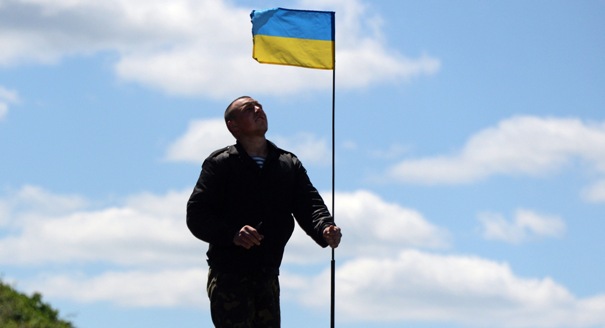
Russia certainly pursues its interests in Ukraine, as does the United States, but the actual forces engaged there are the locals. The victorious Maidan has proven both unwilling and powerless to bridge or stitch together the fault lines which have emerged.
Ten days ago, it was the murderous fire in Odessa. Last Friday, the shooting in Mariupol. Both the actions and the inactions of the interim authorities in Kiev helped to split Ukraine, in the name of saving it. The notion that the prime source of Ukraine’s current troubles lies in the Kremlin and that the Ukrainian military and security forces are facing terrorists in the east is self-delusion. Developments in Ukraine follow their own dynamic, and its pace is quickening. The presidential elections set for May 25 will not bring a magic solution. A point may soon be reached when an internally federalized and internationally neutralized Ukraine—Moscow’s mantra—will not be possible.
One can dismiss the regional referenda as illegal, although it is a weak argument in Ukraine’s post-revolutionary context. One can dismiss the real internal divisions in Ukraine only at one’s own peril. Russia certainly pursues its interests in Ukraine, as does the United States, but the actual forces engaged there are the locals. The victorious Maidan has nudged Ukraine off its post-Soviet immobility, but it has proven both unwilling and powerless to bridge or stitch together the fault lines which have emerged. Ukraine will not die, but it can multiply.
Former Director, Carnegie Moscow Center
Trenin was director of the Carnegie Moscow Center from 2008 to early 2022.
Recent Work
Dmitri Trenin
Dmitri Trenin
Carnegie does not take institutional positions on public policy issues; the views represented herein are those of the author(s) and do not necessarily reflect the views of Carnegie, its staff, or its trustees.

By failing to address Palestinian representation, the current process is bound to lead to just another temporary arrangement.

Nathan J. Brown

Just look at Iraq in 1991.

Marwan Muasher

A coalition of states is seeking to avert a U.S. attack, and Israel is in the forefront of their mind.

Michael Young

Baku may allow radical nationalists to publicly discuss “reunification” with Azeri Iranians, but the president and key officials prefer not to comment publicly on the protests in Iran.

Bashir Kitachaev
The country’s leadership is increasingly uneasy about multiple challenges from the Levant to the South Caucasus.

Armenak Tokmajyan