

Article
C. Raja Mohan, Darshana M. Baruah
{
  "authors": [
    "C. Raja Mohan"
  ],
  "type": "legacyinthemedia",
  "centerAffiliationAll": "dc",
  "centers": [
    "Carnegie Endowment for International Peace",
    "Carnegie India"
  ],
  "collections": [],
  "englishNewsletterAll": "ctw",
  "nonEnglishNewsletterAll": "",
  "primaryCenter": "Carnegie India",
  "programAffiliation": "SAP",
  "programs": [
    "South Asia"
  ],
  "projects": [],
  "regions": [
    "South Asia",
    "India"
  ],
  "topics": [
    "Foreign Policy"
  ]
}
Source: Getty
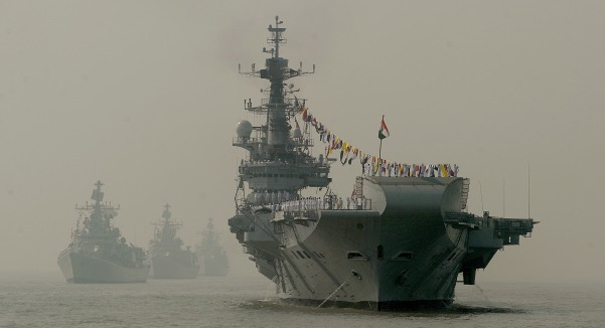
Modi's reference to the South China Sea says more about India’s changing political attitude than its policy towards the maritime territorial disputes between Beijing and its Asian neighbours.
Source: Indian Express
The fact that the South China Sea was mentioned for the first time in a joint statement between India and the United States during the visit of Prime Minister Narendra Modi to Washington has been widely noted. The reference says more about India’s changing political attitude under Modi than New Delhi’s policy towards the maritime territorial disputes in the South and East China Seas between Beijing and its Asian neighbours, especially Japan, Vietnam and the Philippines.
Ever since China became more assertive in the Pacific, Delhi, which has its own territorial disputes with Beijing in the Great Himalayas, started weighing in on the issue of freedom of navigation. After all, much of India’s growing trade with East Asia flows through the South China Sea. Modi reaffirmed this in the joint statement with US President Barack Obama and restated India’s position that the maritime territorial disputes in the South China Sea should be resolved in accordance with the United Nations Convention on the Law of the Sea.
These assertions have become a regular feature in India’s joint statements with its partners in East Asia. What is new is the fact that Delhi under Modi is no longer coy about affirming its position in conjunction with the US. One of the unfortunate diplomatic legacies of India’s non-alignment has been Delhi’s reluctance to highlight any convergence of interests with the US on regional and global issues. A self-assured Modi is changing all that by injecting a measure of pragmatism and openness into India’s positions.Given India’s growing trade and its increasing dependence on the sea for the import of vital energy resources, India’s interests are similar to those of the US, the world’s foremost maritime power. The converging maritime interests have been reflected in the steady expansion of the engagement between the Indian and US navies since India began economic globalisation at the turn of the 1990s. But there has been considerable reluctance in the ministry of defence during the UPA years to realise the full potential of naval cooperation with the US. Modi, in contrast, is ready to explore the possibilities.
It was not a great surprise, therefore, when Modi and Obama agreed to intensify bilateral maritime security cooperation and “upgrade” the Malabar series of bilateral naval exercises. The Malabar series began in the early 1990s under the Congress government led by P.V. Narasimha Rao, and was given a fresh boost by Pranab Mukherjee, who served as the defence minister during the first two years of the UPA government elected to power in 2004.
But the moment A.K. Antony stepped into Mukherjee’s big shoes at the ministry of defence in 2006, Delhi’s attitude to maritime security cooperation with the US became increasingly ambivalent. Antony seemed to have little appreciation of India’s new maritime imperative and was reluctant to strengthen the partnership with the US. He had even problems with the Indian navy’s name for the joint exercises with the US — “Malabar”. Antony was concerned that name might upset the Muslim sentiment in his home state, Kerala.
With Antony spending seven long years at the MoD, India’s naval diplomacy with the world, not just the US, had to endure many setbacks. It will be a while before Modi can get the MoD to become more enthusiastic about pursuing India’s maritime interests.
The joint statement’s reference to upgrading the Malabar series of exercises suggests that Delhi and Washington are now ready to elevate the quality of the exercise as well as bring in third parties like Japan, Australia, Singapore and other interested East Asian nations. Equally interesting is the reference in the joint statement to enhancing naval technology cooperation between the two countries. According to informed speculation, the US might now be ready to offer some critical technologies to India in the construction of its next aircraft carrier.
Modi’s maritime diplomacy is not limited to the naval domain. Transborder infrastructure development is a major priority for the NDA government. The PM’s joint statement with Obama talks about bilateral cooperation in integrating the subcontinent with the markets of East Asia through an “Indo-Pacific Economic Corridor”.
The proposal is similar to China’s plan for a maritime silk road linking the Pacific and Indian Oceans. For India, which appears wary of China’s plans for the Indian Ocean, the Indo-Pacific Economic Corridor could be the first step towards building its own maritime silk road.
This article was originally published in the Indian Express.
Former Nonresident Senior Fellow, Carnegie India
A leading analyst of India’s foreign policy, Mohan is also an expert on South Asian security, great-power relations in Asia, and arms control.
Recent Work

C. Raja Mohan, Darshana M. Baruah


Alexander Gabuev, Paul Haenle, C. Raja Mohan, …
Carnegie does not take institutional positions on public policy issues; the views represented herein are those of the author(s) and do not necessarily reflect the views of Carnegie, its staff, or its trustees.

Just look at Iraq in 1991.

Marwan Muasher

A coalition of states is seeking to avert a U.S. attack, and Israel is in the forefront of their mind.

Michael Young

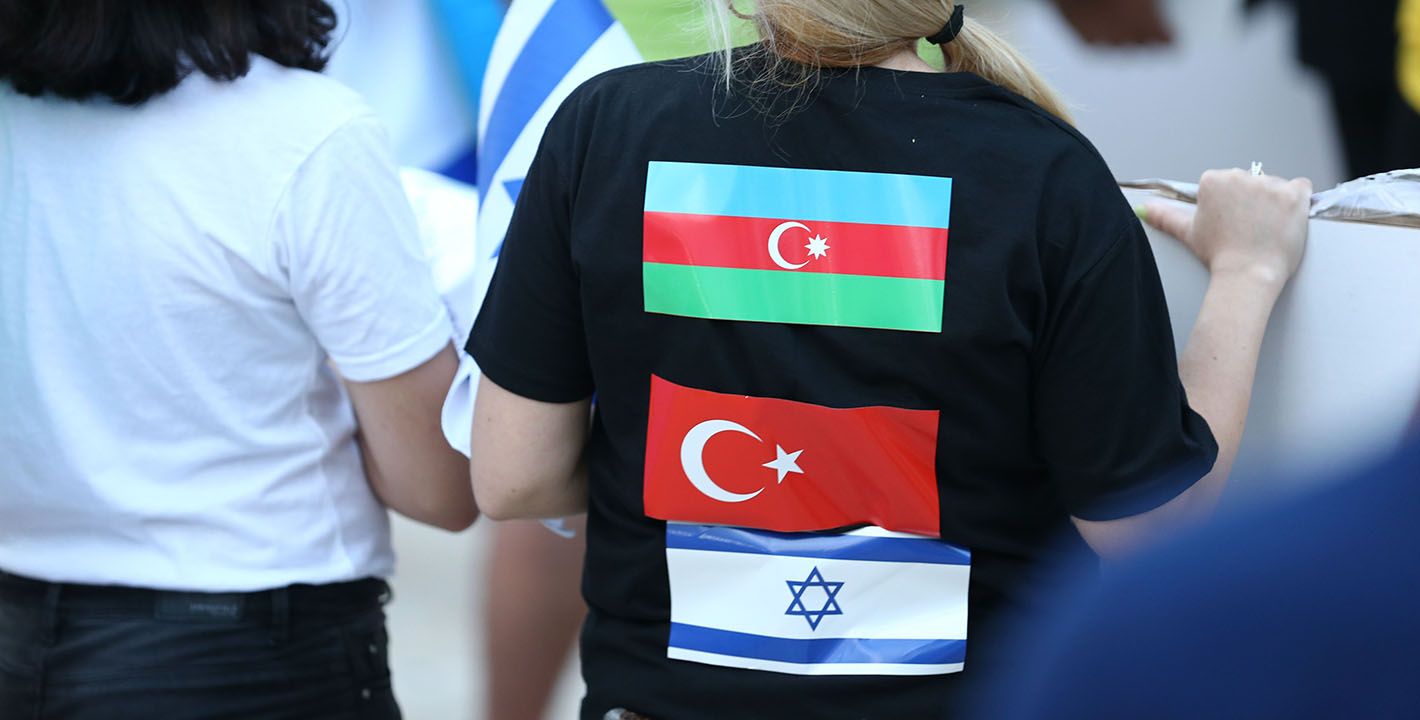
Baku may allow radical nationalists to publicly discuss “reunification” with Azeri Iranians, but the president and key officials prefer not to comment publicly on the protests in Iran.

Bashir Kitachaev
The country’s leadership is increasingly uneasy about multiple challenges from the Levant to the South Caucasus.

Armenak Tokmajyan
The countries of the region have engaged in sustained competition that has tested their capacities and limitations, while resisting domination by rivals. Can a more stable order emerge from this maelstrom, and what would it require?

Hamza Meddeb, Mohamed Ali Adraoui