

Article
C. Raja Mohan, Darshana M. Baruah
{
  "authors": [
    "C. Raja Mohan"
  ],
  "type": "legacyinthemedia",
  "centerAffiliationAll": "dc",
  "centers": [
    "Carnegie Endowment for International Peace",
    "Carnegie India"
  ],
  "collections": [],
  "englishNewsletterAll": "ctw",
  "nonEnglishNewsletterAll": "",
  "primaryCenter": "Carnegie India",
  "programAffiliation": "SAP",
  "programs": [
    "South Asia"
  ],
  "projects": [],
  "regions": [
    "South Asia",
    "Pakistan",
    "India"
  ],
  "topics": [
    "Foreign Policy"
  ]
}
Source: Getty
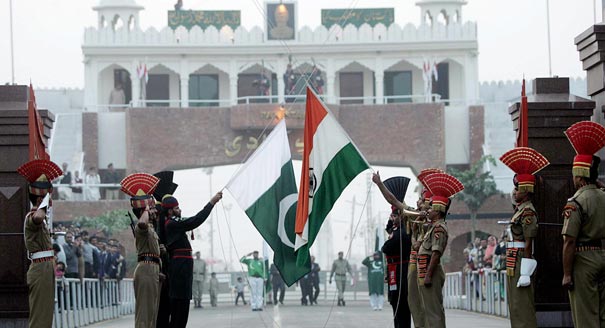
Cricket has always come in handy to the leaders of India and Pakistan to break political ice at difficult moments in bilateral relations, and Prime Minister Narendra Modi’s recent outreach follows this trend.
Source: Indian Express
Cricket has always come in handy for the leaders of India and Pakistan to signal good will towards each other and break political ice at difficult moments in bilateral relations.
So it has for Prime Minister Narendra Modi who suspended the dialogue last August when Pakistan’s high commissioner in Delhi got in touch with the Kashmiri separatist leaders just before the Indian foreign secretary was to travel to travel to Islamabad.
While Pakistan saw it as a routine consultation with the Hurriyat leaders, the Modi government signalled that it will not accept any role for the Kashmiri separatist groups in the India-Pakistan dialogue.Delhi’s capricious move at once reversed the bonhomie that Modi had generated with Nawaz Sharif when the Pakistani PM joined other South Asian leaders at the swearing in ceremony of the new Indian government last May.
Whatever the political logic behind the suspension, it had become increasingly counter productive for the Modi government to be seen as resisting a dialogue with Pakistan. Islamabad has been portraying Modi as intransigent and was mounting pressure on the international community to push Delhi towards a dialogue.
Although the U.S. President Barack Obama did not publicly bring up the question of resuming the India-Pakistan dialogue, it is believed the two leaders had talked about the issue during their conversation at the Hyderabad House on the eve of the Republic Day celebrations.
On his part, Modi apparently reaffirmed his commitment to the peace process and his readiness to engage Islamabad in a framework that responds to Delhi’s concerns on cross-border terrorism, is focused on expansive economic cooperation, and avoids the kind of posturing that Islamabad does on Kashmir.
Modi reminded Obama of his quick and empathetic response to the horrible terror attack on a school in Peshawar last December and his deep disappointment at the reports that Pakistan was going to release the main plotter of the 26/11 attacks on Mumbai.
It was not just Obama who was urging Modi to renew the dialogue with Pakistan. In his address to the Indian envoys last week, President Pranab Mukherjee reminded the government of the need to revitalise its regional peace overtures.
The opening of the World Cup this weekend provided Modi with an opportunity to end the current diplomatic impasse with Pakistan. He called up Sharif to wish Pakistan well in the World Cup and offered to send the new foreign secretary Dr. S. Jaishankar to Islamabad.
The PM was careful to present the outreach to Pakistan as part of extending good will to all the five South Asian nations participating in the World Cup. Dr. Jaishankar’s trip to Pakistan is also being billed as part of the foreign secretary’s travel to all the capitals of the Subcontinent.
Despite the attempt to couch the initiative in South Asian terms, there is little doubt that Dr. Jaishankar’s visit to Pakistan is an important step forward by the Modi government. But it is important to note that Dr Jaishankar’s visit will be more in the nature of ‘talks about talks’.
As he reviews the state of bilateral relations with the Pakistani officials and political leadership, Dr. Jaishankar would want to test out the possibilities for instituting a new framework of engagement rather than simply return to status quo ante.
The significant change unfolding in the Subcontinent—both within the region and its international relations—demands that the two sides try and develop a fresh approach to the troubled relationship between India and Pakistan.
This article was originally published in the Indian Express.
Former Nonresident Senior Fellow, Carnegie India
A leading analyst of India’s foreign policy, Mohan is also an expert on South Asian security, great-power relations in Asia, and arms control.
Recent Work

C. Raja Mohan, Darshana M. Baruah


Alexander Gabuev, Paul Haenle, C. Raja Mohan, …
Carnegie does not take institutional positions on public policy issues; the views represented herein are those of the author(s) and do not necessarily reflect the views of Carnegie, its staff, or its trustees.

In an interview, Ian Lustick and Eli Clifton discuss their new book on why a prominent ally has so much influence in America.

Michael Young

By failing to address Palestinian representation, the current process is bound to lead to just another temporary arrangement.

Nathan J. Brown

Just look at Iraq in 1991.

Marwan Muasher

A coalition of states is seeking to avert a U.S. attack, and Israel is in the forefront of their mind.
Michael Young
Baku may allow radical nationalists to publicly discuss “reunification” with Azeri Iranians, but the president and key officials prefer not to comment publicly on the protests in Iran.

Bashir Kitachaev