

Report
- +3
James M. Acton, Alexey Arbatov, Vladimir Dvorkin, …
{
  "authors": [
    "Petr Topychkanov"
  ],
  "type": "commentary",
  "centerAffiliationAll": "",
  "centers": [
    "Carnegie Endowment for International Peace",
    "Carnegie Russia Eurasia Center"
  ],
  "collections": [],
  "englishNewsletterAll": "",
  "nonEnglishNewsletterAll": "",
  "primaryCenter": "Carnegie Russia Eurasia Center",
  "programAffiliation": "",
  "programs": [],
  "projects": [
    "Eurasia in Transition"
  ],
  "regions": [
    "Middle East",
    "Türkiye",
    "South Asia",
    "India",
    "Russia"
  ],
  "topics": [
    "Economy",
    "Foreign Policy",
    "Nuclear Policy",
    "Nuclear Energy"
  ]
}
Source: Getty
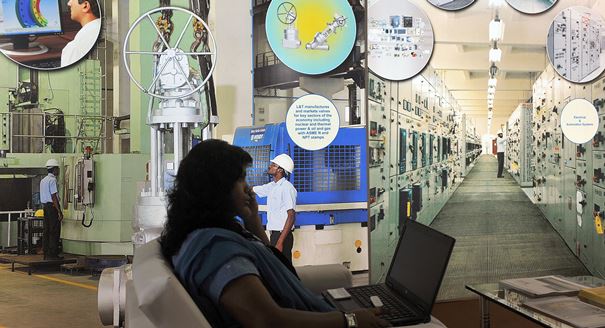
Though largely overlooked by international media, Russia has signed several significant nuclear energy agreements over the last several months. These agreements give Russia an opportunity to develop nuclear cooperation with India, Turkey, and Iran, as well as Bangladesh, Vietnam, and Egypt, where Russia plans to build nuclear plants too.
Though largely overlooked by international media, Russia has signed several significant nuclear energy agreements over the last several months. These agreements give Russia an opportunity to develop nuclear cooperation with India, Turkey, and Iran. Plus Bangladesh, Vietnam, and Egypt, where Russia plans to build nuclear plants too. Vladimir Putin called the nuclear deal with India a step toward “cooperation on a different level” and these words are equally applicable to the other aforementioned countries.
Of the deals signed, the agreement with India appears to have the most potential, as Beijing and New Delhi already have relatively developed bilateral relations. On December 11, 2014, Russia and India signed a number of documents, including the Strategic Vision for Strengthening Cooperation in Peaceful Uses of Atomic Energy Between the Republic of India and the Russian Federation, a provision on non-disclosure of technical data and confidential information, and a set of documents laying the groundwork for the construction of the third and fourth reactors at the Kudankulam Nuclear Power Plant. Nuclear energy cooperation is also covered in Paragraph 6 of the Druzhba-Dosti Joint Statement: A Vision for Strengthening the Indian-Russian Partnership over the Next Decade.
It is noteworthy that Russian high-ranking officials speak of the burgeoning nuclear cooperation with India in terms similar to those they use when describing Russia’s nascent nuclear cooperation with Turkey. For instance, during his visit to Ankara on December 1, Vladimir Putin said, “The Russian Rosatom Corporation doesn’t just build a facility in Turkey—a nuclear power plant; it creates an entire industry.” Subsequently, during his New Delhi visit on December 11, he stated, “This is not just trading goods or services or even technology—it is the creation of an entire industry, a new industry for India.”
These words are perfectly applicable to Turkey, but not India, whose nuclear sector is only slightly younger than Russia’s. The Soviet Union launched its first research reactor in 1946 in Moscow; India launched a similar reactor in 1956 in Trombay. As with Indian companies, Rosatom wants Turkish companies to be maximally involved in manufacturing equipment for future nuclear power plants in Turkey and third countries. On December 1, 2014, its general director, Sergey Kiriyenko, spoke of possible Turkish participation in Rosatom’s foreign construction projects.
The similarities between Rosatom’s approaches to Turkey and India are hardly coincidental. It appears that the corporation is trying to use the same approach in both cases. The approach involves efforts to assist the recipient countries with building their nuclear industry (rather than simply constructing nuclear power plants), maximally localizing equipment manufacturing, as well as being open to joint nuclear power plant construction projects in third countries.
Evidently, the same, somewhat modified approach will be used with Bangladesh, Vietnam, Egypt and Iran. It is still too early to expect that the local enterprises in those countries will participate in joint equipment manufacturing for Russian-engineered nuclear power plants in third countries, like they do in India and Turkey. However, local manufacturers will be involved in manufacturing equipment for national nuclear power plants to the extent possible.
Former Fellow, Nonproliferation Program, Moscow Center
Topychkanov was a fellow in the Carnegie Moscow Center’s Nonproliferation Program.
Recent Work

James M. Acton, Alexey Arbatov, Vladimir Dvorkin, …
Petr Topychkanov
Carnegie does not take institutional positions on public policy issues; the views represented herein are those of the author(s) and do not necessarily reflect the views of Carnegie, its staff, or its trustees.

As the U.S. stumbles in its war with Iran, we are likely to see an acceleration of its disengagement from the region.

Michael Young

Huawei pushed hard to enter the Egyptian data centers market, until the Americans made a better offer.

Angie Omar

The accord represents a pivotal moment in the region to avert a security vacuum in the Gulf.


Azeema Cheema, Mohanad Hage Ali

In an interview, Jason Burke discusses his sweeping account of the “revolutionists” who so shaped the 1970s and early 1980s.
Michael Young

By failing to address Palestinian representation, the current process is bound to lead to just another temporary arrangement.

Nathan J. Brown