

Article
Carole Nakhle
{
  "authors": [
    "Carole Nakhle"
  ],
  "type": "other",
  "centerAffiliationAll": "dc",
  "centers": [
    "Carnegie Endowment for International Peace",
    "Malcolm H. Kerr Carnegie Middle East Center"
  ],
  "collections": [],
  "englishNewsletterAll": "menaTransitions",
  "nonEnglishNewsletterAll": "",
  "primaryCenter": "Malcolm H. Kerr Carnegie Middle East Center",
  "programAffiliation": "MEP",
  "programs": [
    "Middle East"
  ],
  "projects": [
    "Carnegie Oil Initiative"
  ],
  "regions": [
    "Egypt",
    "Gulf",
    "Maghreb",
    "Iran",
    "Iraq",
    "Algeria",
    "Middle East",
    "North Africa"
  ],
  "topics": [
    "Economy",
    "Climate Change"
  ]
}
Source: Getty
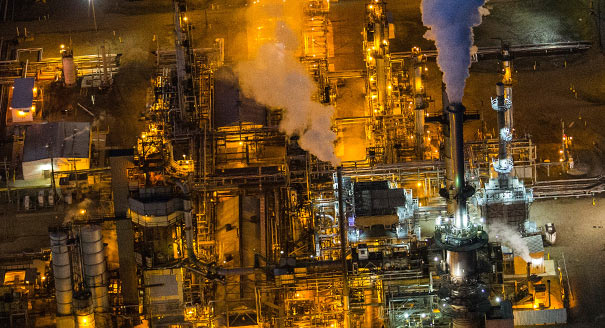
The ongoing slack in oil has exerted pressure and shed light on many producer countries, which struggle to attract investment and fight to secure favorable contract terms.
Source: Natural Resource Governance Institute
The ongoing slack in oil has exerted pressure and shed light on many producer countries, which struggle to attract investment and fight to secure favorable contract terms. Dr. Carole Nakhle, founder of advisory firm Crystol Energy and nonresident scholar at Carnegie Middle East Center, spoke with Thomas Lassourd at the Natural Resource Governance Institute’s annual conference in June about Algeria, Iran, Iraq, Egypt, and other countries, and the contractual and fiscal issues they face as commodity prices remain depressed.
This interview was originally published by the Natural Resource Governance Institute.
Former Nonresident Scholar, Middle East Center
Nakhle was a nonresident scholar at Carnegie Middle East Center, specializing in international petroleum contracts and fiscal regimes for the oil and gas industry, world oil and gas market developments, energy policy, and oil and gas revenue management.
Recent Work
Carole Nakhle
Carole Nakhle
Carnegie does not take institutional positions on public policy issues; the views represented herein are those of the author(s) and do not necessarily reflect the views of Carnegie, its staff, or its trustees.
This will be the region’s most representative tournament, amid broad changes in its footballing landscape.

Issam Kayssi
Across the Middle East and North Africa, climate stress interacts with economic fragility, governance failures, social marginalization, and conflict.
Camille Ammoun
In an interview, Marc Lynch discusses his new book decrying the post-1990 U.S.-dominated order in the Middle East.

Michael Young
Because perpetual conflict enhances control, offers economic benefits, and allows leaders to ignore popular preferences.

Angie Omar
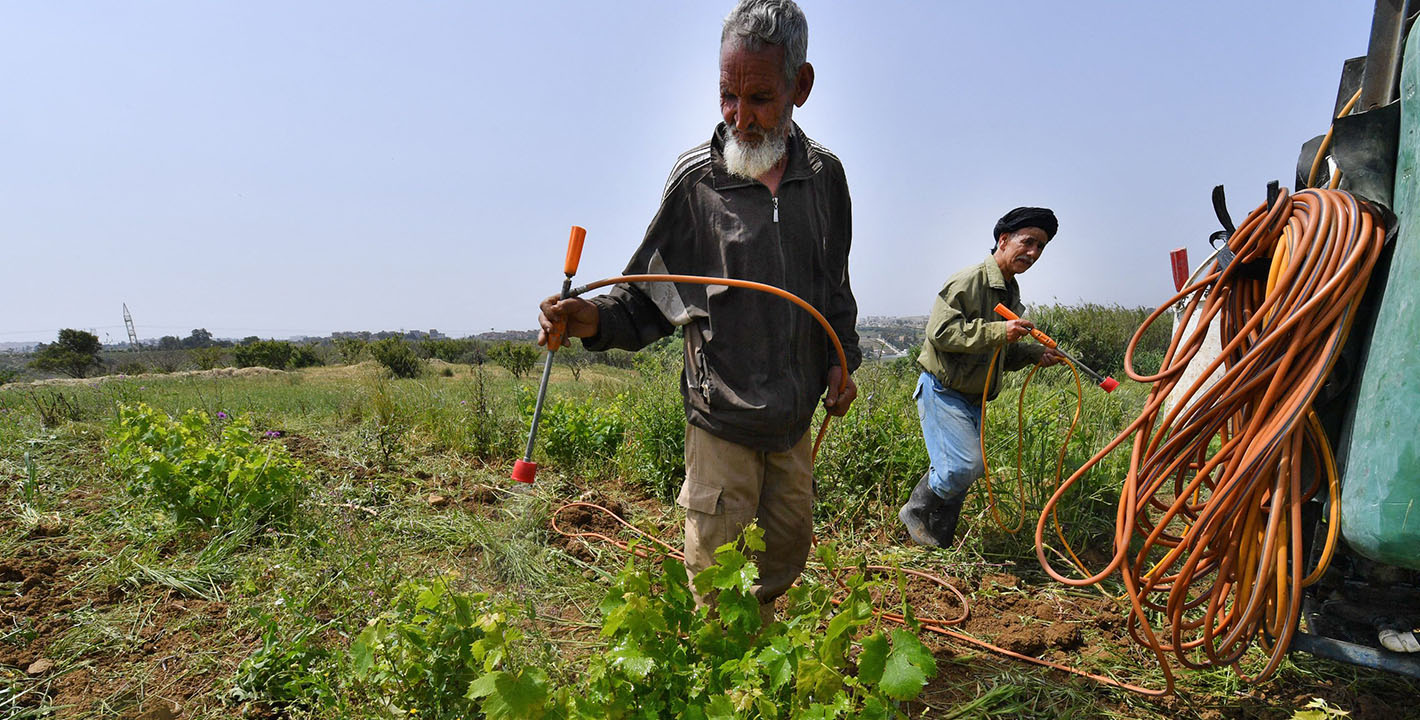
Understanding how farmers in the Oued Sahel-Soummam Valley grapple with climate change is essential for addressing the paradoxes through which adaptation, operating at both individual and institutional levels, deepens the region’s vulnerability and erodes the social fabric and agrarian identity that once defined life.

Ilyssa Yahmi