• Research
  • Diwan
  • About
  • Experts
Carnegie Middle East logoCarnegie lettermark logo
LebanonIran
{
  "authors": [
    "Garima Mohan"
  ],
  "type": "other",
  "centerAffiliationAll": "",
  "centers": [
    "Carnegie Endowment for International Peace",
    "Carnegie India"
  ],
  "collections": [],
  "englishNewsletterAll": "",
  "nonEnglishNewsletterAll": "",
  "primaryCenter": "Carnegie India",
  "programAffiliation": "",
  "programs": [],
  "projects": [],
  "regions": [
    "Asia",
    "India"
  ],
  "topics": [
    "Foreign Policy"
  ]
}
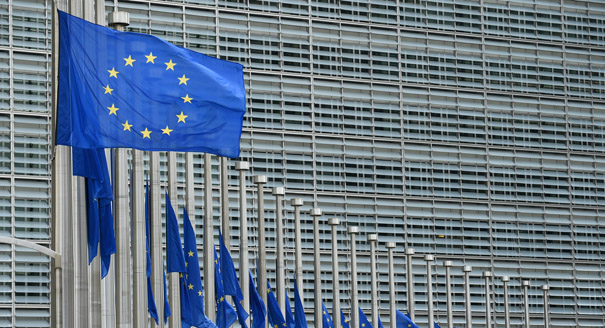
Source: Getty

Other
Carnegie India

Regional Connectivity in Asia: New Avenues for EU-India Partnership

Beijing-led multilateral arrangements have economic and geopolitical implications for Europe and India alike: they threaten Europe’s centrality in the Eurasian neighborhood and markets, and could posit China as the primary actor in India’s near neighborhood.

Link Copied
By Garima Mohan
Published on Nov 9, 2016

Source: Global Public Policy Institute

Executive Summary

Promoting a rules-based, multilateral global order is a central goal of the EU global strategy on foreign and security policy, 2016. However, with the global shift of power towards Asia, the established multilateral system and international organizations are under increasing pressure. China is at the center of this challenge. Beijing-led multilateral arrangements have economic and geopolitical implications for Europe and India alike: they threaten Europe’s centrality in the Eurasian neighborhood and markets, and could posit China as the primary actor in India’s near neighborhood. And yet neither partner has found an effective approach to deal with these challenges. Looking closely at regional connectivity projects including the Belt and Road initiative (OBOR), this policy brief argues that they present similar opportunities and challenges for the EU and India alike. By building on these convergences, the two can revive their flagging strategic partnership and gain greater influence in shaping the regional order in Asia. 

Policy Recommendations

  • Promoting multilateralism: The EU needs to develop a strategy for proactively engaging with new multilateral arrangements in Asia. To do so, it must utilize its strategic partnership with India more effectively, focusing especially on the emerging regional governance architecture in Asia.
  • Coordinating positions: Common concerns on initiatives like OBOR offer new opportunities for deepening EU-India cooperation. Building on these strategic and normative convergences, European member states and India can develop coordinated positions in platforms such as the Asian Infrastructure Bank (AIIB), which will be used to fund OBOR projects. Similar strategy can be deployed when the New Development Bank (NDB) starts accepting members in 2017. However, this would require the EU to first develop a coordinated position among member states on dealing with new institutions.
  • Regional connectivity beyond OBOR: India is in the process of articulating its position on regional connectivity and integration, which in rhetoric at least it is similar to the EU’s vision. As India pushes for connectivity and infrastructure development within South Asia and with Southeast and East Asia, the EU can play a role through investments and capacity building to support regional integration. There is also significant scope for infrastructure development within India. While partners like Japan have used this opportunity to deepen their strategic partnership with India, the EU is yet to capitalize on it. Given rapid urbanization and initiatives like ‘Make in India’ which presuppose quality and resilient infrastructure, the EU can play an important role and increase its visibility in India by investing in infrastructure development and linking to initiatives like Smart Cities. 

Read Full Text

This policy paper was produced as a collaboration between the Global Public Policy Institute and Carnegie India as part of the EU-India Policy Dialogues On Global Governance and Security. 

About the Author

Garima Mohan

Former Nonresident Fellow, Carnegie India

Garima Mohan was a nonresident fellow at Carnegie India. Her research focuses on the foreign and security policies of rising powers, particularly that of India, and on Europe-India relations.

    Recent Work

  • Article
    Modernizing India’s Approach to Peacekeeping: The Case of South Sudan

      Garima Mohan

Garima Mohan
Former Nonresident Fellow, Carnegie India
Foreign PolicyAsiaIndia

Carnegie does not take institutional positions on public policy issues; the views represented herein are those of the author(s) and do not necessarily reflect the views of Carnegie, its staff, or its trustees.

More Work from Malcolm H. Kerr Carnegie Middle East Center

  • Commentary
    Diwan
    In the Trump Gaza Plan, Diplomatic Failure is Success

    By failing to address Palestinian representation, the current process is bound to lead to just another temporary arrangement.

      Nathan J. Brown

  • people watching smoke rising at sunrise from rooftops
    Commentary
    Emissary
    Bombing Campaigns Do Not Bring About Democracy. Nor Does Regime Change Without a Plan.

    Just look at Iraq in 1991.

      Marwan Muasher

  • Commentary
    Diwan
    Iran and the New Geopolitical Moment

    A coalition of states is seeking to avert a U.S. attack, and Israel is in the forefront of their mind.

      Michael Young

  • Commentary
    Carnegie Politika
    Baku Proceeds With Caution as Ethnic Azeris Join Protests in Neighboring Iran

    Baku may allow radical nationalists to publicly discuss “reunification” with Azeri Iranians, but the president and key officials prefer not to comment publicly on the protests in Iran.

      Bashir Kitachaev
  • Commentary
    Diwan
    Iran’s Woes Aren’t Only Domestic

    The country’s leadership is increasingly uneasy about multiple challenges from the Levant to the South Caucasus.

      Armenak Tokmajyan

Get more news and analysis from
Malcolm H. Kerr Carnegie Middle East Center
Carnegie Middle East logo, white
  • Research
  • Diwan
  • About
  • Experts
  • Projects
  • Events
  • Contact
  • Careers
  • Privacy
  • For Media
Get more news and analysis from
Malcolm H. Kerr Carnegie Middle East Center
© 2026 Carnegie Endowment for International Peace. All rights reserved.
