

Commentary
Dmitri Trenin
{
  "authors": [
    "Dmitri Trenin"
  ],
  "type": "legacyinthemedia",
  "centerAffiliationAll": "",
  "centers": [
    "Carnegie Endowment for International Peace",
    "Carnegie Russia Eurasia Center"
  ],
  "collections": [],
  "englishNewsletterAll": "",
  "nonEnglishNewsletterAll": "",
  "primaryCenter": "Carnegie Russia Eurasia Center",
  "programAffiliation": "",
  "programs": [],
  "projects": [],
  "regions": [
    "Russia"
  ],
  "topics": [
    "Foreign Policy"
  ]
}
Source: Getty
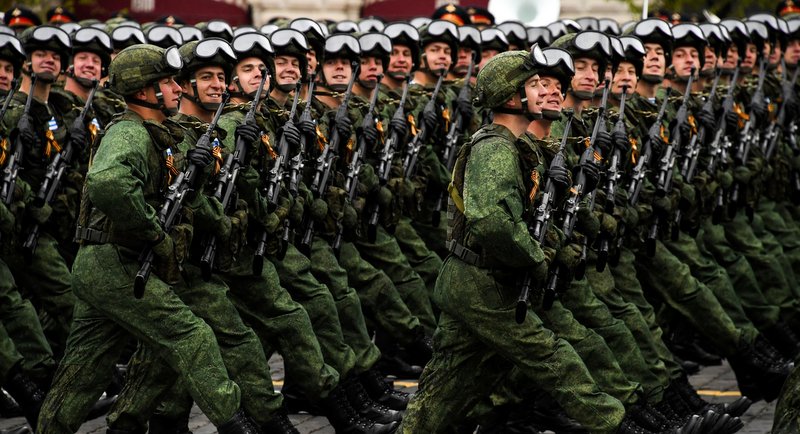
Today, Moscow militates against the global order dominated by a single power – the United States of America.
Source: Raisina Files 2018
In Russia’s foreign policy, the notion of the national interest and the yearning for a particular global regime of the world order, including Russia’s own status within it, are closely intertwined. Modern Russia has always had to work its way up the international rungs, seeking recognition by the high and mighty and admission to exclusive ‘clubs’ – as a great power in early 18th century Europe; as a member of the short-lived G8. Bolshevik Russia, with its universal mission of bringing the world to some sort of a socialist paradise, was a historic aberration.
Traditionally, from the 19th century Concert of Europe to the 21st century “multipolarity,” Russia has been coming out in favor of a pluralistic international regime of several major players, with itself necessarily part of that concert. Today, Moscow militates against the global order dominated by a single power – the United States of America.
This article was originally published in the Observer Research Foundation's Raisina Files 2018
Former Director, Carnegie Moscow Center
Trenin was director of the Carnegie Moscow Center from 2008 to early 2022.
Recent Work
Dmitri Trenin
Dmitri Trenin
Carnegie does not take institutional positions on public policy issues; the views represented herein are those of the author(s) and do not necessarily reflect the views of Carnegie, its staff, or its trustees.

By failing to address Palestinian representation, the current process is bound to lead to just another temporary arrangement.

Nathan J. Brown

Just look at Iraq in 1991.

Marwan Muasher

A coalition of states is seeking to avert a U.S. attack, and Israel is in the forefront of their mind.

Michael Young

Baku may allow radical nationalists to publicly discuss “reunification” with Azeri Iranians, but the president and key officials prefer not to comment publicly on the protests in Iran.

Bashir Kitachaev
The country’s leadership is increasingly uneasy about multiple challenges from the Levant to the South Caucasus.

Armenak Tokmajyan