

Paper
James M. Acton, Ankit Panda
{
  "authors": [
    "James M. Acton"
  ],
  "type": "other",
  "centerAffiliationAll": "dc",
  "centers": [
    "Carnegie Endowment for International Peace"
  ],
  "collections": [],
  "englishNewsletterAll": "ctw",
  "nonEnglishNewsletterAll": "",
  "primaryCenter": "Carnegie Endowment for International Peace",
  "programAffiliation": "NPP",
  "programs": [
    "Nuclear Policy"
  ],
  "projects": [],
  "regions": [],
  "topics": [
    "Security",
    "Military",
    "Nuclear Policy",
    "Foreign Policy"
  ]
}
Source: Getty
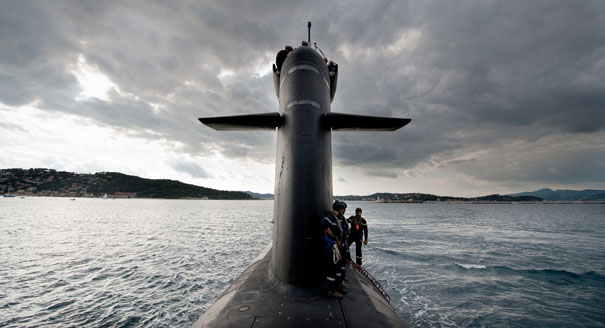
The risk of nuclear use is increasing, and not only as a result of politics. Changes in military doctrine and technology—especially in the context of growing multipolarity—also drive this risk.
Source: American Academy of Arts and Sciences
A war between two nuclear-armed states has become all too imaginable. Following Russia’s annexation of Crimea in 2014 and its interference in the 2016 U.S. presidential election, Russia’s relations with the United States are now probably worse than U.S.-Soviet relations during at least some phases of the Cold War. Stresses between China and the United States, including from the former’s land reclamation efforts in the South China Sea, are not as serious and have not built up as quickly, but a sustained détente is unlikely anytime soon. In the six years since Kim Jong-un assumed the leadership of North Korea, Pyongyang’s provocative behavior has sunk U.S.–North Korean relations to a level not seen in decades. Indeed, the two states are now engaged in a serious, if slow moving, crisis over North Korea’s nuclear and missile programs. Meanwhile, even if the Indian-Pakistani relationship is not especially bad at the moment—if judged by its own low standards—it could deteriorate rapidly and at any time.
The possibility of nuclear use would hang over a deep crisis or conflict in any of these dyads. Fortunately, the day-to-day likelihood of nuclear use is prob - ably still lower than it was during the Cold War. Certainly, the risk of nuclear use—the product of consequence and probability—almost certainly remains much smaller. Nonetheless, this risk is increasing, and not only as a result of politics. I will argue in this paper that changes in military doctrine and technol - ogy—especially in the context of growing multipolarity—also drive this risk, including in ways that are frequently overlooked....

Jessica T. Mathews Chair, Co-director, Nuclear Policy Program
Acton holds the Jessica T. Mathews Chair and is co-director of the Nuclear Policy Program at the Carnegie Endowment for International Peace.
Recent Work

James M. Acton, Ankit Panda
James M. Acton
Carnegie does not take institutional positions on public policy issues; the views represented herein are those of the author(s) and do not necessarily reflect the views of Carnegie, its staff, or its trustees.

By failing to address Palestinian representation, the current process is bound to lead to just another temporary arrangement.

Nathan J. Brown

The armed forces champion a form of capitalism that is generating revenue, but its reliance on rent faces diminishing returns, leaving the country with massive sunk costs and deferred returns, deepening dependency on external borrowing.

Yezid Sayigh
In an interview, Marc Lynch discusses his new book decrying the post-1990 U.S.-dominated order in the Middle East.

Michael Young

Just look at Iraq in 1991.

Marwan Muasher
A coalition of states is seeking to avert a U.S. attack, and Israel is in the forefront of their mind.
Michael Young