

Article
C. Raja Mohan, Darshana M. Baruah
{
  "authors": [
    "C. Raja Mohan"
  ],
  "type": "other",
  "centerAffiliationAll": "dc",
  "centers": [
    "Carnegie Endowment for International Peace",
    "Carnegie India"
  ],
  "collections": [],
  "englishNewsletterAll": "ctw",
  "nonEnglishNewsletterAll": "",
  "primaryCenter": "Carnegie India",
  "programAffiliation": "SAP",
  "programs": [
    "South Asia"
  ],
  "projects": [],
  "regions": [
    "South Asia",
    "Pakistan"
  ],
  "topics": [
    "Foreign Policy",
    "Political Reform"
  ]
}
Source: Getty
Any easing of tensions with Afghanistan and India will significantly boost Pakistan’s prospects for economic advancement at home and the elevation of its international standing.
Source: Institute of South Asian Studies
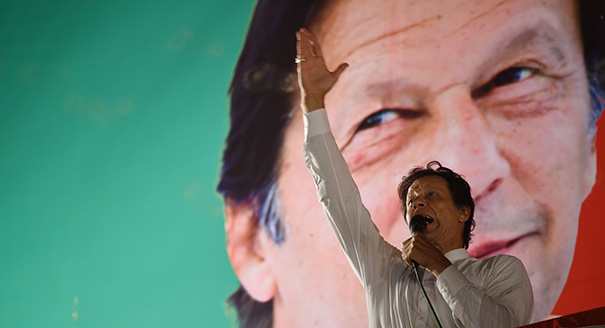
If the rise of Imran Khan to the top of Pakistan’s political heap is rooted in popular aspirations for change, analysts are sceptical about any significant evolution in the nation’s internal and external orientation after the elections. While the constraints on the civilian leadership are real, the status quo in Pakistan is increasingly difficult to sustain. It is possible to imagine a course correction at home and abroad if Khan can generate a new domestic consensus on key national issues on the basis of his mass appeal and the trust of the army that so dominates Pakistan’s political life. Any easing of tensions with Afghanistan and India will significantly boost Pakistan’s prospects for economic advancement at home and the elevation of its international standing. It is possible to imagine a course correction at home and abroad if Khan can generate a new domestic consensus on key national issues on the basis of his mass appeal and the trust of the army that so dominates Pakistan’s political life.
Former Nonresident Senior Fellow, Carnegie India
A leading analyst of India’s foreign policy, Mohan is also an expert on South Asian security, great-power relations in Asia, and arms control.
Recent Work

C. Raja Mohan, Darshana M. Baruah


Alexander Gabuev, Paul Haenle, C. Raja Mohan, …
Carnegie does not take institutional positions on public policy issues; the views represented herein are those of the author(s) and do not necessarily reflect the views of Carnegie, its staff, or its trustees.

By failing to address Palestinian representation, the current process is bound to lead to just another temporary arrangement.

Nathan J. Brown

Just look at Iraq in 1991.

Marwan Muasher

A coalition of states is seeking to avert a U.S. attack, and Israel is in the forefront of their mind.

Michael Young

Baku may allow radical nationalists to publicly discuss “reunification” with Azeri Iranians, but the president and key officials prefer not to comment publicly on the protests in Iran.

Bashir Kitachaev
The country’s leadership is increasingly uneasy about multiple challenges from the Levant to the South Caucasus.

Armenak Tokmajyan