

Article
C. Raja Mohan, Darshana M. Baruah
{
  "authors": [
    "C. Raja Mohan"
  ],
  "type": "legacyinthemedia",
  "centerAffiliationAll": "",
  "centers": [
    "Carnegie Endowment for International Peace",
    "Carnegie India"
  ],
  "collections": [],
  "englishNewsletterAll": "",
  "nonEnglishNewsletterAll": "",
  "primaryCenter": "Carnegie India",
  "programAffiliation": "",
  "programs": [],
  "projects": [],
  "regions": [
    "South Asia",
    "Pakistan",
    "India"
  ],
  "topics": [
    "Foreign Policy"
  ]
}
Source: Getty
This volatile history of India-Pakistan engagement over the last decade makes the agreement on opening the Kartarpur corridor quite significant.
Source: Indian Express
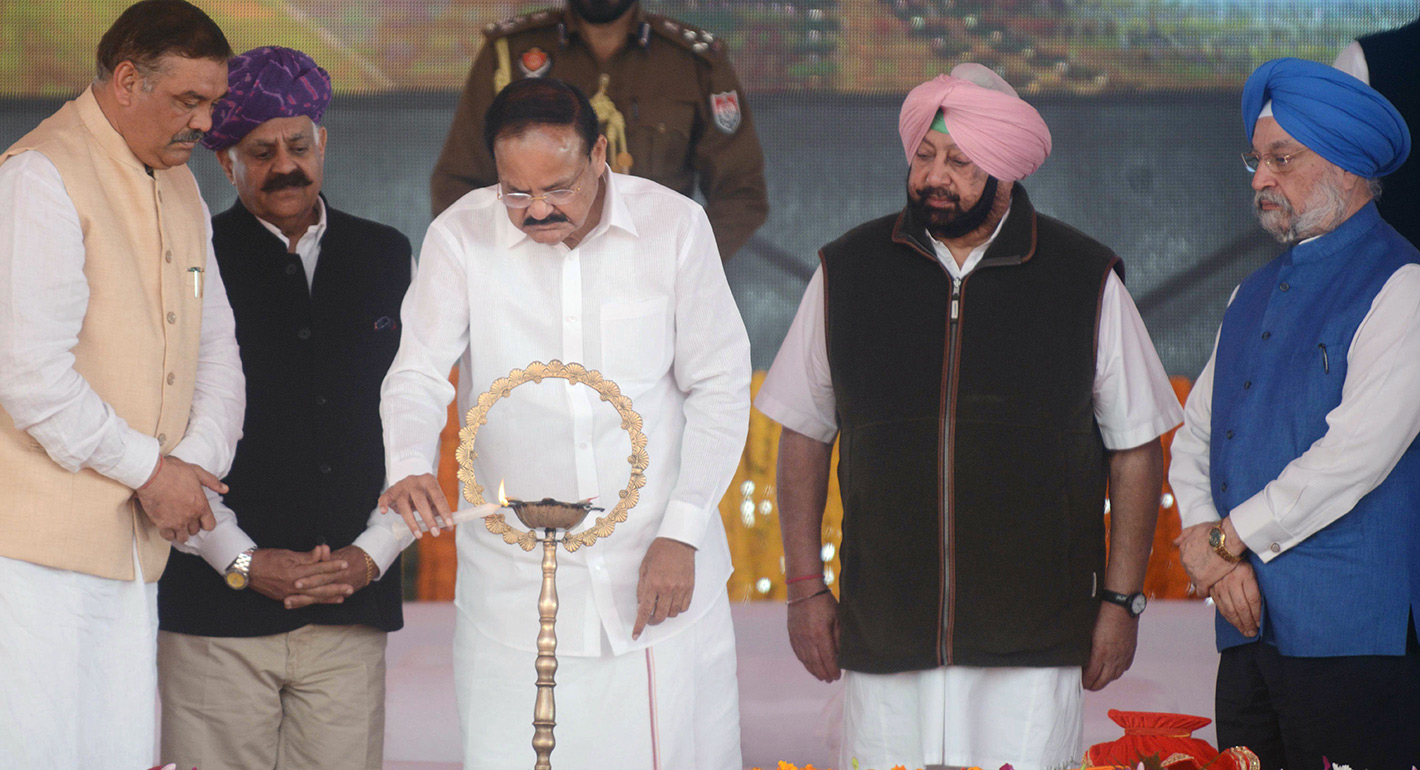
The enduring contradictions of India’s relations with Pakistan and the violent mood swings that shape its dynamics are on full display this week. The commemoration of the 26/11 Mumbai terror attack on Monday came along with the ground work for the construction of a “faith corridor” across one the world’s most militarised borders in the Punjab.
It was a decade ago this week that terrorists from Pakistan sailed into Mumbai to perpetrate an outrageous attack on the city. There have been terror attacks sponsored from across the border before and since. But no other incident is likely to remain as etched in India’s memory.
This week also sees the beginning of the construction of a five-kilometre long visa-free corridor connecting the gurudwaras at Dera Nanak in India and Kartarpur in Pakistan. This is to mark the 550th anniversary of Guru Nanak Dev next year. Nanak, the founder of the Sikh faith, spent the last 18 years of his life in Kartarpur. The Sikh community has long demanded the liberalisation of travel to the holiest of their shrines that went to Pakistan after the Partition.
If the Mumbai attacks represent the accumulated negative legacy of the relationship, the surprising breakthrough on Kartarpur points to a potentially positive future. Sceptics might say “not so fast”. For there is always another sad twist to the tragic tale of the two nations since the Partition. Every hopeful moment in India-Pakistan relations has been followed by a despairing one.
Sceptics will also remind us how hard it has been for Indian political leaders to even embark on sustained talks with Pakistan since the Mumbai attacks. When Prime Minister Manmohan Singh sought to resume the dialogue with Pakistan after he returned to power in the summer of 2009 — six months after the Mumbai attacks — the Congress party came down hard and vetoed the decision.
When Delhi announced that External Minister Sushma Swaraj will hold talks with her Pakistani counterpart, Shah Mohammad Qureshi, on the margins of the UN General Assembly a couple of months ago, the political backlash was so intense that Delhi had to quickly reverse the decision.
This volatile history of India-Pakistan engagement over the last decade makes the agreement on opening the Kartarpur corridor quite significant. But those familiar with the past might demur. It is one thing to talk about “visa-free” travel in the corridor, but entirely another for the two sides to agree on the rules governing it.
In Kashmir, we have seen how the agreement in the middle of the last decade to let Kashmiris travel across the Line of Control without passports and visas was marred by an onerous permit system. Security agencies on both sides would have demands that will make it a lot less easier than the Sikh pilgrims might expect at the Punjab border.
That Pakistan has long supported Sikh separatists demanding Khalistan will make the task even harder for Delhi. There are other issues as well. In declining the invitation from Pakistan to attend the foundation-laying ceremony at Kartarpur on Wednesday, the chief minister of Punjab, Amarinder Singh pointed to the routine killing of Indian soldiers on the LoC in Kashmir and the ISI’s “nefarious activities” in the Punjab.
Why then did Delhi accept the opening of the corridor? In addressing the Sikh community on Gurpurab last week, Prime Minister Narendra Modi said the negative dynamic between the governments must be separated from the need to build bridges between the two peoples. “Religious diplomacy” — or using faith to bring people and nations together — has been very much part of Modi’s foreign policy in his outreach to the neighbouring countries in the Subcontinent and beyond. It was also framed as a priority in the joint statement issued after his talks with Pakistan Prime Minister Nawaz Sharif at Ufa in July 2015.
But is Modi taking a big risk on the Kartarpur corridor? In inviting PM Sharif for his inauguration in 2014 and in travelling to Lahore on short notice at the end of 2015, Modi had demonstrated his appetite for risk taking with Pakistan. Will he be lucky the third time?
If there is one place ripe for quick advances in bilateral relations it is the Punjab. The pent-up demands for cross-border commercial cooperation and people-to-people contact is immense in the Punjab, which has borne so much of the Partition’s tragic burden. If there is political will, a lot of steps — relating to religious tourism, overland commerce, cross-border trade in electricity and hydrocarbons — can be taken.
But none of the repeated efforts over the last decade — between Delhi and Islamabad as well as Chandigarh and Lahore — on transforming the relationship between the two Punjabs has borne fruit. During the decade-long UPA rule, there were moments when breakthroughs appeared imminent, but turned out to be elusive.
Modi, however, might believe that he has little to lose by trying again and India is strong enough to take some political risks with Pakistan. And if the Kartarpur corridor works out well, there could be room to expand his religious diplomacy to other holy sites and extend the momentum to other areas. For now though, fingers are crossed.
This article was originally published in the Indian Express.
Former Nonresident Senior Fellow, Carnegie India
A leading analyst of India’s foreign policy, Mohan is also an expert on South Asian security, great-power relations in Asia, and arms control.
Recent Work

C. Raja Mohan, Darshana M. Baruah


Alexander Gabuev, Paul Haenle, C. Raja Mohan, …
Carnegie does not take institutional positions on public policy issues; the views represented herein are those of the author(s) and do not necessarily reflect the views of Carnegie, its staff, or its trustees.

By failing to address Palestinian representation, the current process is bound to lead to just another temporary arrangement.

Nathan J. Brown

Just look at Iraq in 1991.

Marwan Muasher

A coalition of states is seeking to avert a U.S. attack, and Israel is in the forefront of their mind.

Michael Young

Baku may allow radical nationalists to publicly discuss “reunification” with Azeri Iranians, but the president and key officials prefer not to comment publicly on the protests in Iran.

Bashir Kitachaev
The country’s leadership is increasingly uneasy about multiple challenges from the Levant to the South Caucasus.

Armenak Tokmajyan