

Commentary
Dmitri Trenin
{
  "authors": [
    "Dmitri Trenin"
  ],
  "type": "legacyinthemedia",
  "centerAffiliationAll": "",
  "centers": [
    "Carnegie Endowment for International Peace",
    "Carnegie Russia Eurasia Center"
  ],
  "collections": [],
  "englishNewsletterAll": "",
  "nonEnglishNewsletterAll": "",
  "primaryCenter": "Carnegie Russia Eurasia Center",
  "programAffiliation": "",
  "programs": [],
  "projects": [],
  "regions": [
    "Russia"
  ],
  "topics": [
    "Foreign Policy"
  ]
}
Source: Getty
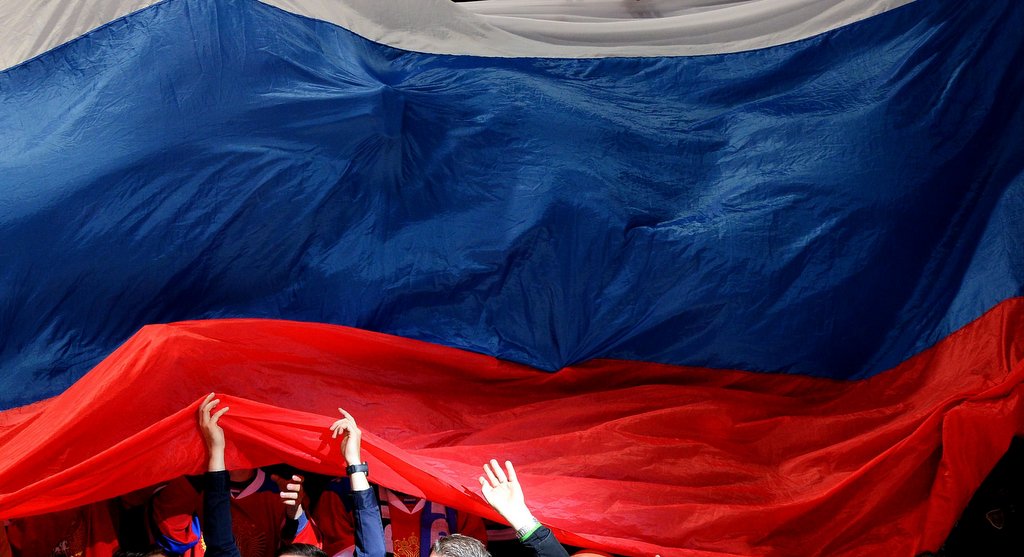
Russian history is a controversial and hotly debated subject, both at home and abroad. Distilling its lessons is difficult, but worthwhile, as many themes from Russia’s past are likely to endure well into its post-Putin future.
Source: Ambassador's Brief
Here, I summarise three of those lessons, distilled from my new book Russia, which is an ultra-concise overview of 120 years of Russia’s recent history.
In the course of its millennium-long history, Russia has been a succession of states – the tsardom of Muscovy, the Russian Empire, the Soviet Union, the Russian Federation – each of which repudiated its predecessor, only to continue along the main axis of its path.
Russia can also be a phoenix: periodically, it burns itself down virtually completely, as in the early 17th century, in 1917 or 1991, before making a stunning comeback.
The State is organized around a ruler exercising undivided power – a tsar, a party leader, a president – who is invested with ultimate responsibility for the country’s well-being. Politics usually trumps economics, and – when it does not fully control it – forms a tilted nexus with it in a mixed economic system.
The worst crime of a Russian leader, in the minds of the subjects, is to lose control of the state, which then can cease to exist: this misfortune happened as a result of misrule by Nicholas II (for failure to reform) and Mikhail Gorbachev (for losing control of the reform effort). The worst calamities in Russian history have been domestic anarchy and foreign invasion, with the former believed to be worse.
Russia is ill at ease at best and exceedingly vulnerable at worst when the spiritual bonds that hold the country together – traditional monarchy, Orthodox religion, communist ideology – are loosened or broken: the fate of the State depends, ultimately, on the confidence the ordinary people place in the system in which they live.
Geopolitically, Russia feels insecure, as it has had to stand up to far stronger and more advanced adversaries: Napoleon’s France; Kaiser/Hitler Germany, and their European allies; the United States and its NATO partners.
Russia is also lonely power, whose survival depends on its capacity to fend for itself. Thus, it needs to be a great power simply to keep going. Russia looks upon its smaller neighbours as either its own buffers or its major adversaries’ advance positions.
Further, I offer the following insights on how Russia’s foreign relations may evolve over time.
The current confrontation is caused by Moscow rejecting Washington’s dominance and insisting on defining its own security interests and ways to defend/promote them itself.
This confrontation may subside over time, as the global balance and the domestic political environment in both countries change. But rivalry moderated by a degree of cooperation will remain in place.
These relations, which are marked today more by mutual disillusionment and estrangement, may be rebuilt on a new foundation of neighbourliness – which recognizes fundamental differences between the parties, but lays emphasis on their mutual interests.
Russia’s ties with China have grown thicker and stronger over the last three decades. Moscow and Beijing have managed to construct a stable relationship – even as China was rising faster, and Russia was going through its difficult post-communist, post-imperial transformation.
Currently, the motto of the relationship is: we will never be against each other, but we will not always have to be with each other.
The future of the relationship – entente, as I define it – will depend on whether Russia will manage to keep the relationship with its powerful neighbour on an even keel. Should it feel that Beijing is poised to gain the upper hand in the relationship, Russia’s attitudes toward its partner will grow sour.
This text was originally published on the Ambassador's Brief
Former Director, Carnegie Moscow Center
Trenin was director of the Carnegie Moscow Center from 2008 to early 2022.
Recent Work
Dmitri Trenin
Dmitri Trenin
Carnegie does not take institutional positions on public policy issues; the views represented herein are those of the author(s) and do not necessarily reflect the views of Carnegie, its staff, or its trustees.

By failing to address Palestinian representation, the current process is bound to lead to just another temporary arrangement.

Nathan J. Brown

Just look at Iraq in 1991.

Marwan Muasher

A coalition of states is seeking to avert a U.S. attack, and Israel is in the forefront of their mind.

Michael Young

Baku may allow radical nationalists to publicly discuss “reunification” with Azeri Iranians, but the president and key officials prefer not to comment publicly on the protests in Iran.

Bashir Kitachaev
The country’s leadership is increasingly uneasy about multiple challenges from the Levant to the South Caucasus.

Armenak Tokmajyan