

Commentary
In an interview, Ian Lustick and Eli Clifton discuss their new book on why a prominent ally has so much influence in America.
Michael Young
{
  "authors": [
    "Frederic Wehrey",
    "Megan Doherty"
  ],
  "type": "commentary",
  "centerAffiliationAll": "",
  "centers": [
    "Carnegie Endowment for International Peace",
    "Malcolm H. Kerr Carnegie Middle East Center"
  ],
  "collections": [],
  "englishNewsletterAll": "",
  "nonEnglishNewsletterAll": "",
  "primaryCenter": "Carnegie Endowment for International Peace",
  "programAffiliation": "",
  "programs": [],
  "projects": [],
  "regions": [
    "North Africa",
    "Libya"
  ],
  "topics": [
    "Security",
    "Foreign Policy"
  ]
}
Source: Getty
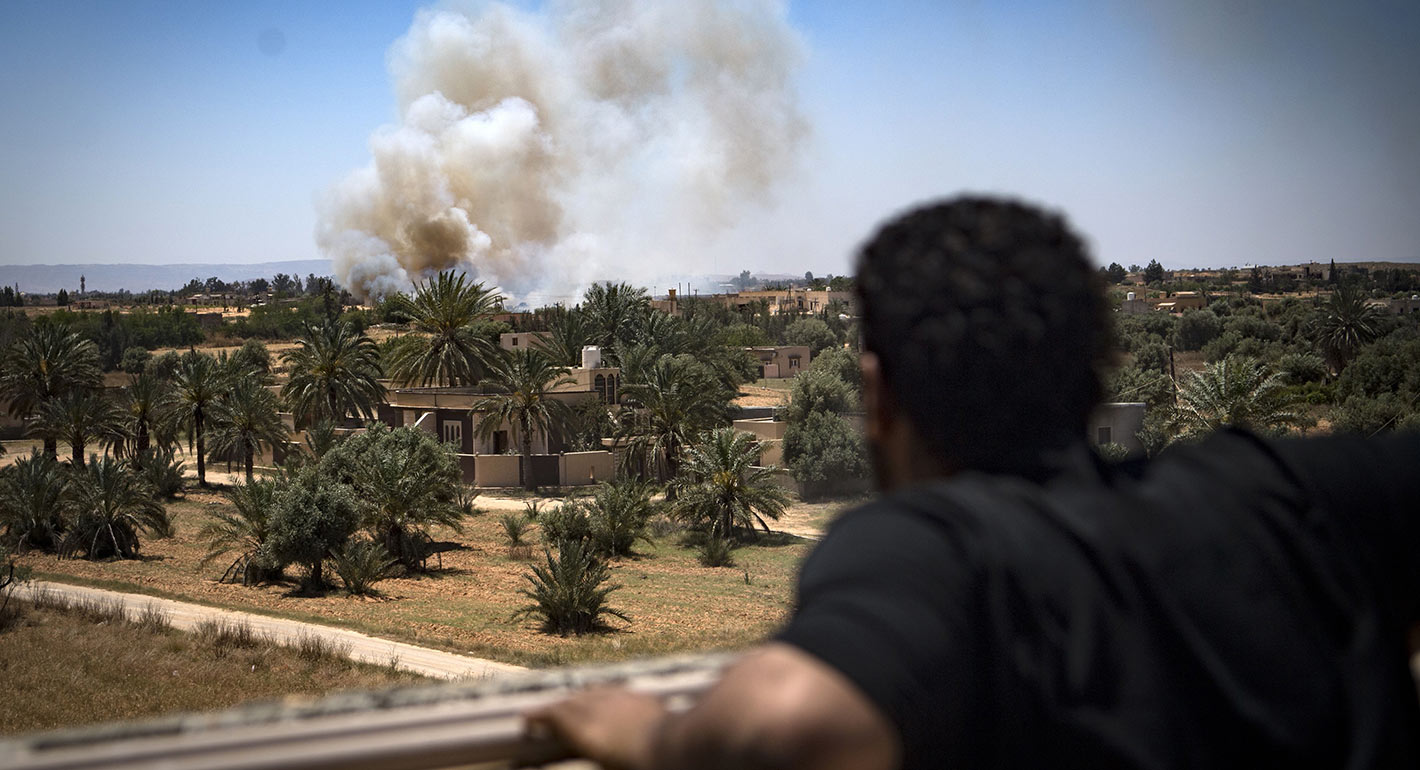
With diplomacy failing and a battlefield stalemate in Libya, the United States must act to protect Libyan civilians from humanitarian disaster.
On July 3, 2019, an airstrike by the forces of Libyan General Khalifa Haftar on a migrant detention center in Tajura, a neighborhood outside the capital, Tripoli, killed fifty-three migrants and refugees. Scenes of carnage in the ruined facility—“it was horrible, blood is everywhere, somebody’s guts in pieces,” related one survivor—appalled Western media audiences and refocused world attention, however briefly, on an increasingly violent conflict that has long been abetted by international ambivalence.
The massacre is only the most vivid example of a long list of afflictions unleashed by this three-month war, which became painfully evident when one of us visited Tripoli last month. Nearly 1,000 people have lost their lives and over 100,000 people have been displaced by the fighting. Tripoli and its environs are suffering from widespread electrical outages and a dwindling supply of drinkable water. Shortages in fuel and cash at banks, already bad before the war, have gotten worse. As more families are displaced, the prices of rent and food are climbing. Tripoli’s already stretched health sector is being pushed to its limits and hospitals cannot keep up with the pace of casualties. Militia influence in the capital, which was being modestly curtailed prior to the war, has expanded as the weak Tripoli government, the Government of National Accord (GNA), diverts funds for salaries and contracts. There are reports of some GNA-aligned militias using the war against Haftar as a license to commit crimes and detain civilians on the basis of political loyalties.
Increasingly, the boundary between frontline and civilian areas and between combatants and noncombatants has been blurred, often purposefully and cynically. In violation of international humanitarian law, health workers and emergency responders have been killed trying to access and treat the wounded. Militias are using civilian homes as staging grounds for snipers or storage for weapons. Both sides of the conflict have the ability to cut off vital supply lines for food and water. This is true in the capital and also for the vulnerable communities in southern Libya that rely on food, fuel, and supplies from the coast. As the fighting continues, more families will be forced to flee or be caught in the crossfire. More than 3,000 vulnerable refugees and migrants are unable to flee, trapped in detention centers like the one in Tajura.
We have both been focused intensely on Libya for a decade – including time on the ground as a diplomat/NGO worker and military officer/scholar—and we’ve rarely seen the country so polarized. What is most wrenching for us is that the current humanitarian crisis in Libya is entirely man-made and that by many metrics—number of displaced, number of people needing humanitarian assistance, to name a couple—things had been steadily getting better before this war started. There is plenty of blame to go around for the outbreak of fighting, but the ultimate responsibility lies with Khalifa Haftar, whose April 4 surprise attack on Tripoli effectively torpedoed a UN-brokered process to replace the GNA with a more inclusive and durable body through a national conference and elections. His hopes for an easy victory evaporated in the face of stiff militia resistance in and around Tripoli and, on June 26, his forces suffered a severe blow with the loss of Gharyan, a strategic mountain town south of Tripoli that served as a forward base.
Despite this, Haftar’s regional patrons, the United Arab Emirates and Egypt, show no signs of letting up, and he appears to have shifted tactics toward intensified airstrikes, like the one that hit Tajura. For their part, GNA-aligned forces, having scored a major battlefield victory, are in no mood to negotiate and will intensify their ground campaign—aided by outside military support of their own, most notably from Turkey. Meanwhile, diplomatic efforts to effect a ceasefire have been stymied by divisions within the European Union and the UN Security Council. While the UN did issue a statement condemning the airstrike, the United States previously blocked efforts to pass a Security Council resolution demanding a ceasefire.
Taken in sum, these grim developments—disregard for a ceasefire by Libya’s combatants, their shift toward more reckless battlefield tactics, and diplomatic gridlock among the great powers—worsens the threat to civilians in Libya. That’s why a more robust humanitarian response by the United States and its partners is needed now—to save lives, but also to limit the long-term damage to Libya’s political and social bonds and to pave the way for future reconciliation.
First, the United States should immediately call for the release and safe evacuations of detained refugees and migrants trapped on the frontlines. While the UN Refugee Agency has been able to evacuate some of the trapped refugees and migrants, more than 3,000 remain imprisoned in detention centers. While working toward international evacuations, the United States should use diplomatic leverage with the GNA to allow safe zones for released refugees and migrants to receive urgent medical treatment, food, and shelter under international supervision. The United States should also increase funding to the UN’s Humanitarian Response Plan for Libya, which includes relocation of refugees and migrants from conflict zones and is currently funded at less than 30 percent.
The United States should also press its European allies to receive and process refugees evacuated from Libya, to avoid criminalizing NGO efforts to save lives at sea, and to restore the search and rescue mandate and capacities to the EU’s Operation Sophia in the Mediterranean Sea. As the conflict continues to spread throughout the country, there is no doubt that more desperate people will attempt to flee to Europe by sea. The UN has recorded more than 590 deaths and people lost at sea in 2019 already. Refugees and migrants who are intercepted by the Libyan Coast Guard are returned to a warzone where they are at risk of abuse, injury, conscription, and death.
Aside from these immediate interventions, the United States must leverage its diplomatic relationships to pressure all conflict parties to guarantee unimpeded humanitarian access and push for humanitarian truces. Airstrikes in civilian neighborhoods, explosive devices on key access lines, shifting frontlines, and militia checkpoints make it increasingly difficult for humanitarian providers to reach people in need. Washington should also clarify at the highest level that it will not tolerate violations of human rights and international humanitarian law in Libya. Beyond messaging, the United States should work with its European allies to investigate and hold perpetrators accountable through sanctions and war crimes prosecutions. The longer the international community stays silent on the growing travesties in Libya, the longer parties will continue to violate human rights, confident they can do so with impunity.
The clearest and most obvious way to end human suffering in Libya is to end the war. We know firsthand just how hard this will be, especially given the determination of the combatants to keep fighting and the continued support of their foreign patrons. But even if this goal remains elusive, there is much more that Washington and its partners can do on the humanitarian front. Acting now will not only save lives but help limit the damage to the country’s unity and set the stage for its future recovery.

Senior Fellow, Middle East Program
Frederic Wehrey is a senior fellow in the Middle East Program at the Carnegie Endowment for International Peace, where his research focuses on governance, conflict, and security in Libya, North Africa, and the Persian Gulf.
Megan Doherty
Megan Doherty is senior director for policy and advocacy at Mercy Corps and former National Security Council Director for North Africa.
Carnegie does not take institutional positions on public policy issues; the views represented herein are those of the author(s) and do not necessarily reflect the views of Carnegie, its staff, or its trustees.

In an interview, Ian Lustick and Eli Clifton discuss their new book on why a prominent ally has so much influence in America.

Michael Young

By failing to address Palestinian representation, the current process is bound to lead to just another temporary arrangement.

Nathan J. Brown

The armed forces champion a form of capitalism that is generating revenue, but its reliance on rent faces diminishing returns, leaving the country with massive sunk costs and deferred returns, deepening dependency on external borrowing.

Yezid Sayigh
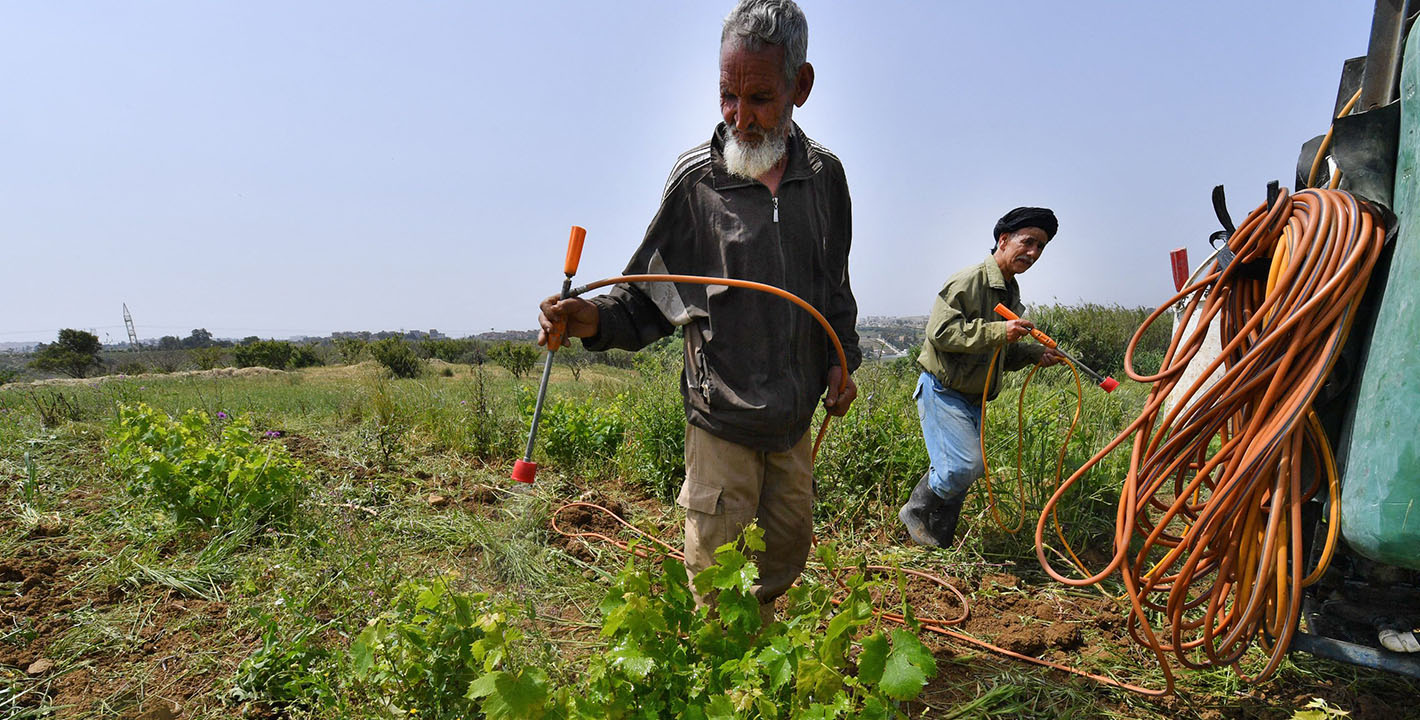
Understanding how farmers in the Oued Sahel-Soummam Valley grapple with climate change is essential for addressing the paradoxes through which adaptation, operating at both individual and institutional levels, deepens the region’s vulnerability and erodes the social fabric and agrarian identity that once defined life.
Ilyssa Yahmi

Just look at Iraq in 1991.

Marwan Muasher