

Paper
Ariel (Eli) Levite, Toby Dalton
{
  "authors": [
    "Ariel (Eli) Levite"
  ],
  "type": "other",
  "centerAffiliationAll": "dc",
  "centers": [
    "Carnegie Endowment for International Peace"
  ],
  "collections": [],
  "englishNewsletterAll": "ctw",
  "nonEnglishNewsletterAll": "",
  "primaryCenter": "Carnegie Endowment for International Peace",
  "programAffiliation": "NPP",
  "programs": [
    "Nuclear Policy"
  ],
  "projects": [],
  "regions": [
    "Middle East",
    "Israel",
    "North Africa",
    "Egypt",
    "Palestine"
  ],
  "topics": [
    "Political Reform",
    "Global Governance",
    "Foreign Policy"
  ]
}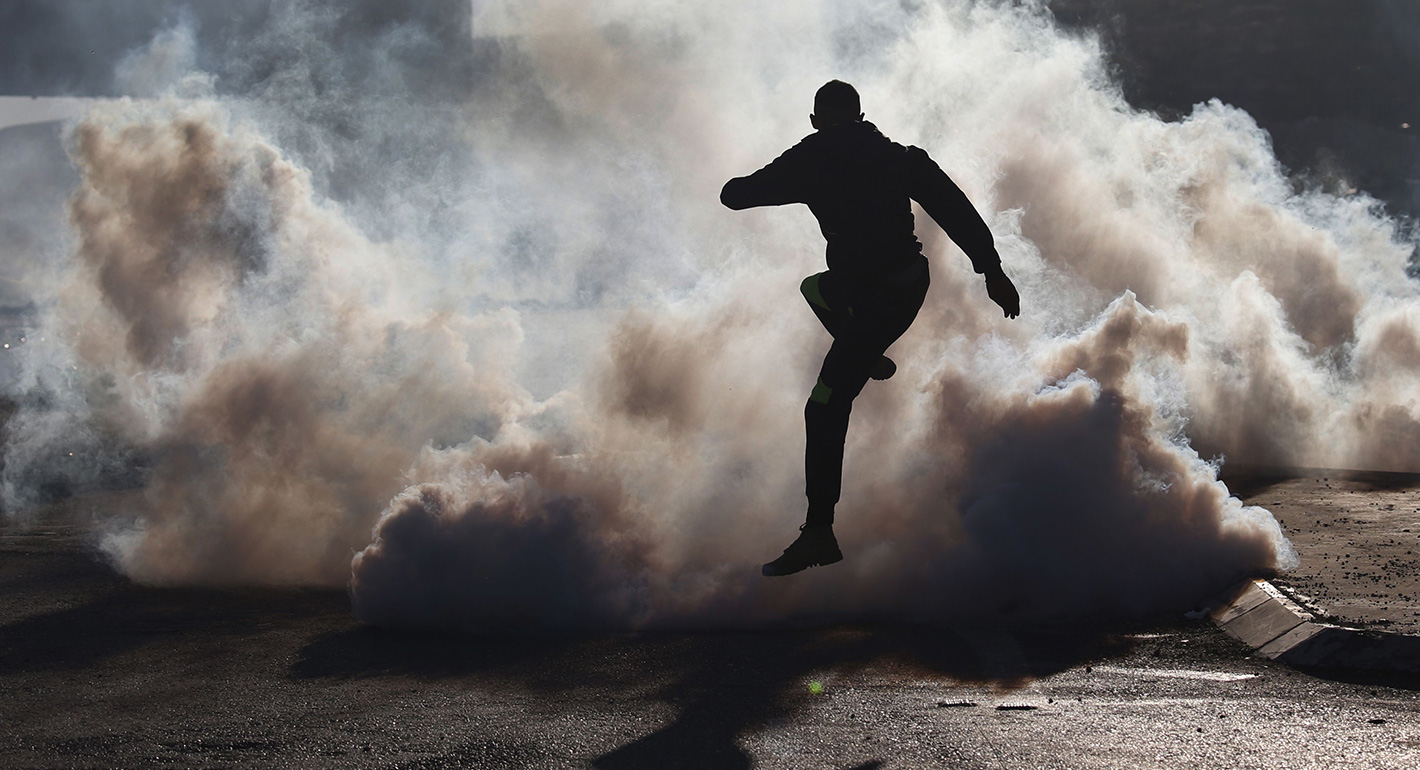
Source: Getty
It is argued that several Western states currently similarly engage in such warfare, but without fully admitting as much or effectively adjusting their strategies, doctrines and force structures.
Source: Vie de I’IRSEM
Shimshoni and Levite offer a fresh look at the transformation of warfare, focusing on its evolution from post-Westphalian struggle predominantly taking place between opposing military organizations into society centric confrontations. They submit that all contemporary opponents of the West have made the social dimension central to warfare, de facto pursuing society-centric strategies even when they apply traditional force. They argue that several Western states currently similarly engage in such warfare, but without fully admitting as much or effectively adjusting their strategies, doctrines and force structures. Building on their recent expose in Survival of the theoretical and historical underpinnings of this phenomenon, the authors turn to the rich and varied Israeli warfighting experience for additional insights into the nature and dynamics of contemporary societycentric confrontation.
In this paper the authors examine the societal warfare phenomenon in four Arab-Israeli cases: Ben Gurion’s formulation of Israel’s foundational grand strategy and doctrine; the Egyptian-Israeli War of Attrition; Israel’s ongoing confrontation with Hamas; and with Hezbollah these past two decades. They conclude with observations on factors that tend to escalate and increase the undesired societization of warfare, discussing critical implications for the study and practice of strategy.

Senior Fellow, Nuclear Policy Program, Technology and International Affairs Program
Levite was the principal deputy director general for policy at the Israeli Atomic Energy Commission from 2002 to 2007.
Recent Work

Ariel (Eli) Levite, Toby Dalton
Ariel (Eli) Levite, Toby Dalton
Carnegie does not take institutional positions on public policy issues; the views represented herein are those of the author(s) and do not necessarily reflect the views of Carnegie, its staff, or its trustees.

In an interview, Ian Lustick and Eli Clifton discuss their new book on why a prominent ally has so much influence in America.

Michael Young

As the U.S. stumbles in its war with Iran, we are likely to see an acceleration of its disengagement from the region.
Michael Young
It is improbable that Israel’s forthcoming elections will alter much in terms of how the country thinks about security.

Nathan J. Brown

The accord represents a pivotal moment in the region to avert a security vacuum in the Gulf.


Azeema Cheema, Mohanad Hage Ali

In an interview, Jason Burke discusses his sweeping account of the “revolutionists” who so shaped the 1970s and early 1980s.
Michael Young