

Commentary
By failing to address Palestinian representation, the current process is bound to lead to just another temporary arrangement.
Nathan J. Brown
{
  "authors": [
    "James L. Schoff",
    "Ankit Panda"
  ],
  "type": "legacyinthemedia",
  "centerAffiliationAll": "dc",
  "centers": [
    "Carnegie Endowment for International Peace"
  ],
  "collections": [],
  "englishNewsletterAll": "asia",
  "nonEnglishNewsletterAll": "",
  "primaryCenter": "Carnegie Endowment for International Peace",
  "programAffiliation": "AP",
  "programs": [
    "Asia"
  ],
  "projects": [],
  "regions": [
    "East Asia",
    "South Korea",
    "China",
    "Japan",
    "North Korea"
  ],
  "topics": [
    "Political Reform",
    "Nuclear Policy",
    "Foreign Policy"
  ]
}
Source: Getty
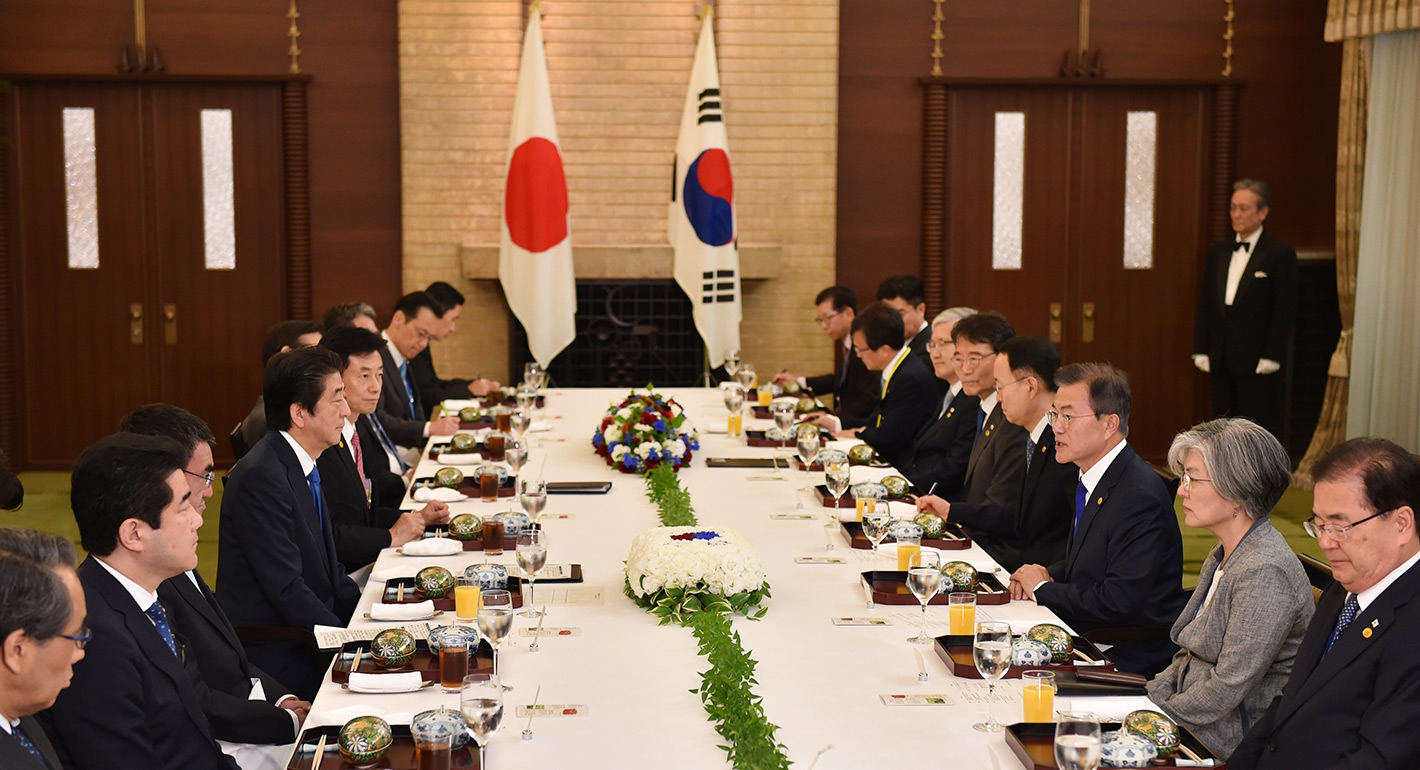
Tokyo has claimed that the new trade restrictions are the result of concerns over South Korean export controls, which Japan insists could let sensitive materials cross into North Korea or China.
Source: Diplomat
In August, Japan and South Korea both upped the ante in their intensifying trade dispute. Japan made good on its threat to remove South Korea from a “white list” of trusted export destinations, meaning extra hoops to jump through for the export of sensitive technologies to its neighbor. South Korea responded in kind, removing Japan from its own “white list.”
Tokyo has repeatedly claimed that the new trade restrictions are the result of concerns over South Korean export controls, which Japan insists could let sensitive materials cross into North Korea or China. But many believe the restrictions are the result of a far more toxic brew of nationalism and historical issues, which is being reciprocated in South Korea.
To help sort through the root causes of today’s dispute, The Diplomat’s Ankit Panda spoke to James L. Schoff, a senior fellow in the Carnegie Asia Program. In the following conversation, Schoff explains 2019’s trade tensions in light of longstanding fractures in the Japan-South Korea relationship, and what that legacy means for 21st century geopolitics.

Former Senior Fellow, Asia Program
James L. Schoff was a senior fellow in the Carnegie Asia Program. His research focuses on U.S.-Japan relations and regional engagement, Japanese technology innovation, and regional trade and security dynamics.

Stanton Senior Fellow in the Nuclear Policy Program at the Carnegie Endowment for International Peace
Ankit Panda is the Stanton Senior Fellow in the Nuclear Policy Program at the Carnegie Endowment for International Peace.
Carnegie does not take institutional positions on public policy issues; the views represented herein are those of the author(s) and do not necessarily reflect the views of Carnegie, its staff, or its trustees.

By failing to address Palestinian representation, the current process is bound to lead to just another temporary arrangement.

Nathan J. Brown
In an interview, Marc Lynch discusses his new book decrying the post-1990 U.S.-dominated order in the Middle East.

Michael Young

Just look at Iraq in 1991.

Marwan Muasher

A coalition of states is seeking to avert a U.S. attack, and Israel is in the forefront of their mind.
Michael Young

Baku may allow radical nationalists to publicly discuss “reunification” with Azeri Iranians, but the president and key officials prefer not to comment publicly on the protests in Iran.

Bashir Kitachaev