• Research
  • Diwan
  • About
  • Experts
Carnegie Middle East logoCarnegie lettermark logo
PalestineSyria
{
  "authors": [
    "James Schwemlein"
  ],
  "type": "other",
  "centerAffiliationAll": "dc",
  "centers": [
    "Carnegie Endowment for International Peace"
  ],
  "collections": [],
  "englishNewsletterAll": "",
  "nonEnglishNewsletterAll": "",
  "primaryCenter": "Carnegie Endowment for International Peace",
  "programAffiliation": "SAP",
  "programs": [
    "South Asia"
  ],
  "projects": [],
  "regions": [
    "South Asia",
    "Pakistan"
  ],
  "topics": [
    "Foreign Policy"
  ]
}
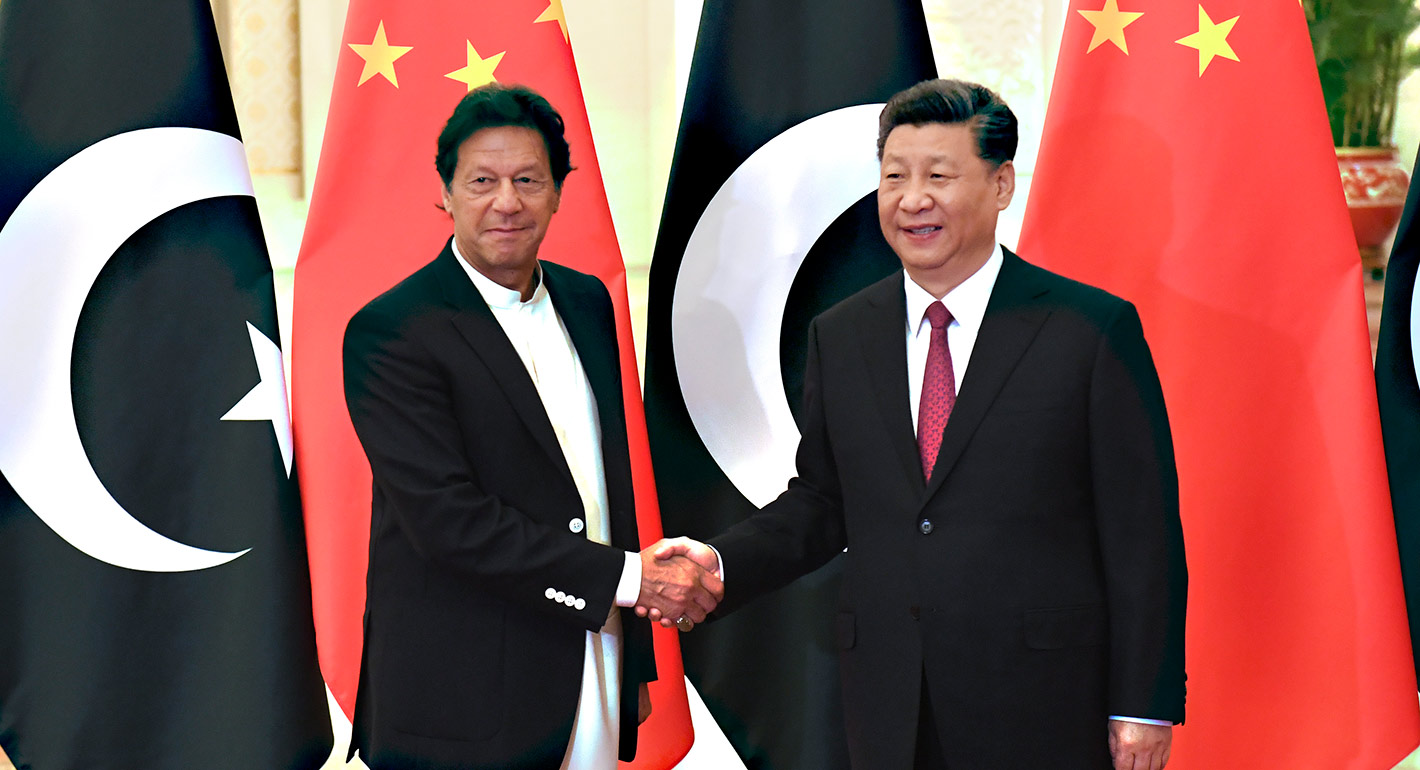
Source: Getty

Other

Strategic Implications of the China-Pakistan Economic Corridor, December, 16, 2019

The China-Pakistan Economic Corridor (CPEC) has strategic implications for China-Pakistan, China-India, India-U.S., and U.S.-China relations. U.S. targeted support to Pakistan could prevent Pakistan’s dependence on China, mitigating some of the most negative effects.

Link Copied
By James Schwemlein
Published on Dec 16, 2019

Source: United States Institute of Peace

Great power politics is resurgent in South Asia today. China’s growing military ambition in the region is matched in financial terms by its Belt and Road Initiative, the largest and most advanced component of which is the China-Pakistan Economic Corridor. What remains unclear is how the United States should navigate the new dynamic. This report, which is based on research and consultations with experts worldwide, addresses the question of how the India-Pakistan rivalry will play into the emerging great power competition.

.

Summary

  • China’s changing role in Pakistan offers an opportunity to examine China in a learning mode, in a challenging environment, and as an actor in the decades-long rivalry between Pakistan and India.
  • China’s long-term investments in the China-Pakistan Economic Corridor (CPEC) can be explained in at least three ways: to demonstrate China’s attractiveness as a partner; to prove that China’s development model can be exported; and to use Pakistan as an element of its strategic competition with the United States and India.
  • Pakistan’s hopes for CPEC are mitigated by China’s apparent lack of interest in establishing an overland transit corridor and counterterrorism concerns, which are likely to be a persistent liability in the years ahead.
  • There is a growing potential that China’s surge into Pakistan could increase the threat that Pakistan poses to India, particularly if China expands its military position there and if Pakistan does not curtail its use of militant proxies. The resulting dynamic could prove a further impetus toward deepening the U.S.-India partnership in the face of a common threat from China and Pakistan.
  • The ultimate success of China’s investments will continue to be threatened by political and economic instability in Pakistan and the country’s ongoing support for terrorism.
  • The United States could offer targeted support to help Pakistan determine how best to use Chinese infrastructure to grow its economy, which could contribute to improving and stabilizing Pakistan.

About the Report

This report examines how China’s financial underwriting of infrastructure projects along the China-Pakistan Economic Corridor is altering the political landscape for the United States, India, China, and Pakistan. Supported by the Asia Center at the U.S. Institute of Peace, this study is based on research and discussions worldwide, and specifically by Asia Center–led consultations with Chinese experts in December 2017 and with Pakistani experts in May 2019.

Read Full Text

This report was originally published by the United States Institute of Peace.

James Schwemlein
Former Nonresident Scholar, South Asia Program
James Schwemlein
Foreign PolicySouth AsiaPakistan

Carnegie does not take institutional positions on public policy issues; the views represented herein are those of the author(s) and do not necessarily reflect the views of Carnegie, its staff, or its trustees.

More Work from Malcolm H. Kerr Carnegie Middle East Center

  • Commentary
    Diwan
    Iran and the New Geopolitical Moment

    A coalition of states is seeking to avert a U.S. attack, and Israel is in the forefront of their mind.

      Michael Young

  • Commentary
    Carnegie Politika
    Baku Proceeds With Caution as Ethnic Azeris Join Protests in Neighboring Iran

    Baku may allow radical nationalists to publicly discuss “reunification” with Azeri Iranians, but the president and key officials prefer not to comment publicly on the protests in Iran.

      Bashir Kitachaev

  • Commentary
    Diwan
    Iran’s Woes Aren’t Only Domestic

    The country’s leadership is increasingly uneasy about multiple challenges from the Levant to the South Caucasus.

      Armenak Tokmajyan

  • A municipal employee raises the US flag among those of other nations in Sharm el-Sheikh, as the Egyptian Red Sea resort town gets ready to receive international leaders, following a Gaza ceasefire agreement, on October 11, 2025.
    Article
    The Tragedy of Middle Eastern Politics

    The countries of the region have engaged in sustained competition that has tested their capacities and limitations, while resisting domination by rivals. Can a more stable order emerge from this maelstrom, and what would it require?

      • Mohamed Ali Adraoui

      Hamza Meddeb, Mohamed Ali Adraoui

  • Paper
    The United States and the Emerging Security Order in Eastern Syria

    As Washington reduces its presence in the country, the success of its withdrawal and continued containment of the Islamic State will hinge on adopting an approach of flexible oversight built around three priorities, as well as balancing Turkish and Israeli red lines.

      Kheder Khaddour, Issam Kayssi

Get more news and analysis from
Malcolm H. Kerr Carnegie Middle East Center
Carnegie Middle East logo, white
  • Research
  • Diwan
  • About
  • Experts
  • Projects
  • Events
  • Contact
  • Careers
  • Privacy
  • For Media
Get more news and analysis from
Malcolm H. Kerr Carnegie Middle East Center
© 2026 Carnegie Endowment for International Peace. All rights reserved.