

Article
Erik Brattberg, David Whineray
{
  "authors": [
    "David Whineray"
  ],
  "type": "legacyinthemedia",
  "centerAffiliationAll": "dc",
  "centers": [
    "Carnegie Endowment for International Peace"
  ],
  "collections": [],
  "englishNewsletterAll": "ctw",
  "nonEnglishNewsletterAll": "",
  "primaryCenter": "Carnegie Endowment for International Peace",
  "programAffiliation": "EP",
  "programs": [
    "Europe"
  ],
  "projects": [],
  "regions": [
    "North America",
    "United States",
    "East Asia",
    "China",
    "Western Europe",
    "Iran"
  ],
  "topics": [
    "Democracy",
    "Economy",
    "Trade",
    "Foreign Policy",
    "Global Governance"
  ]
}
Source: Getty
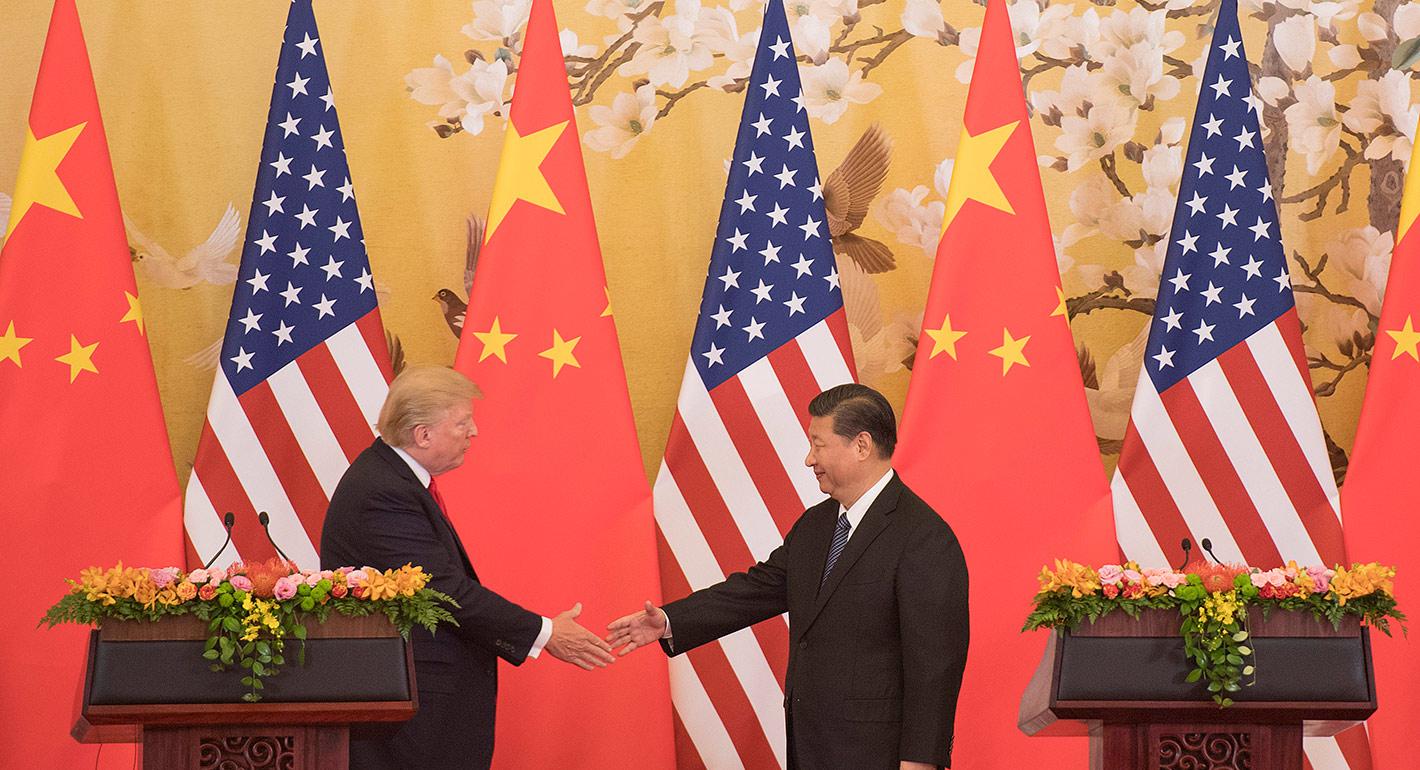
China’s rise and new transnational threats leave the United States with a unique opportunity to reform the UN in its national interest.
Source: Independent
President Trump’s decision to halt US funding to the WHO was predictable and misguided, weakening both the global response to coronavirus and US influence at the United Nations just as China is questioned. The coronavirus pandemic brings together the two biggest challenges facing the UN: China’s rise and new transnational threats. It leaves the US with a unique opportunity to reform the UN in its national interest. Will it take it?
Trump has broken away from 70 years of US bipartisan consensus towards the UN. Each previous president, from Truman to Obama, supported the “rules-based international order” as advancing US interests. Trump holds a more Hobbesian global outlook: a power-based international system where rules constrain US power.
The Trump administration‘s approach to the UN has been defined by five themes: sovereignty and neglect (the UN provides a platform for political positioning, not solving global challenges); financial savings (as one UN Ambassador privately puts it, US policy is frequently about “saving money not saving lives”); prioritising interests over values; unilateralism over alliances; and transactional diplomacy in place of grand strategy. Halting WHO funding follows each of these.
The geopolitical result of US pull-back at the UN has been an opening up of the landscape for China to exert more influence. Many UN Member States have moved away from Washington and towards Beijing in recent years as – in the context of a developing G2 world – one pole (the US) has withdrawn while the other (China) has become more assertive. An intellectual inconsistency exists between US bilateral policy to China (constraint) and its multilateral policy (empowering Beijing).
The UN, and US allies, fear a re-elected, emboldened President Trump could weaken the UN far beyond cutting WHO funding — perhaps even declaring that the Charter can be disregarded when a state disagrees with it — and that growing US-China tensions could paralyse the Security Council. To encourage US support for the UN, Europeans should stress the financial pay-offs to Washington of UN action instead of making ideological arguments for multilateralism — how the UN advances “America First”, not global goods.
A Biden administration offers an opportunity to restore and reboot multilateralism. Biden would likely echo Obama’s approach to the UN: instinctively wanting to act more with allies and to restore global rules and US leadership, but also often seeing the UN as a delivery (rather than political) mechanism and demanding greater burden-sharing.
Re-establishing US leadership won’t be easy. Things have changed since 2016. The US will have to lean in, not pull back, and accept that the era of unipolarity — where others automatically deferred to America — has passed. The US is no longer the only big kid on the block. A President Biden would also be constrained by continued domestic US polarisation and an American public weary of international engagements. The size of his electoral win — which states he carried and by how much — would impact his enthusiasm for multilateral action, such as returning to TPP.
A Biden administration strategy to reassert US leadership at the UN should be based on three messages. First, that the US is an international law-abiding, rules-obeying nation — and recommits to its alliances. Second, that the US holds values that overlap with the UN and which it will uphold. Third, that Washington’s starting point will be “how to make the international system work” not “how to dismantle it”. The administration should also give early signals of intent: support for the SDGs, paying financial dues, rejoining the Human Rights Council and Paris Climate Agreement, and new multilateral efforts on Iran and North Korea.
To restore multilateralism, the US will also need to reform it. Covid-19 has revealed a UN unable to deliver a collective response to a critical global threat and to bring the challenging (China) and status quo (US) powers together. The crisis provides an opening for US to lead new UN work on pandemics, AI and climate change. The US will also need to find ways to channel, not just oppose, growing Chinese influence. That means working through trade-offs: which issues that matter to Beijing would Washington be prepared to de-emphasise to protect other core UN elements central to US interests? A new administration should mark the start of a process to resurrect multilateralism, not the end of it.
Coronavirus provides the US with a unique, and unexpected, opportunity to restore and reboot the post-1945 multilateral system on predominantly American terms. It should take it while it can — and before China’s influence grows.
Former Nonresident Fellow, Europe Program
David Whineray was a nonresident fellow in the Europe Program at the Carnegie Endowment for International Peace in Washington, DC.
Recent Work
Erik Brattberg, David Whineray
David Whineray
Carnegie does not take institutional positions on public policy issues; the views represented herein are those of the author(s) and do not necessarily reflect the views of Carnegie, its staff, or its trustees.
This will be the region’s most representative tournament, amid broad changes in its footballing landscape.

Issam Kayssi
As negotiations with Iran and Lebanon continue, chaos is at the heart of the Netanyahu government’s calculations.

Michael Young
The party’s domestic and regional roles have changed, so Lebanon should devise a disarmament strategy that encompasses this.
Michael Young
In an interview, Marc Lynch discusses his new book decrying the post-1990 U.S.-dominated order in the Middle East.
Michael Young
Because perpetual conflict enhances control, offers economic benefits, and allows leaders to ignore popular preferences.

Angie Omar