

Article
Thomas de Waal
{
  "authors": [
    "Thomas de Waal"
  ],
  "type": "legacyinthemedia",
  "centerAffiliationAll": "dc",
  "centers": [
    "Carnegie Endowment for International Peace",
    "Carnegie Europe"
  ],
  "collections": [
    "Turkey’s Transformation",
    "Europe’s Eastern Neighborhood"
  ],
  "englishNewsletterAll": "ctw",
  "nonEnglishNewsletterAll": "",
  "primaryCenter": "Carnegie Europe",
  "programAffiliation": "EP",
  "programs": [
    "Europe"
  ],
  "projects": [],
  "regions": [
    "Russia",
    "Europe",
    "Türkiye",
    "Eastern Europe",
    "Middle East",
    "Caucasus",
    "Azerbaijan",
    "Armenia",
    "Iran"
  ],
  "topics": [
    "Security",
    "Foreign Policy"
  ]
}
Source: Getty
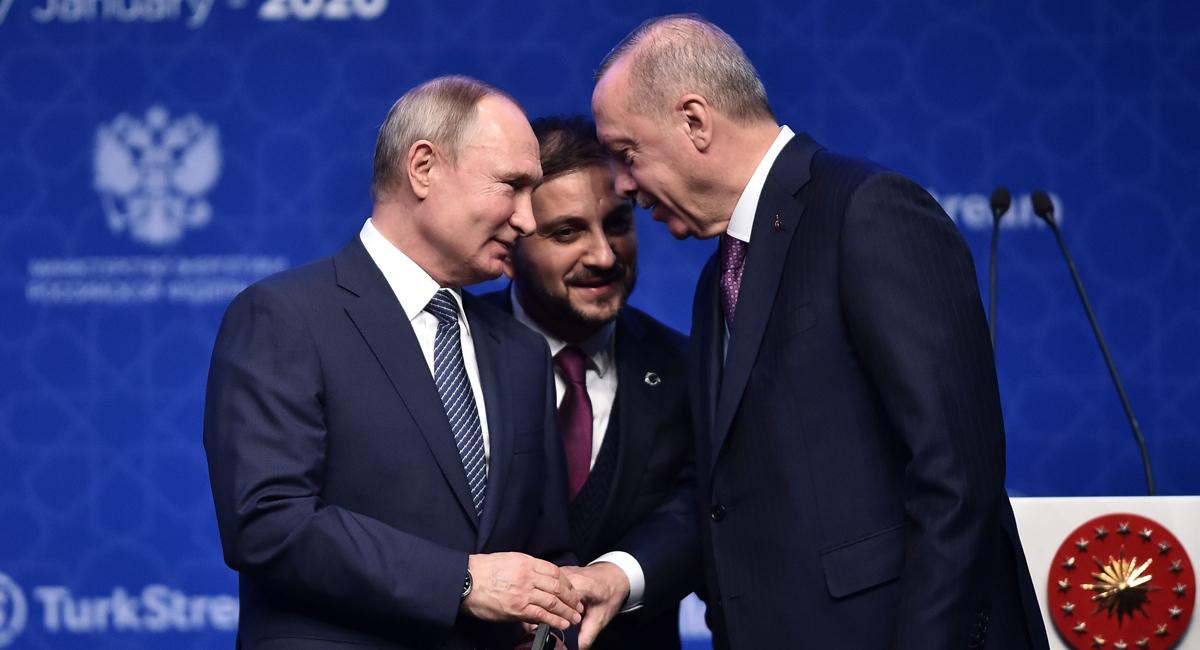
Russia and Turkey have brokered a peace deal for the Nagorny Karabakh conflict that greatly enhances their military presence in a region where they were losing influence.
Source: New York Times
After weeks of brutal and bloody fighting between Armenians and Azerbaijanis in and around the disputed enclave of Nagorny Karabakh, a halt has been called. Facing defeat, the Armenian side has more or less capitulated. Russian peacekeepers are already arriving to enforce a new peace deal.
It is a pivotal moment. The military and political map of the South Caucasus region has changed fundamentally. Lives have been saved. Hundreds of thousands of Azerbaijani refugees, displaced by the conflict in the late 1980s and early ’90s, can celebrate at the possibility of going home. But Armenians are shattered and fearful.
And the geopolitical picture is not so pretty: This is a deal brokered by two big autocratic neighbors, Russia and Turkey, that can now use it to pursue their own self-aggrandizing agendas. For them this is about troops and transport corridors, not people. The United States, despite being an official mediator, along with European countries, is being kept at bay, paying the price for years of not engaging with the conflict.
The conflict, which dates back to 1988 in its modern form, can lay claim to being Europe’s most intractable dispute. It pits the aspirations of the Armenian-majority region of Nagorny Karabakh for self-determination against Azerbaijan’s right to the territory under international law. Almost incapable of dialogue, both sides have sought to settle their dispute by force of arms. In the ’90s, the Armenian side prevailed at great cost; on Sept. 27, Azerbaijan took military action to reverse that defeat and recover lost lands.

Senior Fellow, Carnegie Europe
Thomas de Waal is a senior fellow at Carnegie Europe, specializing in Eastern Europe and the Caucasus.
Recent Work
Thomas de Waal
Thomas de Waal
Carnegie does not take institutional positions on public policy issues; the views represented herein are those of the author(s) and do not necessarily reflect the views of Carnegie, its staff, or its trustees.

Huawei pushed hard to enter the Egyptian data centers market, until the Americans made a better offer.

Angie Omar

Middle Eastern states should welcome an accelerated U.S. disengagement from their region.

Michael Young

In an interview, former ambassador Charles Freeman assesses the Trump administration’s war against Iran.
Michael Young

The accord represents a pivotal moment in the region to avert a security vacuum in the Gulf.


Azeema Cheema, Mohanad Hage Ali

In an interview, Jason Burke discusses his sweeping account of the “revolutionists” who so shaped the 1970s and early 1980s.
Michael Young