• Research
  • Diwan
  • About
  • Experts
Carnegie Middle East logoCarnegie lettermark logo
LebanonIran
REQUIRED IMAGE

REQUIRED IMAGE

Article

We Are Losing the War in Afghanistan


It has been called the forgotten war. What seemed two years ago to be a shining example of American military power and international leadership is now a growing morass. The Taliban is back, Al Qaeda roams the countryside and Osama bin Ladin mocks America from his mountain redoubt. Assassins in the last week barely missed killing both the president and the vice-president in separate attacks on this fledgling democracy’s government.


Link Copied
By Joseph Cirincione and Joshua Williams
Published on Sep 23, 2004

It has been called the forgotten war. What seemed two years ago to be a shining example of American military power and international leadership is now a growing morass. The Taliban is back, Al Qaeda roams the countryside and Osama bin Ladin mocks America from his mountain redoubt. Assassins in the last week barely missed killing both the president and the vice-president in separate attacks on this fledgling democracy’s government.

After a quick military victory, the administration turned from Afghanistan to pursue war in Iraq. The danger is that, like Aesop’s dog, officials will lose the bone they had in pursuit of the illusion of a larger prize. U.S. and international military and economic efforts are too little, but it is not too late. A sharp turn back to Afghanistan can still rescue the situation. It must begin with a candid acknowledgement of the problems we face.

Five key indicators tell a sober story.

  • First, the rate of attacks on international military forces, humanitarian aid workers, and Afghan civilians is increasing. 2004 has been the deadliest year thus far for American troops. In February, the head of the U.S. Defense Intelligence Agency stated that attacks "had reached their highest levels since the collapse of the Taliban…" More than twice as many assistance workers have already been killed in 2004 than in all of 2003. There is concern that regions not previously affected by insurgent violence are now subject to attacks, and a recent UN study claimed that al Qaeda is regrouping and setting up facilities near the Pakistani border.
  • Second, international forces are unable to control much territory beyond Kabul. Regional warlords dominate much of the country, and the efforts to demobilize them have progressed very slowly. The Government Accountability Office (GAO) reported in June that the United States uses warlord militias in counterinsurgency efforts against the Taliban, yet considers their demobilization to be essential to improving the country’s security. As of June, the UN had designated 169 of 361 Afghan districts as "high or medium risk," up from 144 labeled as such in November 2003. And in August, the UN reported that "the main objective of consolidating peace and security was constantly being threatened by the Taliban and al-Qaida, particularly in Afghanistan’s eastern and southern border regions…"
  • Third, significant questions still surround the October 9 election. While it now appears that the election will take place, it is certain that it will occur amid increased violence, which could weaken the legitimacy of the results. More than 20 individuals were killed in August in election-related violence. The Organization for Security and Cooperation in Europe, the group charged with monitoring the election (as they did in Kosovo and Bosnia), says Afghanistan is too dangerous for its election monitors. Instead, it will send a scaled-down "election support team" that will be unable to comment on the conduct of the polls.
  • Fourth, the opium trade is booming. The UN says "eradication and interdiction efforts have not so far proved able to contain the growth of illicit cultivation and drug trafficking." The 2003 opium harvest made up 75% of the world’s opium supply, brought in over $2 billion, and was the second largest in Afghanistan’s history. 2004 production levels could increase 50-100%. This extremely lucrative trade not only detracts from the legitimate economy, but also finances the warlords and possibly even the Taliban.
  • Fifth, reconstruction is moving far too slowly, due to lack of security and resources. There is just one international troop for every 1,115 citizens in Afghanistan, while in Iraq, there is one international troop for every 161 Iraqis. The GAO reports that of $9.7 billion pledged by international donors in 2002 and 2003, only $947 million had been disbursed as of June 2004. The administration has proposed cutting reconstruction funds for Afghanistan by 45 percent next year, down to $1.2 billion from the current $2.2 billion.

Millions of Afghans want a secure, democratic future free of Taliban oppression and Al Qaeda terror. Now more than ever, they need American and international help. The October elections are not a cure-all. They should be followed by a renewed presidential commitment to increase U.S. forces and assistance, matched by increased international aid. Afghanistan deserves more. It is the front line in the war against fundamentalist Islamic terrorists. We cannot lose here.

About the Authors

Joseph Cirincione

Former Senior Associate, Director for NonProliferation

Joshua Williams

Carnegie Endowment for International Peace

Authors

Joseph Cirincione
Former Senior Associate, Director for NonProliferation
Joseph Cirincione
Joshua Williams
Carnegie Endowment for International Peace
AfghanistanDemocracySecurityForeign Policy

Carnegie does not take institutional positions on public policy issues; the views represented herein are those of the author(s) and do not necessarily reflect the views of Carnegie, its staff, or its trustees.

More Work from Malcolm H. Kerr Carnegie Middle East Center

  • people watching smoke rising at sunrise from rooftops
    Commentary
    Emissary
    Bombing Campaigns Do Not Bring About Democracy. Nor Does Regime Change Without a Plan.

    Just look at Iraq in 1991.

      Marwan Muasher

  • Commentary
    Diwan
    Iran and the New Geopolitical Moment

    A coalition of states is seeking to avert a U.S. attack, and Israel is in the forefront of their mind.

      Michael Young

  • Commentary
    Carnegie Politika
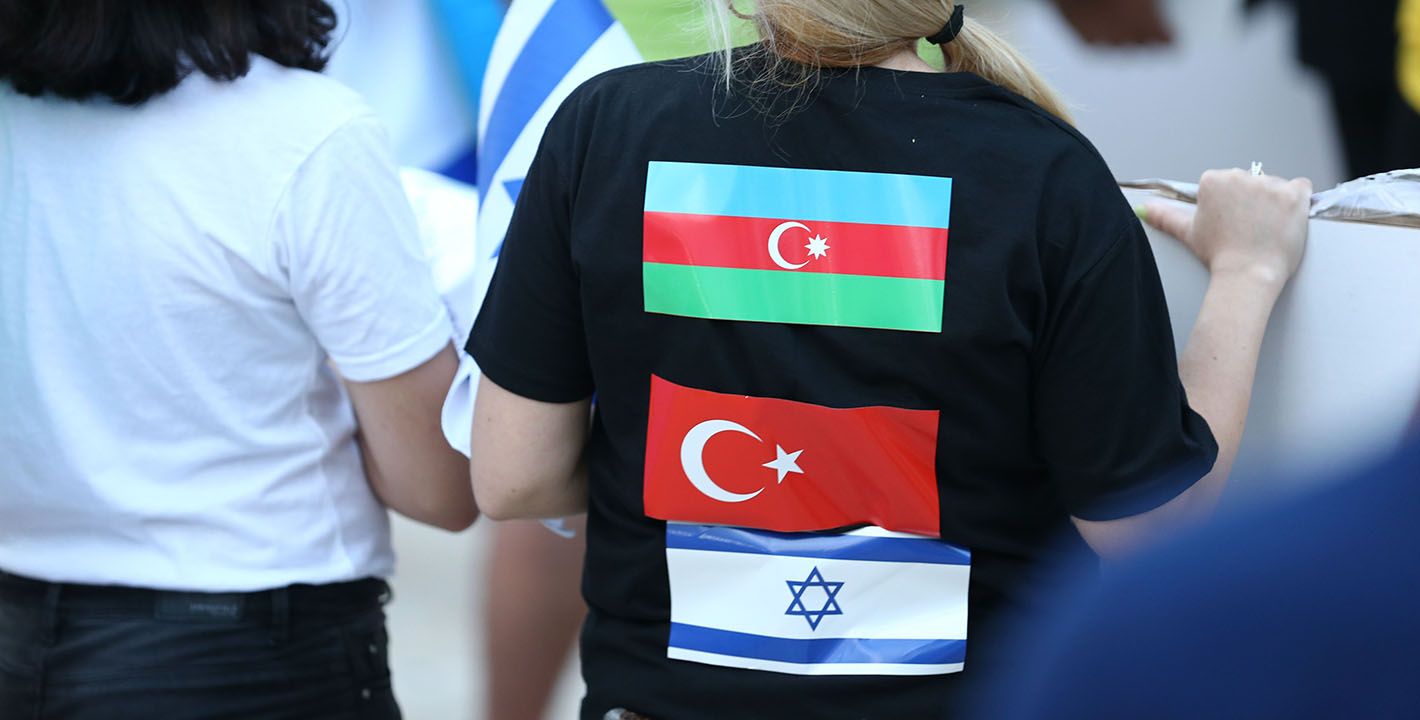
    Baku Proceeds With Caution as Ethnic Azeris Join Protests in Neighboring Iran

    Baku may allow radical nationalists to publicly discuss “reunification” with Azeri Iranians, but the president and key officials prefer not to comment publicly on the protests in Iran.

      Bashir Kitachaev
  • Commentary
    Diwan
    Iran’s Woes Aren’t Only Domestic

    The country’s leadership is increasingly uneasy about multiple challenges from the Levant to the South Caucasus.

      Armenak Tokmajyan

  • A municipal employee raises the US flag among those of other nations in Sharm el-Sheikh, as the Egyptian Red Sea resort town gets ready to receive international leaders, following a Gaza ceasefire agreement, on October 11, 2025.
    Article
    The Tragedy of Middle Eastern Politics

    The countries of the region have engaged in sustained competition that has tested their capacities and limitations, while resisting domination by rivals. Can a more stable order emerge from this maelstrom, and what would it require?

      • Mohamed Ali Adraoui

      Hamza Meddeb, Mohamed Ali Adraoui

Get more news and analysis from
Malcolm H. Kerr Carnegie Middle East Center
Carnegie Middle East logo, white
  • Research
  • Diwan
  • About
  • Experts
  • Projects
  • Events
  • Contact
  • Careers
  • Privacy
  • For Media
Get more news and analysis from
Malcolm H. Kerr Carnegie Middle East Center
© 2026 Carnegie Endowment for International Peace. All rights reserved.


