

Commentary
Huawei pushed hard to enter the Egyptian data centers market, until the Americans made a better offer.
Angie Omar
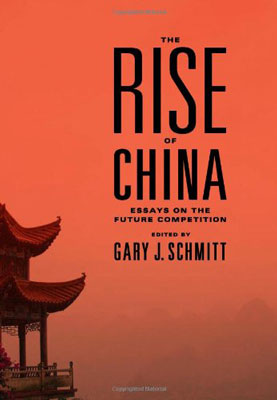
Chinese leaders view the international community as fundamentally defined by antagonism; an outlook that is unlikely to change until and unless the regime changes.
Source: Encounter Books

The Rise of China is a collection of essays about the nature of that threat and what the U.S. and its allies might do in the areas of foreign and defense affairs to meet it. Robert Kagan and Ashley J. Tellis, senior associates at the Carnegie Endowment, have published essays which contemplate how these two rising, ambitious powers are contesting for leadership in East Asia and ask if the sanguine forecasts for a peaceful century will hold true.
Although the Chinese have been very careful to look like a cautious power, and in key respects have been, they see the international scene as fundamentally one of antagonism. And this is unlikely to change until and unless the regime changes. It is this China, the authors of The Rise of China assert, that we will be dealing with for some time to come.
Robert Kagan - Ambition and Anxiety: America's Competition with China
Ashley J. Tellis - China's Grand Strategy: The Quest for Comprehensive National Power and Its Consequences
Reviews for this Publication:
“Since Nixon’s opening to China in 1972, eight successive U.S. Presidents have bet that integrating China into the world economy will change China before China changes the international system. This highly readable collection of essays challenges that assumption from the perspectives of history, demographics and military strategy. U.S.-China cooperation has expanded in recent years and that trend is likely to continue, but the authors in this volume remind us that China’s future is not pre-ordained and that the United States must take a more proactive approach to shape the strategic environment in Asia.”
- Michael J. Green, Former Special Assistant to the President for National Security Affairs and Senior Director for Asia, NSC; Senior Advisor and Japan Chair, CSIS; Associate Professor, Georgetown University
“A masterful survey of the clash of ideas, interests and powers that will define the security order of the next few decades. This book is robust, undiplomatic, and sometimes scary to read.”
-Mark Leonard, author of What Does China Think?
“Gary Schmitt has assembled a superlative cast of foreign policy experts to examine one of the greatest long-term challenges that the United States faces. It is not, as he writes, the rise of China per se but rather the rise of a “People’s Republic of China” that causes concern for American policymakers. Those who read this invaluable book will not have their concerns allayed, but they will gain a much better understanding of the issues involved. This is the best single-volume overview of U.S.-China relations that anyone has produced.”
-Max Boot, Jeane J. Kirkpatrick Senior Fellow for National Security Studies, Council on Foreign Relations, and author of The Savage Wars of Peace and War Made New
About the Carnegie Endowment contributors:
Robert Kagan is senior associate at the Carnegie Endowment for International Peace, Transatlantic Fellow at the German Marshall Fund, and a columnist for the Washington Post. He is the author of the books, The Return of History and the End of Dreams, A Twilight Struggle: American Power and Nicaragua, 1977–1990, and editor, with William Kristol, of Present Dangers: Crisis and Opportunity in American Foreign and Defense Policy. Kagan served in the State Department from 1984 to 1988.
Ashley J. Tellis, Senior Associate at the Carnegie Endowment for International Peace, served in the U.S. Department of State as senior advisor to the Ambassador at the U.S. embassy in India and on the National Security Council staff as special assistant to the president and senior director, strategic planning and Southwest Asia. He is the author of the books What Should We Expect of India as a Strategic Partner? and India's Emerging Nuclear Posture, as well as the editor of Strategic Asia 2006-07: Trade, Interdependence and Security, Strategic Asia 2005-06: Military Modernization in an Era of Uncertainty, and Strategic Asia 2004-05: Confronting Terrorism in Pursuit of Power.

Former Senior Associate
Kagan, author of the recent book, The Return of History and the End of Dreams (Knopf 2008), writes a monthly column on world affairs for the Washington Post and is a contributing editor at both the Weekly Standard and the New Republic.
Former Senior Fellow
Ashley J. Tellis was a senior fellow at the Carnegie Endowment for International Peace.
Michael R. Auslin
Dan Blumenthal
American Enterprise Institute
Ellen Bork
Nicholas Eberstadt
Gary J. Schmitt
Carnegie does not take institutional positions on public policy issues; the views represented herein are those of the author(s) and do not necessarily reflect the views of Carnegie, its staff, or its trustees.

Huawei pushed hard to enter the Egyptian data centers market, until the Americans made a better offer.

Angie Omar

Middle Eastern states should welcome an accelerated U.S. disengagement from their region.

Michael Young

In an interview, former ambassador Charles Freeman assesses the Trump administration’s war against Iran.
Michael Young

By failing to address Palestinian representation, the current process is bound to lead to just another temporary arrangement.

Nathan J. Brown

The armed forces champion a form of capitalism that is generating revenue, but its reliance on rent faces diminishing returns, leaving the country with massive sunk costs and deferred returns, deepening dependency on external borrowing.

Yezid Sayigh