

Commentary
The accord represents a pivotal moment in the region to avert a security vacuum in the Gulf.
Azeema Cheema, Mohanad Hage Ali

Deradicalization programs will likely remain a necessary part of larger counter-radicalization and counterterrorism strategies. To succeed, deradicalization programs must include affective, pragmatic, and ideological components and considerable aftercare.
Source: Rand Corporation

A key question is whether the objective of these programs should be disengagement or deradicalization of militants. Disengagement entails a change in behavior (i.e., refraining from violence and withdrawing from a radical organization) but not necessarily a change in beliefs. A person could exit a radical organization and refrain from violence but nevertheless retain a radical worldview. Deradicalization is the process of changing an individual’s belief system, rejecting the extremist ideology, and embracing mainstream values.
There is a view in the scholarly community that deradicalization may not be a realistic objective and that the goal of terrorist rehabilitation programs should be disengagement. Deradicalization, in fact, may be particularly difficult for Islamist extremists because they are motivated by an ideology that is rooted in a major world religion. The tenets of the ideology, therefore, are regarded as religious obligations.
Nevertheless, deradicalization may be necessary to permanently defuse the threat posed by these individuals. If a militant disengages solely for instrumental reasons, when the circumstances change, the militant may once again take up arms. Conversely, when deradicalization accompanies disengagement, it creates further barriers to recidivism.
Moreover, there may be a tipping point. When enough exmilitants renounce radical Islamism, the ideology and the organizations that adhere to it are fatally discredited. Even short of this tipping point, as greater numbers of militants renounce extremism, radical Islamist organizations will experience greater hurdles in attracting adherents and sympathizers within the Muslim community.
Studies of those who leave gangs and criminal organizations, exit from cults and religious sects, and withdraw from terrorist organizations suggest that individuals follow a similar trajectory when leaving a criminal or extremist group. Certain lessons can be derived from this trajectory.

Former Associate, Middle East Program
Boucek was an associate in the Carnegie Middle East Program where his research focused on security challenges in the Arabian Peninsula and Northern Africa.
Angel Rabasa
Stacey L. Pettyjohn
Jeremy J. Ghez
Carnegie does not take institutional positions on public policy issues; the views represented herein are those of the author(s) and do not necessarily reflect the views of Carnegie, its staff, or its trustees.

The accord represents a pivotal moment in the region to avert a security vacuum in the Gulf.


Azeema Cheema, Mohanad Hage Ali

In an interview, Jason Burke discusses his sweeping account of the “revolutionists” who so shaped the 1970s and early 1980s.

Michael Young

The armed forces champion a form of capitalism that is generating revenue, but its reliance on rent faces diminishing returns, leaving the country with massive sunk costs and deferred returns, deepening dependency on external borrowing.

Yezid Sayigh

There is a disturbing structural parallel between the old global energy economy and the new green transition.

Angie Omar
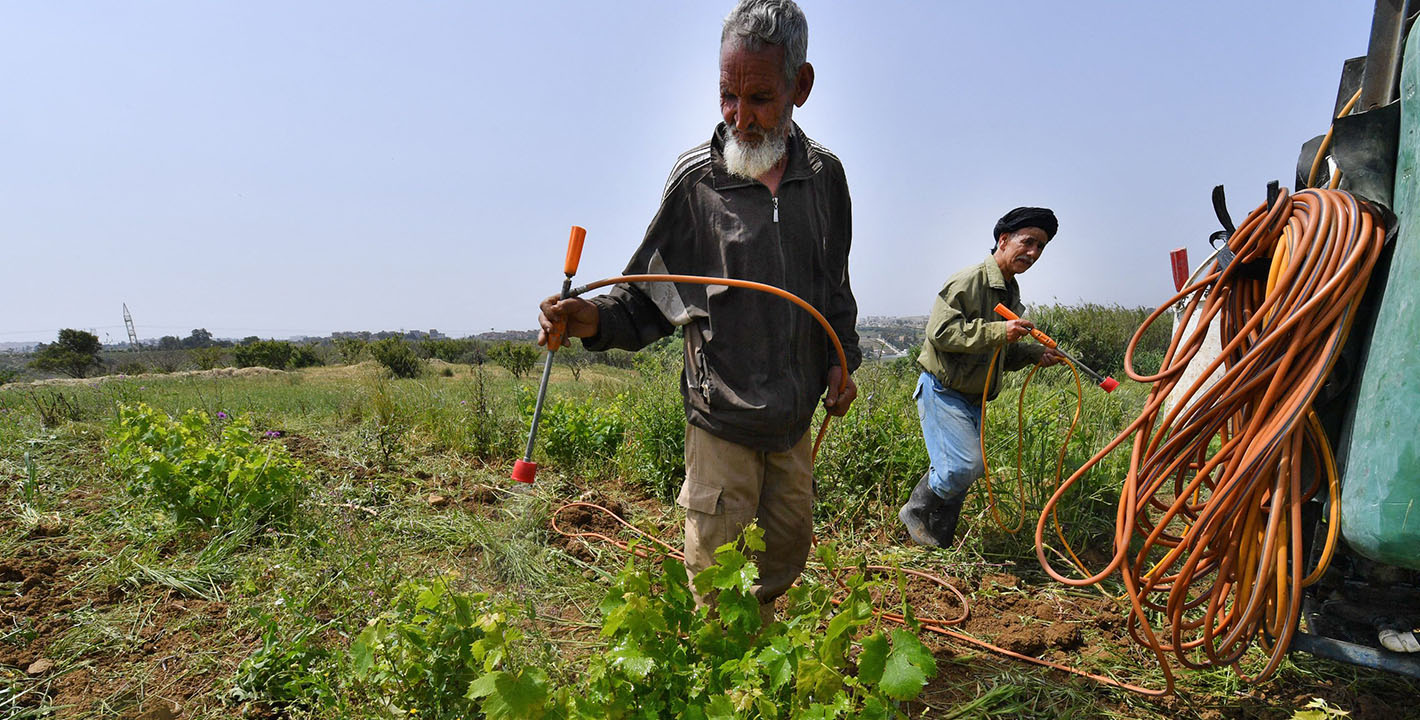
Understanding how farmers in the Oued Sahel-Soummam Valley grapple with climate change is essential for addressing the paradoxes through which adaptation, operating at both individual and institutional levels, deepens the region’s vulnerability and erodes the social fabric and agrarian identity that once defined life.

Ilyssa Yahmi