

Paper
Sinan Ülgen
Source: Getty
The EU should expect tenser relations with Turkey should Cyprus assume the bloc's presidency before a deal reunifying the divided island is reached.
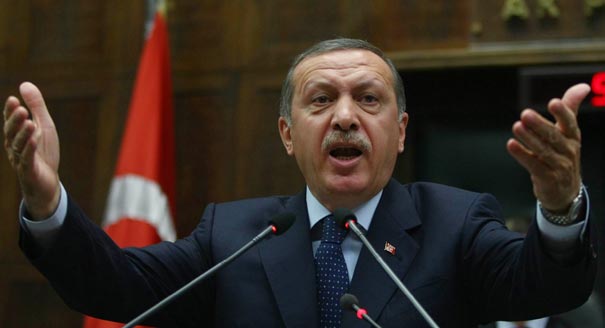
In his first official visit abroad to Turkish Cyprus since his reelection last month, Turkish Prime Minister Recep Tayyip Erdogan warned that his country's relations with the European Union "will be completely frozen" if Cyprus assumes the bloc's presidency before a deal reunifying the divided island is reached. "No one should expect us to sit on the same table with the Greek side even if they were holding the EU presidency," Erdogan said last week in northern Nicosia. He echoed Foreign Minister Ahmet Davutoglu’s previous statements that Turkey-EU ties would reach a "freezing point" if Cyprus assumes the presidency before settlement. The lack of a settlement on the Cyprus question continues to hinder Turkey’s accession to the EU. Fourteen chapters of the accession process are blocked due to Turkey’s refusal to open its ports to Greek Cypriot ships.
The Turkish prime minister’s statements come at a critical point for UN-sponsored peace negotiations on the island. UN Secretary-General Ban Ki-moon convened Turkish and Greek Cypriot leaders in early July to unveil his latest roadmap. The roadmap gives the two leaders until October to scale down their differences. The secretary-general would then decide whether sufficient progress has been made to warrant the launch of an international peace conference before the end of the year. The Peace Conference on Cyprus would seal the deal and prepare the ground for a referendum to take place on the island in the first half of 2012. The deal would need to be adopted and ratified before the second half of 2012, when Cyprus takes over the EU presidency.
Erdogan’s statements should be understood as an attempt to focus the international community’s attention on Cyprus. Policymakers in Ankara strongly support the UN-led process. But they also believe that the incentive structure for achieving a deal is flawed. As full EU members and the internationally recognized government of the island, Greek Cypriots have very little incentive to engage in comprehensive bargaining. Ankara, therefore, wants to underline the negative consequences of yet another failure in Cyprus for Turkey-EU relations. The hope is for the Turkey- friendly EU member states to put more pressure on the government in Nicosia to facilitate a lasting deal.
The prime minister’s statements also reflect the shifting balance of power between Ankara and Brussels. At a time when the EU is struggling with the Euro crisis and the economic collapse of some of the more fragile member-state economies, Turkey is emerging as a regional power on the back of sustained economic growth. The newfound assertiveness in Turkey’s foreign policy rhetoric is unavoidably starting to impact Turkey’s relationship with the EU. Turkey sees itself as less a candidate country for EU accession and more as a peer of the EU in the foreign policy sphere.
Against this backdrop, the intractability of the Cyprus problem is pushing the decision makers in Ankara to raise the stakes. After all, in the last round of the Cyprus talks, Turkey gained little from its pro-settlement behavior. Despite the Turkish side’s support for the settlement plan and Greek Cypriot No vote in the 2004 referendum, Cyprus ended up as an EU member state. Now Ankara seems to favor a controlled escalation of diplomatic tensions. Erdogan’s statements were a clear sign of this shift. Going forward, Ankara will continue to harden its rhetoric on Cyprus while remaining committed to an eventual settlement.

Senior Fellow, Carnegie Europe
Sinan Ülgen is a senior fellow at Carnegie Europe in Brussels, where his research focuses on Turkish foreign policy, transatlantic relations, international trade, economic security, and digital policy.
Recent Work
Sinan Ülgen
Carnegie does not take institutional positions on public policy issues; the views represented herein are those of the author(s) and do not necessarily reflect the views of Carnegie, its staff, or its trustees.
This will be the region’s most representative tournament, amid broad changes in its footballing landscape.

Issam Kayssi

Just look at Iraq in 1991.

Marwan Muasher
As Iran defends its interests in the region and its regime’s survival, it may push Hezbollah into the abyss.

Michael Young
Without structural reform, the organization, which is racked by internal rivalries, risks sliding into irrelevance.

Hesham Alghannam

A coalition of states is seeking to avert a U.S. attack, and Israel is in the forefront of their mind.
Michael Young