

Commentary
Just look at Iraq in 1991.
Marwan Muasher
Source: Getty
New Delhi should aim to become a leader in financial intelligence. But there are several things the central government needs to do before it can solidify that leadership.
As reflected in India’s move from a Neighborhood First policy to an Act East policy, Prime Minister Narendra Modi unequivocally wants India to assume an increased role in world affairs. Such aspirations entail more responsibilities in upholding the peace and prosperity of the world order. One such responsibility is protecting the integrity of the international economic system from illicit threats, such as corruption, money laundering, counterfeit currency smuggling, and tax evasion.
Financial intelligence is a field within the purview of the central government that helps Indian law enforcement and intelligence agencies understand the nature, capabilities, and intentions of entities of interest so as to identify such threats. Activities in this field include the collection, receipt, analysis, collation, and dissemination of intelligence, both foreign and domestic, related to financial services, taxes, international trade, and foreign and domestic currency.
New Delhi understands that protecting the integrity of the international economy is not a job for one country only; all states participating in this system must contribute and cooperate with one another. However, many countries do not have sufficient infrastructure or technology to monitor illicit financial threats within their own economies. Thus, through its membership in and sometimes chairmanship of various regional bodies, India has sought to empower its neighboring countries to develop and mature their own capabilities and financial intelligence apparatuses. In turn, it has become a leader in this field within the South Asian region.
However, in line with its foreign policy ambitions, New Delhi also should aim to become an international leader in financial intelligence. To solidify a claim to global leadership in this field, the central government must first reform its own financial intelligence apparatus, increase the number and scope of its international activities, and assume leadership of international organizations. Doing so would help New Delhi make a case to the international community for its leadership. To assess both the desirability and feasibility of an Indian bid for expanded leadership, it is useful to understand the trajectory of India’s international engagement in financial intelligence.
As economic liberalization took hold in India in the 1990s and the pervasiveness and complexity of illicit financial threats grew, the need to engage internationally in financial intelligence arose. Only during this period did New Delhi begin developing the requisite legal mechanisms and institutional infrastructure.
Lucrative drug trafficking in the 1980s motivated the international community to expand the concept of illicit finance to include proceeds gained from the transactions in illicit goods. The 1988 United Nations (UN) Vienna Convention, which India ratified in 1990, criminalized the financing of any offenses involving the illicit production, distribution, or sale of drugs. The following year, at the G7 summit in Paris, a group of countries came together to formalize an intergovernmental body to combat money laundering. As a result, the Financial Action Task Force (FATF) was established in 1989 to set standards and promote implementation of legal, regulatory, and operational measures to combat money laundering, terrorist financing, and other illicit financial threats. Thus, the international regime on anti–money laundering/counterterrorist financing (AML/CTF) came into existence.
In 1998, India officially entered the AML/CTF international regime by joining the Asia/Pacific Group on Money Laundering (APG), an FATF-style body focused on implementing AML/CTF initiatives in the Asia Pacific region. As required of all APG members, New Delhi underwent a mutual evaluation of its AML/CTF efforts in 2005. This process recognizes countries for meeting standard benchmarks, identifies weakness, and makes recommendations to rectify any deficiencies.
Between joining the APG and its APG mutual evaluation in 2005, New Delhi signed the UN International Convention for the Suppression of the Financing of Terrorism in 2000 and ratified it in 2003; it signed the UN Convention Against Transnational Organized Crime in 2002, ratifying it in 2011. In parallel, the central government changed the structure of its financial intelligence apparatus by passing the Foreign Exchange Management Act (FEMA) of 1999 and the Prevention of Money-Laundering Act (PMLA) of 2002. The former dictates the rules governing India’s foreign exchange market; the latter targets money laundering and terrorist financing.
Under the PMLA, New Delhi could appoint authorities to oversee implementation and administration of this legislation. Thus, in November 2004, the central government set up the Financial Intelligence Unit-India (FIU-IND) as the central national agency for coordinating and strengthening the efforts of national and international intelligence, investigation, and enforcement agencies in pursuing money laundering and related crimes. It became operational only in 2006.
In March 2007, the Union Cabinet approved FIU-IND’s ability to sign memorandums of understanding (MOUs) with its foreign counterparts to share financial intelligence within a structured framework. Subsequently, in May 2007 the Egmont Group—a united body of 155 FIUs that allows for the secure exchange of expertise and financial intelligence—admitted FIU-IND as a member. Having met a signature requirement of the FATF’s 40+9 recommendations and after a successful FATF mutual evaluation in 2010, New Delhi joined the organization, to which it had been an observer since 2006, as a member. Similarly, it later gained membership in the Eurasian Group on Combating Money Laundering and Financing of Terrorism (EAG), an FATF-style regional body for Eurasian states.
Amid the focus on AML/CTF, in 2009 New Delhi also joined the Global Forum on Transparency and Exchange of Information for Tax Purposes (or just the Global Forum) and agreed to implement its international standards on tax transparency and exchange of information. New Delhi later signed and entered into force the Convention on Mutual Administrative Assistance in Tax Matters (MAC) in January 2012 and joined the Multilateral Competent Authority Agreement on Automatic Exchange of Information in June 2015. Moreover, beginning in the 2010s, New Delhi switched from signing Double Tax Code/Double Tax Avoidance Agreements (DTC/DTAAs), which are primarily concerned with allocating taxation rights, to Tax Information Exchange Agreements (TIEAs), which focus exclusively on information sharing. Currently, New Delhi has entered into DTC/DTAAs, TIEAs, and the MAC with more than 130 countries, including tax havens.
New Delhi joined the international AML/CTF and tax compliance regimes to learn best practices from other member nations and contribute to the collective effort against these threats. However, given its cultural history and geographical location, it also possessed unparalleled expertise on understanding the methods and sources of various illicit financial crimes. Realizing its capabilities, New Delhi would do more than just sign international conventions and function as a passive member within these organizations.
Since joining the FATF and EAG in 2010, New Delhi has actively looked to lead on the issue of financial intelligence within South Asia. From 2010 to 2012, New Delhi was the country co-chair of the APG and hosted an APG plenary session in 2011 in Kochi. It was at that session where then Union minister Pranab Mukherjee noted that India had accepted enhanced responsibility and would continue to play a proactive role internationally in AML/CTF. Currently, the central government co-chairs the APG’s Operations Committee, which oversees the APG’s understanding of illicit finance typologies.
Similarly, within the EAG, New Delhi has moved from being an observer to a leader. In 2011, it signed an agreement with the EAG to enhance, inter alia, cooperation on AML/CTF measures. Furthermore, in 2013, the EAG asked New Delhi to lead a project that described the typology of “Money Laundering Through Securities Markets.” Praising New Delhi’s active status in the EAG, the organization’s members awarded India the presidency of the EAG from November 2013 to November 2015. New Delhi then hosted the twenty-fifth EAG plenary meeting in 2016.
Outside of these AML/CTF regional bodies, New Delhi has driven the issue of financial intelligence for the South Asian region within international bodies and other regional organizations that focus on economic and geopolitical cooperation. FIU-IND represented the Asian region for two terms (2011 to 2015) on the Egmont Committee. Currently, New Delhi is the leader of the Counter-Terrorism and Transnational Crime sector of the Bay of Bengal Initiative for Multi-Sectoral Technical and Economic Cooperation (BIMSTEC), which has a sub-group that meets on AML/CTF issues. Furthermore, the central government leads the Global Forum secretariat, shares vice chairmanship of the Global Forum’s Peer Review and Automatic Exchange of Information (AEOI) groups, and is a member of the Steering Group.
In addition to assuming leadership roles, New Delhi has consistently sought to offer technical assistance within South Asia. The central government has been willing to help countries strengthen their respective FIUs and establish better capital market monitoring and surveillance through sophisticated IT tools. For example, in 2011, senior officials from FIU-IND were part of a high-level mission to Bhutan to discuss that country’s implementation of AML/CTF measures and provide technical assistance for setting up its FIU. More recently, in 2015, FIU-IND assisted Sri Lanka’s FIU in investigating $2 billion of undeclared foreign assets stashed overseas by family members and aides of former president Mahinda Rajapaksa.
From leadership positions to offers of technical assistance, New Delhi has gradually assumed international responsibility on matters related to financial intelligence. Given the greater development of the Indian economy and bureaucracy vis-à-vis other South Asian countries, assuming regional leadership has been a natural progression. However, becoming more than just a regional leader requires a discussion about New Delhi’s capabilities and intentions in this space.
This question can be answered both from the perspective of New Delhi and that of the international community. Becoming an international leader in financial intelligence would allow New Delhi to build on the gains it has already accrued from its current international engagement and further its domestic agenda and foreign policy objectives. Most important, other countries, which view New Delhi as a responsible, international leader in this field, may feel more comfortable and willing to share intelligence with it. Current statistics regarding information exchanges support this view. In 2017–2018, FIU-IND, which has currently signed MOUs with thirty-six FIUs, registered a new high in the number of formal information exchanges with other FIUs―120 requests received from and 159 requests sent to foreign FIUs. In addition to formal mechanisms, FIU-IND exchanges information with other foreign FIUs spontaneously based on reciprocity. During an eleven-year period, from 2006–2007 to 2016–2017, there were 429 spontaneous disclosures from foreign FIUs and sixty-four from FIU-IND. These information exchanges are important because they can help New Delhi better understand the size and scope of its illicit economy.
The intelligence derived from this information sharing can help New Delhi carry out a signature priority of Prime Minister Narendra Modi’s domestic policy agenda: curbing corruption and the generation and flow of black money. Specifically, the central government can use this intelligence to take more enforcement, diplomatic, and judiciary actions, such as interdictions, arrests, prosecutions, extradition requests, sanctions, and asset forfeitures. For example, in 2016–2017, two foreign FIUs shared with New Delhi certificates of incorporation of eleven legal entities that had been listed in the Panama Papers. (These papers detailed financial and attorney-client information for more than 210,000 offshore entities.) FIU-IND shared this information with the Central Board of Direct Taxes (CBDT), whose chairman leads a multi-agency group (MAG) to investigate Indian persons included in the Panama Papers. To what extent this information specifically helped the MAG in its investigative efforts is unclear. However, thanks to the information it gathered and received, the MAG has opened 147 cases as of November 2017, which has led to the detection of undisclosed credits of about 792 crore rupees (worth $125.7 million) and the filing of five criminal prosecution complaints.
More recently, FIU-IND, through its foreign counterparts, has identified two bank accounts in Belgium belonging to Nirav Modi, the perpetrator of a massive 11,400 crore rupee (about $1.67 billion) bank scam in February 2018. FIU-IND then shared this information with the Enforcement Directorate (ED), which asked the Belgian authorities to freeze those accounts; the authorities honored that request. Additionally, FIU-IND helped the ED and the Income Tax Department with their investigation of Sanjay Bhandari, a former arms dealer, by asking its counterparts in Europe and the Middle East for information about Bhandari’s assets abroad. The ED later seized 26.6 crore rupees ($3.89 million) of assets to offset his undisclosed deposits in foreign bank accounts in the United Arab Emirates (UAE), beneficial ownership of companies incorporated in the UAE, and properties based in the UAE and the United Kingdom.
Through its international participation in and contributions to the field of financial intelligence, New Delhi can advance other foreign policy objectives. The central government can use the international stage to advocate for cracking down on terrorist financing, namely as it pertains to Pakistan-based terrorist organizations, like Lashkar-e-Taiba and Jaish-e-Mohammed (JeM). Particularly, New Delhi has been frustrated at the UN Sanctions Committee, for which China, as a veto-wielding member, has repeatedly blocked the designation of JeM’s leader Masood Azhar as a global terrorist.
Furthermore, it can provide technical assistance and offer its expertise to improve the financial intelligence capabilities of countries beyond South Asia. In turn, these countries could gather more information about their underground economies, deter future threats to their financial systems, and recoup tax revenues from undisclosed assets. Together, these benefits promote better financial governance and transparency, which in turn can strengthen investor confidence and lead to economic growth. More symbolically, their gratitude for such assistance may lead these countries to view New Delhi favorably, thus opening the possibility for stronger diplomatic relations and cooperation on other issues.
From the international community’s viewpoint, if the central government could scale up its technical assistance and share its best practices globally, other countries would be more inclined to view India as an international leader. Indeed, New Delhi is on the path toward success in this arena. In November 2015, New Delhi held the third Networking the Networks Conference of the United Nations Office on Drugs and Crime (UNODC). This annual conference, whose iteration in India focused on how financial intelligence units counter illicit money flows, resulted from a visit between the UNODC Executive Director and Union Finance Minister Arun Jaitley. In fact, during that visit, the UNODC executive director said that India should emerge as the leading player in countering transnational organized crime, not only in this region but also beyond, given its location and expertise as a transit point for drugs and illicit funds.
At the same time, to increase international regard for India as a leader, it must continue to develop its technical capabilities and human capital. Commendably, the central government has improved in financial intelligence within the last five years. In 2016–2017, FIU-IND disseminated roughly 57,000 suspicious transactions reports (STRs), a 272-percent increase from those disseminated in 2013–2014. Collectively, during this four-year span, those STRs led to the detection of more than 16,000 crore rupees (about $2.34 billion). Yet this amount pales in comparison to that representing the overall illicit economy in India, which, according to a 2012 study commissioned by the central government, is likely greater than 1 million crore rupees (approximately $146.23 billion). Although there is no consensus on the practice of measuring a country’s illicit economy, and its measurement suffers from insufficient data, most estimates, such as that calculated in a 2017 study by Global Financial Integrity (GFI), are multiple orders of magnitude greater than India or any other country have detected. For this reason, before the central government can become an international leader in financial intelligence, it must have a better handle on the size and scope of its own shadow economy.
New Delhi’s trajectory on international engagement of financial intelligence is quite remarkable, considering that the Indian economy has liberalized only within the last three decades. New Delhi should prioritize reforms to its financial intelligence apparatus and legal system over any desire for expanded international engagement. Enacting the recommendations above, though, requires political will, which, given the central government’s history of corruption, cannot be underscored enough. However, should it follow through on these actions, New Delhi can most certainly become an international leader on this issue. Such a position can yield tangible benefits with limited costs, possibly requiring only marginally more manpower and financial resources. However, even outside of a reductive cost-benefit analysis, becoming an international leader on this issue could help New Delhi attain recognition from the international community as a rising global power—a vision Modi and his team have charted. Global powers already appreciate New Delhi because of its leading international role in fighting climate change. If New Delhi takes on the responsibility of maintaining the integrity of the global financial system, it would add to this already favorable view.
Neil Noronha is a Henry Luce scholar, and a visiting scholar with Carnegie India. He previously worked in former U.S. president Barack Obama’s administration, both at the National Security Council Staff and the Department of Defense. He graduated from Georgetown University with a BS in foreign service and an MA in security studies. He tweets @NeilNoronha2.
He would like to express his gratitude to the staff of Carnegie India, particularly Constantino Xavier, Saksham Khosla, and Rhea Menon, as well as all of those interviewed, to include Ramanand Garge, Kabir Taneja, Gaurav Bansal, Aditya Phatak, Michael Rosenthal, Sushant Sareen, Dhruva Jaishankar, Colonel Vivek Chadha, Ashish Joshi, Kevin Gomez, and Abhinav Pandya.
Neil Noronha
Neil Noronha is a Henry Luce scholar, and a visiting scholar with Carnegie India.
Carnegie does not take institutional positions on public policy issues; the views represented herein are those of the author(s) and do not necessarily reflect the views of Carnegie, its staff, or its trustees.

Just look at Iraq in 1991.

Marwan Muasher

A coalition of states is seeking to avert a U.S. attack, and Israel is in the forefront of their mind.

Michael Young

Baku may allow radical nationalists to publicly discuss “reunification” with Azeri Iranians, but the president and key officials prefer not to comment publicly on the protests in Iran.

Bashir Kitachaev

The country’s leadership is increasingly uneasy about multiple challenges from the Levant to the South Caucasus.

Armenak Tokmajyan
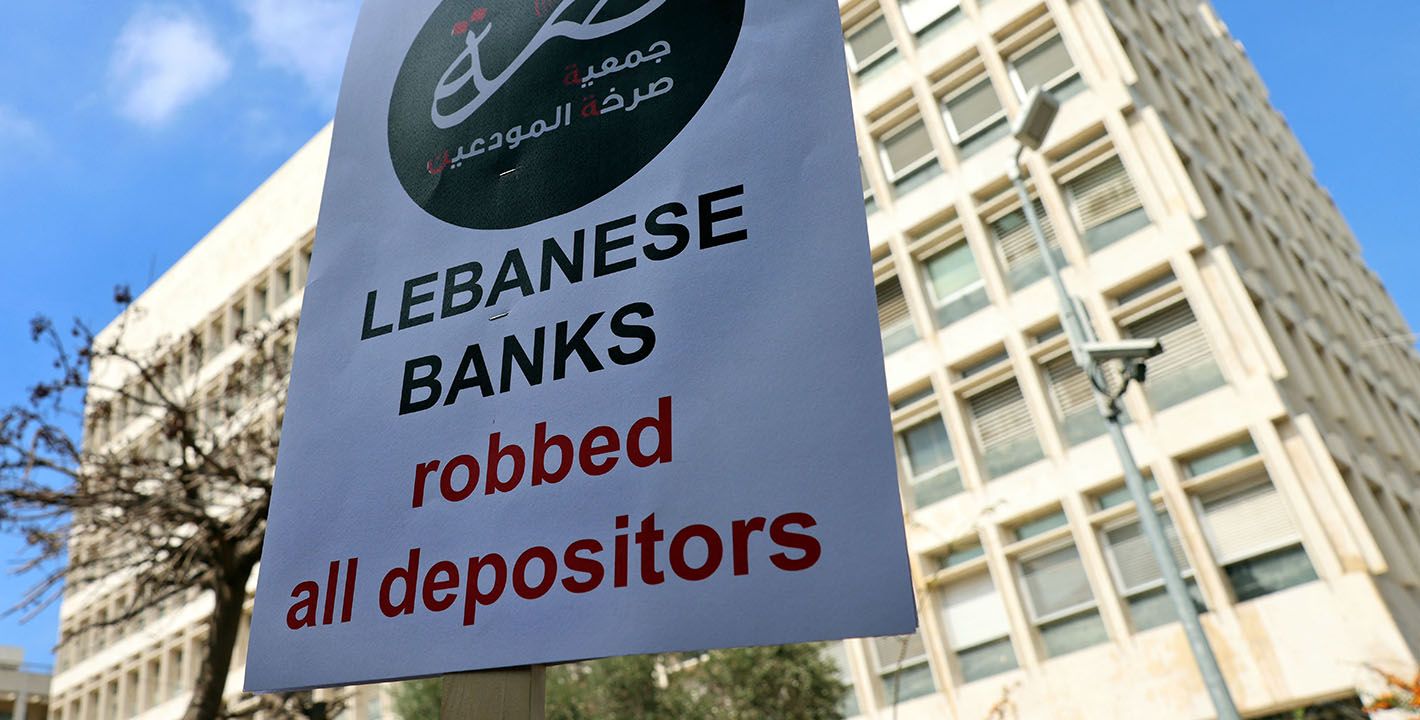
In an interview, Ishac Diwan looks at the merits and flaws in the draft legislation distributing losses from the financial collapse.
Michael Young