

Article
Carole Nakhle
{
  "authors": [
    "Carole Nakhle"
  ],
  "type": "legacyinthemedia",
  "centerAffiliationAll": "dc",
  "centers": [
    "Carnegie Endowment for International Peace",
    "Malcolm H. Kerr Carnegie Middle East Center"
  ],
  "collections": [],
  "englishNewsletterAll": "menaTransitions",
  "nonEnglishNewsletterAll": "",
  "primaryCenter": "Malcolm H. Kerr Carnegie Middle East Center",
  "programAffiliation": "MEP",
  "programs": [
    "Middle East"
  ],
  "projects": [
    "Carnegie Oil Initiative"
  ],
  "regions": [
    "Gulf",
    "Middle East"
  ],
  "topics": [
    "Economy",
    "Climate Change"
  ]
}
Source: Getty
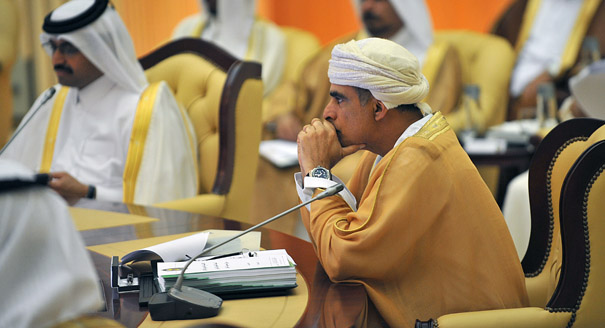
Oman recently became the first Middle Eastern country to join the very small club of unconventional oil and gas producers, currently led by the United States.
Source: Geopolitical Intelligence Services
In the global landscape of oil and gas markets, the Sultanate of Oman is dwarfed by its Middle Eastern neighbors. This is hardly surprising given that its proven oil and gas reserves are a tiny fraction of those of its peers. With a long-standing investment-friendly policy, however, the sultanate has been successful in deploying the latest technology not only to reverse its oil production decline, but also to reach record levels and tap unconventional resources trapped in some of the most complex and deepest geological formations known in the industry.
Oman has been a global leader in the application of Enhanced Oil Recovery, or EOR (also called tertiary recovery) technology. One of Petroleum Development Oman’s oil fields, the Qarn Alam, is the world’s first full-field steam injection EOR project and also the largest of its kind.Oman recently became the first Middle Eastern country to join the very small club of unconventional oil and gas producers, currently led by the United States. In September 2017, production started at its $16 billion Khazzan tight gas field, the largest-scale unconventional gas project in the Middle East.
The full article, originally published by Geopolitical Intelligence Services, is available here.
Former Nonresident Scholar, Middle East Center
Nakhle was a nonresident scholar at Carnegie Middle East Center, specializing in international petroleum contracts and fiscal regimes for the oil and gas industry, world oil and gas market developments, energy policy, and oil and gas revenue management.
Recent Work
Carole Nakhle
Carole Nakhle
Carnegie does not take institutional positions on public policy issues; the views represented herein are those of the author(s) and do not necessarily reflect the views of Carnegie, its staff, or its trustees.

The Plaza Accord was not an externally imposed punishment of Japan but part of a broader restructuring that Japanese economists and policymakers themselves recognized was necessary. Its effects were undermined, however, when Tokyo responded to the resulting slowdown with policies that exacerbated investment, credit expansion, and the very imbalances the adjustment was intended to resolve.

Michael Pettis

The Horn of Africa countries are among those facing a new security calculus.


Andrew Leber, Lesley Anne Warner

A summer of escalation in the Black Sea has hurt Ukraine economically and is exacerbating world food security. A truce is needed—as is a broader reframing of Europe’s Ukraine strategy.

Thomas de Waal

As the U.S. stumbles in its war with Iran, we are likely to see an acceleration of its disengagement from the region.

Michael Young

The Bureau of Industry and Security needs to adjust its focus and practices to maintain its position as the U.S. government’s primary champion of international technological competition.

Geoffrey Irving