

Commentary
Richard Youngs
{
  "authors": [
    "Richard Youngs"
  ],
  "type": "other",
  "centerAffiliationAll": "dc",
  "centers": [
    "Carnegie Endowment for International Peace",
    "Carnegie Europe"
  ],
  "collections": [
    "Turkey’s Transformation",
    "Europe’s Eastern Neighborhood",
    "Europe’s Southern Neighborhood",
    "Civic Activism"
  ],
  "englishNewsletterAll": "ctw",
  "nonEnglishNewsletterAll": "",
  "primaryCenter": "Carnegie Europe",
  "programAffiliation": "EP",
  "programs": [
    "Europe"
  ],
  "projects": [],
  "regions": [
    "Middle East",
    "Europe",
    "Türkiye",
    "Eastern Europe",
    "North Africa",
    "Egypt",
    "Ukraine",
    "Western Europe",
    "Iran"
  ],
  "topics": [
    "Foreign Policy",
    "Democracy"
  ]
}
Source: Getty
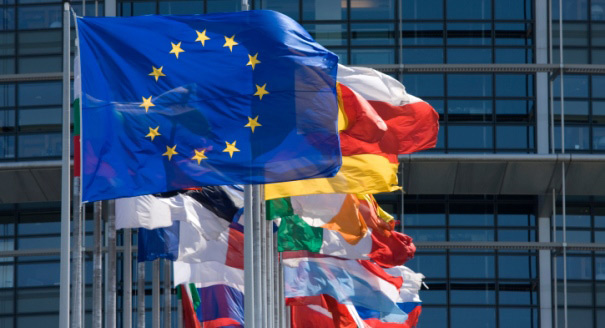
The EU’s external financing instruments should be improved to make the union’s civil society support efforts more politically effective and more closely aligned with strategic aims.
Source: European Parliamentary Research Service
EU support to civil society in Turkey, Ukraine and Egypt has improved in recent years but now struggles to meet a series of new challenges. Funding for civil society in these three countries is now delivered with greater flexibility and to a wider range of recipients than previously.
Amounts allocated to civil society are significant, if rather modest as an overall share of the external financing instruments relevant to the three cases. Support to civil society actors has undoubtedly been valuable, even if it has not been sufficient to avoid complications to political reform in these three countries or to contribute in a major way to the EU’s stated strategic objectives.In Turkey and Egypt, external support has done little to temper government assaults against civil society. In both these cases, the EU has shown some creativity in an effort to circumvent the new obstacles to external support. Yet on-the-ground support has been effective only at the margins, not least because European strategic and diplomatic engagement in many senses now pulls in the opposite direction to the kind of reform objectives associated with civil society.
In Ukraine, the EU has helped foster an impressive degree of civil society dynamism and this has been a leading edge of the country’s reform process since 2014. At the same time, EU support to civil support has in other ways played into and magnified the shortcomings and imbalances of Ukraine’s reform process.
Neither radical simplification of the EFIs nor a dedicated civil society instrument would necessarily improve civil society support, and may involve serious drawbacks.
In re-designing its financing instruments the EU needs to find procedural ways of helping link civil society more effectively with other reform-oriented aid; support new civic actors; temper the current assault on civil society organisations; and establish more nuanced links between civil society and strategic goals.
The EU external financing instruments should be reformed with a number of considerations in mind:

Senior Fellow, Democracy, Conflict, and Governance Program
Richard Youngs is a senior fellow in the Democracy, Conflict, and Governance Program, based at Carnegie Europe. He works on EU foreign policy and on issues of international democracy.
Recent Work
Richard Youngs

Richard Youngs, Erik Jones, Dan Baer, …
Carnegie does not take institutional positions on public policy issues; the views represented herein are those of the author(s) and do not necessarily reflect the views of Carnegie, its staff, or its trustees.
Washington needs to recognize that influence in the Western Hemisphere comes from presence, delivery, and reliability. It also must recognize that while the United States remains the key external actor, it no longer operates in a permissive environment and cannot presume deference from regional players who have other options, namely China.
Juan S. Gonzalez

Minsk clearly expected the dialogue with Washington to yield more results, in particular the lifting of EU sanctions and permission to export potash.

Artyom Shraibman

A summer of escalation in the Black Sea has hurt Ukraine economically and is exacerbating world food security. A truce is needed—as is a broader reframing of Europe’s Ukraine strategy.

Thomas de Waal

As the U.S. stumbles in its war with Iran, we are likely to see an acceleration of its disengagement from the region.

Michael Young
Why governance of rapidly evolving technology will be distributed and complex.


Stewart Patrick, Scott Singer