

Commentary
Alexandra Prokopenko
{
  "authors": [
    "Alexandra Prokopenko"
  ],
  "type": "commentary",
  "blog": "Carnegie Politika",
  "centerAffiliationAll": "dc",
  "centers": [
    "Carnegie Endowment for International Peace",
    "Carnegie Russia Eurasia Center"
  ],
  "collections": [],
  "englishNewsletterAll": "ctw",
  "nonEnglishNewsletterAll": "",
  "primaryCenter": "Carnegie Russia Eurasia Center",
  "programAffiliation": "russia",
  "programs": [
    "Russia and Eurasia"
  ],
  "projects": [],
  "regions": [
    "Russia",
    "Caucasus"
  ],
  "topics": [
    "Foreign Policy",
    "Economy"
  ]
}
Source: Getty
Given Ukraine’s successful counterattack, the fighting there isn’t going Russia’s way. Nor is the gas supply situation in Europe nearly as grim as Russian propaganda makes out. In these circumstances, Putin finds he does not have so many ways of putting pressure on the West at his disposal. Threatening to torpedo the grain deal is one of his few remaining options.
Less than two months after a deal was finally reached to restart crucial grain exports out of Ukraine’s Black Sea ports, the Russian leadership is threatening to pull out of the agreement on the dubious grounds that the grain is not being sent where it was meant to be.
Moscow’s withdrawal from the deal would deprive Ukraine of a major part of its hard-currency revenues, and will drive up global food prices and inflation in Europe. Russia’s losses, on the other hand, look set to be insignificant. The country has already lost its status as a reliable partner in the eyes of most countries, while any reduction in hard-currency revenues from selling grain would be inconsequential amid the enormous trade surplus it is currently seeing from soaring energy prices.
The benefits for Moscow of signing the grain deal were always modest. It’s likely that Russian President Vladimir Putin simply wanted to have an additional means of exerting pressure on the West. From his point of view, now is the time to wield that power. It’s telling that the Russian president’s threats to withdraw from the deal have coincided with the Ukrainian army’s successful counterattack in the Kharkiv region, and with reports of decent gas storage levels in Europe.
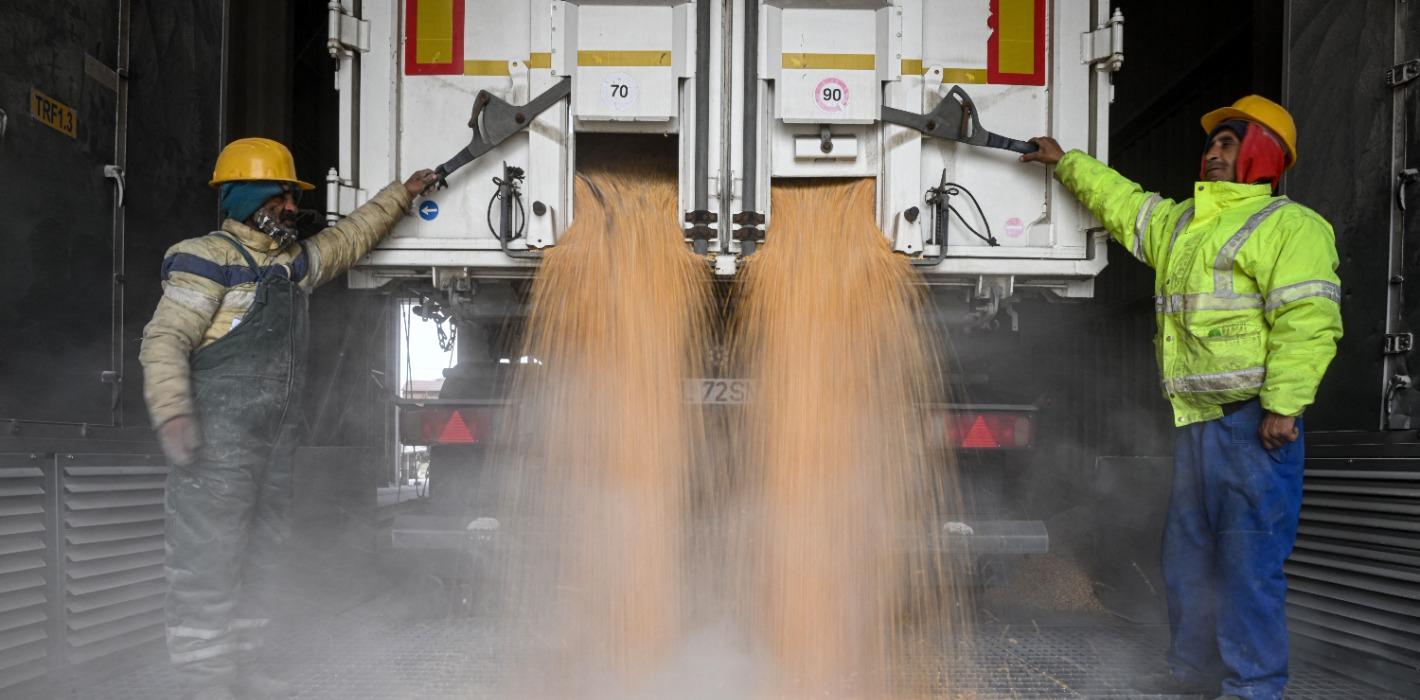
Putin has said the grain deal is under review by Moscow because Ukrainian grain is being shipped not to the Middle East and Africa, where it is most needed, but to Europe. At the time of his claim, 108 ships had left Ukrainian ports, with 47 percent of the grain going to Turkey and Asian countries, 17 percent heading to Africa, and 36 percent going to the EU. In any case, as Putin himself acknowledged in the same comments, neither of the two documents Russia signed to enable the export of Ukrainian grain specified any destinations, belying the Kremlin’s apparent concern over the food situation in the world’s poorest countries.
Right now, drought in southern Europe means that Ukrainian grain is in very high demand on the global market. Soon after the deal was signed, Ukraine’s grain exports were almost back to their prewar pace. In September, Kyiv is expected to export about 4 million tons, according to Andriy Sizov, head of the SovEcon analysis center: not so far behind the 6–7 million tons it exported before the war, and far more than the 1–1.5 million tons it managed to export before the deal was signed.
For Ukraine, the deal isn’t just a source of much-needed hard currency (the country’s GDP is expected to drop by 35–40 percent this year). It’s also a chance to make some space for this year’s harvest, which is forecast to exceed 53 million tons of grain and 15 million tons of oilseed crops: far more than Ukraine’s domestic requirements.
Grain exports from Russia, meanwhile, fell by 22 percent in July and August to 6.3 million tons. Although food supplies are exempt from Western sanctions in the interests of combating food insecurity, bankers and insurers are wary of doing business with Russia, while shipping lines are reluctant to risk sending their vessels into a conflict zone. Many jurisdictions have closed their ports to Russia-linked ships, industry figures say.
Other factors making Russian grain less competitive on the global market are an overly strong ruble, export tariffs, and a record harvest (about 95 million tons of wheat), which must be stored somewhere: for the first time in a long while, Russia is facing a shortage of storage space. The country is unlikely to see revenues comparable with last year, when it made $11.5 billion from grain exports.
The fertilizer market is faring little better. Production of potash fertilizer fell by a quarter in the first seven months of the year, while their main producer, Russia’s Uralkali, is experiencing logistical and transactional problems. The slump in production is primarily the result of a 25–30 percent reduction in exports.
Technically, the company is not subject to sanctions, since the U.S. Treasury issued a general license back in March exempting agricultural commodities, including the production, transportation, and sale of fertilizers. But nearly a third of Uralkali’s exports went through Baltic ports, which are now refusing to work with Russian companies. Asian buyers, in contrast, are ready to buy more Russian fertilizer, but only at a significant discount.
Ultimately, the lack of formal prohibitions on working with Russian agricultural companies and fertilizer producers matters little at a time when the entire Russian economy has become toxic. Banks are either slow to process transactions, or refuse outright to work with Russian firms. Foreign buyers try to find alternatives to Russian suppliers, and companies from the United States and Canada are quickly filling those new niches.
Even if Ukrainian grain and fertilizer disappear from the market, it’s by no means guaranteed that they can be replaced with Russian ones. Western companies and their clients are prepared to bear additional costs in order to avoid working with Russian businesses, especially while the war in Ukraine continues.
In any case, Russia’s threat to drop out of the grain deal is already having an effect. In the last few days, Putin has received phone calls from French President Emmanuel Macron, German Chancellor Olaf Scholz, and UN Secretary-General Antonio Guterres. The grain issue is also likely to come up in bilateral meetings at the UN General Assembly in New York from September 20.
If the deal collapses, it won’t just be a major blow for Ukraine, but for the EU too. It will lead to an increase in wheat prices, which will inevitably be reflected in inflation levels, which are already at a record high in the Eurozone: 9.1 percent year on year in August. Food prices are the second biggest factor driving European inflation after energy prices.
Right now, given Ukraine’s successful counterattack, the fighting there isn’t going Russia’s way. Nor is the gas supply situation in Europe nearly as grim as Russian propaganda makes out: the continent’s underground storage facilities are almost full, despite Moscow having turned off the Nord Stream pipeline, and although prices are high, European governments are prepared to pay in order to end their dependence on Russia once and for all. In these circumstances, Putin, who is used to engaging in dialogue from a position of strength, finds he does not have so many ways of putting pressure on the West at his disposal. Threatening to torpedo the grain deal is one of his few remaining options.

Senior Fellow, Carnegie Russia Eurasia Center
Alexandra Prokopenko is a senior fellow at the Carnegie Russia Eurasia Center.
Recent Work
Alexandra Prokopenko
Alexandra Prokopenko
Carnegie does not take institutional positions on public policy issues; the views represented herein are those of the author(s) and do not necessarily reflect the views of Carnegie, its staff, or its trustees.

Despite a new textbook, an influx of Russian teachers and managers, and an end to the teaching of Ukrainian, the Kremlin is unlikely to have “reprogrammed” locals.

Konstantin Skorkin

For every ruble allocated to social policy, health, and education in 2027, double that amount is earmarked for the army, the police, and the security services.
Alexandra Prokopenko

Cargo traffic through Russia’s Northern Sea Route has increased because of the disruption caused by the conflict in the Middle East, the Ukraine war, and U.S.-China tensions.

Mikhail Korostikov
An analysis of traffic accident data suggests that Ukrainian drone attacks caused a material but not disastrous fall in Russian gasoline consumption over the summer.

Sergey Vakulenko

Sergei Kiriyenko used Russia’s parliamentary vote to further hone his strategy of corporate mobilization that is designed to maximize votes for United Russia.

Andrey Pertsev