

Commentary
Alexandra Prokopenko
{
  "authors": [
    "Alexandra Prokopenko"
  ],
  "type": "commentary",
  "blog": "Carnegie Politika",
  "centerAffiliationAll": "dc",
  "centers": [
    "Carnegie Endowment for International Peace",
    "Carnegie Russia Eurasia Center"
  ],
  "collections": [],
  "englishNewsletterAll": "ctw",
  "nonEnglishNewsletterAll": "",
  "primaryCenter": "Carnegie Russia Eurasia Center",
  "programAffiliation": "russia",
  "programs": [
    "Russia and Eurasia"
  ],
  "projects": [],
  "regions": [
    "Middle East",
    "Türkiye",
    "Russia",
    "Caucasus"
  ],
  "topics": [
    "Foreign Policy",
    "Economy"
  ]
}
Source: Getty
Having declined to join Western sanctions against Russia, Turkey has become the only remaining window to Europe for Russian companies and individuals.
After Moscow withdrew from the Ukrainian grain deal, it took Turkish President Recep Tayyip Erdogan just two days to get Russia to return to the agreement and abandon the idea of blocking the export of Ukrainian grain. The speed of this reversal shows just how much Ankara’s influence on Moscow has grown in the last eight months, drastically shifting the relationship balance in Turkey’s favor.
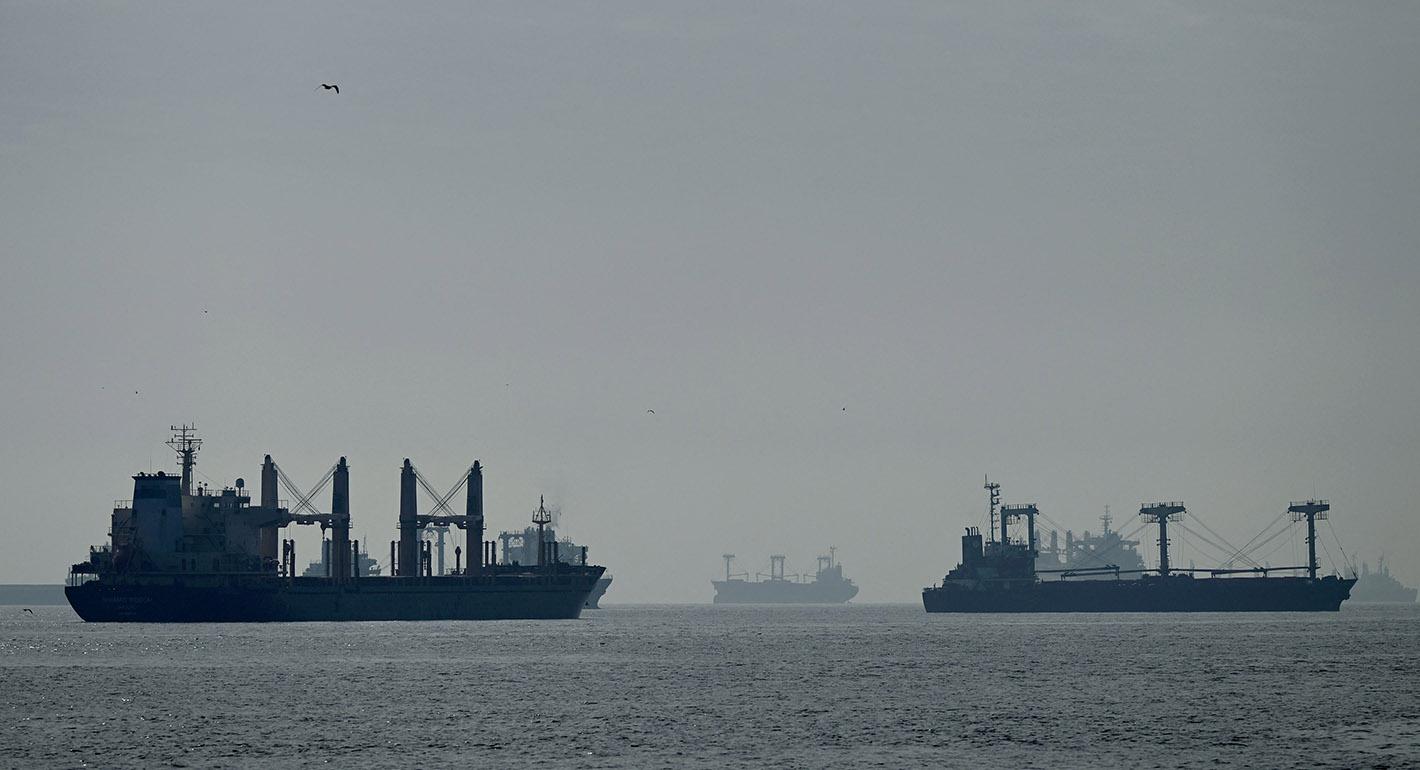
Moscow originally agreed to unblock Ukraine’s ports to allow the export of grain back in the summer, when Russia appeared to have the advantage in the war. The Kremlin was urged to sign the agreement by Turkey, key importers of Russian and Ukrainian grain in the Middle East, and the UN.
It was also in Russia’s interests to agree to the deal. The simultaneous loosening of sanctions to allow exports of Russia’s own grain and fertilizer wasn’t officially billed as part of the deal, but was agreed with the United States and the EU.
The grain deal also provided the Kremlin with one more precious lever of influence over the West. Russian President Vladimir Putin first started hinting that Russia might withdraw from the agreement back in September—shortly after the Ukrainian army launched its successful counteroffensive.
The Kremlin’s official reason for criticizing the deal was that Ukrainian grain was supposedly largely being sent to Europe, rather than the poorer countries where it was needed more, though the destination for the Ukrainian grain was not part of the terms of the agreement.
In reality, Putin was irritated that despite the lack of formal sanctions, European companies did not resume business as usual with their Russian counterparts. Banks continued to delay transactions, or simply refused to work with Russian entities; several cargos of fertilizer remained blockaded in Baltic ports; and foreign buyers looked for alternatives to Russian suppliers.
Russia found an excuse to use the grain deal as a lever over the West on October 29, following an attack on the Crimean port of Sevastopol. The Russian military said that Ukraine had launched a drone attack from a civilian vessel sailing through the corridor designated for grain cargo, and that ships escorting the grain cargoes had been damaged in the attack. Moscow called it a terrorist attack, and suspended its participation in the deal.
In exchange for returning to the deal, Putin demanded written security guarantees for both military and civilian ships within the grain corridor. There were also non-public demands, such as other banks restoring relations with the state-owned Rosselkhozbank (Russian Agricultural Bank). The bank had previously played no significant role in the international trade of grain and fertilizers, but the Kremlin has apparently decided to turn it into a one-stop shop for payments for agricultural exports, thereby protecting it from sanctions in the same way it protected Gazprombank by channeling payments for gas exports through it.
In the couple of days following Russia’s withdrawal from the deal, Erdogan announced that grain could be exported without Russia’s involvement, and spoke to Putin by phone, after which Moscow suddenly did a U-turn and returned to the deal.
Furthermore, the Russian president promised that “in any case,” Russia would not prevent the export of Ukrainian grain to Turkey. In other words, even if Russia again withdraws from the deal, it will still be possible to ship Ukrainian grain out of Black Sea ports. There was much talk in diplomatic circles that Ankara had “leaned heavily” on Moscow, reflecting the Kremlin’s new weakness.
At the beginning of this year, Turkey needed its partnership with Russia more than Russia did. Russians made up the bulk of tourists vacationing in Turkish resorts (about 4 million in the first nine months of this year), and Turkish diplomats were begging Moscow to lift sanctions on Turkish agricultural produce. It was Russia that laid the TurkStream gas pipeline to Turkey along the Black Sea bed; Russia’s state atomic agency Rosatom is building a nuclear power plant (Akkuyu) for Turkey; and Moscow is Ankara’s key partner in the Caucasus, Syria, and Libya.
Back then, Russia could afford to be choosy: in 2021, Turkey was not even among Russia’s top ten biggest foreign trade partners (it was in eleventh place). All of that changed with Russia’s invasion of Ukraine. The trade turnover between Russia and Turkey doubled in the first nine months of this year from the year before to reach $47 billion, and at the end of the third quarter of this year, Turkey may well have become one of Russia’s top three trading partners, behind China and Belarus only—and gaining on Germany.
Tech goods saw particularly stratospheric growth: Russia now depends on Turkey for equipment maintenance and other manufacturing processes, since tech imports to Russia from the rest of the world—including China—have fallen significantly. Turkey appears to have become a trans-shipment hub for deliveries of tech goods from Europe. Italy, for example, has significantly increased its supply of goods to Turkey, while Turkish exports to Russia have increased by similar amounts. Having declined to join Western sanctions against Russia, Turkey has become the only remaining window to Europe for Russian companies and individuals.
Meanwhile, Turkstream is now the only route for transporting Russian gas to Europe that is fully controlled by Moscow, following the damage caused to both Nord Stream pipelines by recent explosions. Now Moscow and Ankara have started discussing the creation of a gas hub in Turkey.
Russian propaganda presents the growth in cooperation with Turkey as proof that Russia is not isolated on the international stage. But it also has its flip side. The Kremlin can no longer ignore Erdogan’s own foreign policy ambitions and interests. Russian companies will have to provide their Turkish partners with significant discounts to make sure they don’t close the last window onto the European market.
There will also be a price to pay at home. Turkey has never been very popular among Russian ultra-patriots, and now they are outraged by their country’s return to the grain deal, which they see as a sign of weakness.
The Western sanctions that came in response to Russia’s invasion of Ukraine and the breakdown in relations with the West have seen Russia’s cooperation with several non-Western states broaden dramatically. Compared with the previous five years, Russia’s average monthly trade volumes this year have quadrupled with India, doubled with Turkey, and increased by more than 60 percent with China. Now the possible loss of those partners would not just deprive Moscow of a considerable portion of its hard currency revenues, it would also accelerate the rate at which the Russian economy lags behind in terms of technology, due to the deficit of imported equipment and components.
The Kremlin still has various tools for putting pressure on the West in its arsenal, including nuclear blackmail, but Russian demand for various goods and tech imports is growing by the day. As a result, Moscow will increasingly have to pay heed to its few remaining partners, taking into account their interests when setting policies, including with regard to Ukraine, and paying a political price at home, as well as a financial cost. The message from those partners to Putin is loud and clear: now “is not a time for war,” and the conflict with Kyiv has already dragged on for too long.

Senior Fellow, Carnegie Russia Eurasia Center
Alexandra Prokopenko is a senior fellow at the Carnegie Russia Eurasia Center.
Recent Work
Alexandra Prokopenko
Alexandra Prokopenko
Carnegie does not take institutional positions on public policy issues; the views represented herein are those of the author(s) and do not necessarily reflect the views of Carnegie, its staff, or its trustees.

The truth of the strategic situation is that Europe and Russia are extremely unlikely to be able to “turn the page” on their confrontation within the next two decades.

Arkady Moshes
Russia spent years building a “sovereign internet,” concentrating web infrastructure exclusively within Russian territory. Ukrainian drone attacks have shown how vulnerable that approach has left the Russian internet.

Maria Kolomychenko

Putin’s conservative staffing policies and search for ever greater control have cemented parliament’s transformation into a bureaucratic appendage of the executive branch.

Andrey Pertsev

Russia’s AI-driven propaganda campaigns operate in a fragmented, chaotic, and often illogical manner. That’s not necessarily a problem for the Kremlin, though: It’s much easier to mimic genuine public debate that way.

Ilya Klishin

Without a ceasefire with Ukraine on attacking each other’s energy infrastructure—to which the Kremlin is unlikely to agree—the diesel agreement between Putin and Trump is largely for show, rather than representing a genuine increase in the volumes of Russian diesel on the global market.

Sergey Vakulenko