

Commentary
Andrei Kolesnikov
{
  "authors": [
    "Andrei Kolesnikov"
  ],
  "type": "commentary",
  "blog": "Carnegie Politika",
  "centerAffiliationAll": "dc",
  "centers": [
    "Carnegie Endowment for International Peace",
    "Carnegie Russia Eurasia Center"
  ],
  "collections": [],
  "englishNewsletterAll": "ctw",
  "nonEnglishNewsletterAll": "",
  "primaryCenter": "Carnegie Russia Eurasia Center",
  "programAffiliation": "russia",
  "programs": [
    "Russia and Eurasia"
  ],
  "projects": [],
  "regions": [
    "Russia"
  ],
  "topics": [
    "Political Reform",
    "Economy"
  ]
}
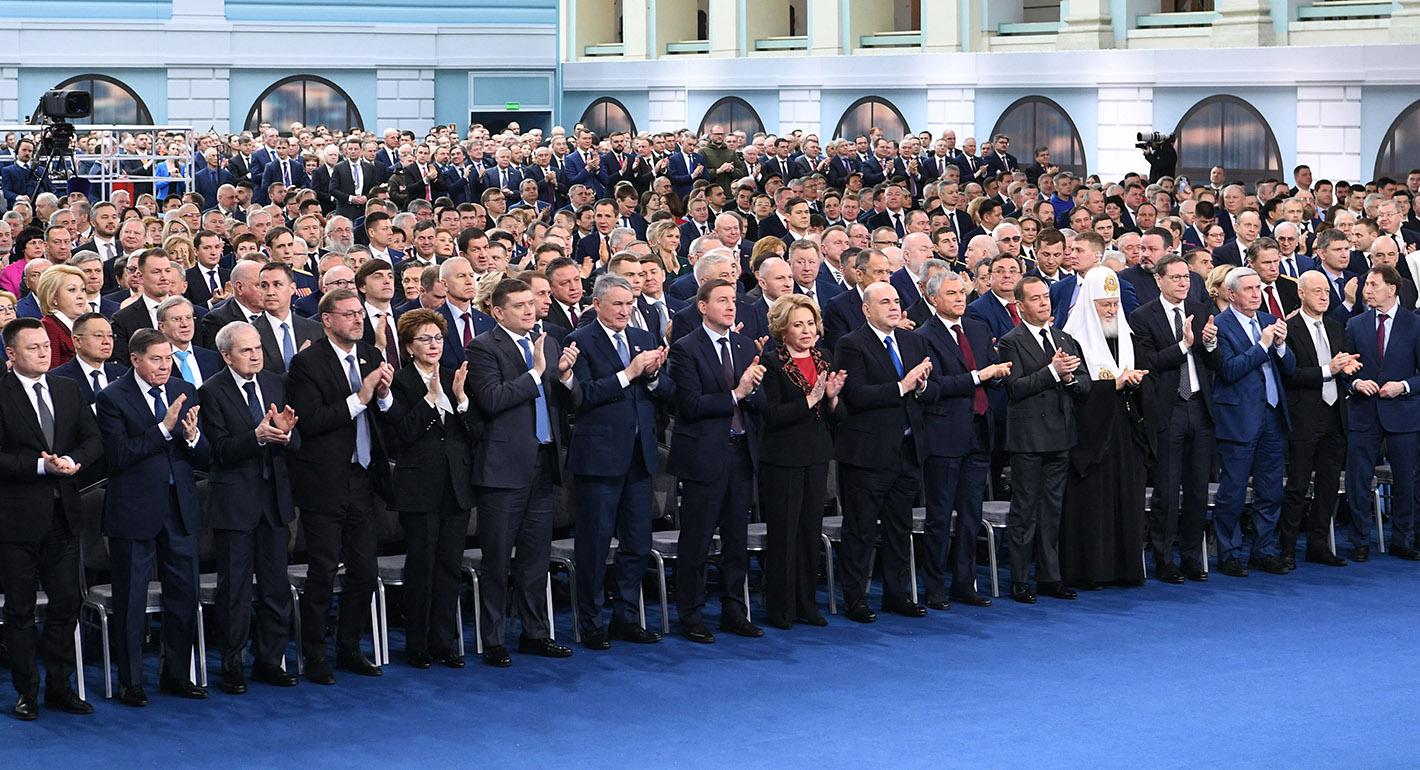
Source: Getty
History shows that a change of leader in Russia has almost always been accompanied not by civil strife, but by liberalization.
When President Vladimir Putin leaves office—however that happens—we will enter the post-Putin era. Much about this next period in Russian history is uncertain, and many fear what it could bring: perhaps a more brutal leader will emerge, perhaps Russia will disintegrate, or descend into chaos.
Such apocalyptic predictions appeared to find confirmation in the events of this summer, when Wagner leader Yevgeny Prigozhin launched his short-lived rebellion. However, the resulting military showdown was not, actually, evidence of chaos; instead, the rebellion’s leaders quickly wound up dead, and its supporters either switched sides or disappeared into Russia’s vast expanses.
With suspicions running rife in the wake of the insurrection, the Russian elite was obliged to redouble their efforts to demonstrate loyalty to Putin. At the same time, most Russians remained—as ever—interested only in being left alone to get on with their lives. For those who have not been swept up in mobilization, or who prefer not to volunteer for the front, it seems sufficient to display imitation loyalty to the regime.
It’s odd to try and scare the world with the specter of a leader more terrible than Putin. What could be worse than the biggest military conflict in Europe of the twenty-first century, and greater repression in Russia than the late Soviet Union? Thanks to the Kremlin and a spineless elite, we’re already living in an anti-utopia.
Who is this future monster who would take the reins from Putin? Perhaps Security Council head and notorious hawk Nikolai Patrushev? But is he worse than Putin? He’s just one voice of the current regime; a spokesperson for conspiracy theories and anti-Americanism.
Would a military commander like the deceased Prigozhin be worse? Firstly, nobody would have heard of Prigozhin if he hadn’t first been nurtured by the Putin system, allocated billions in state money, and become the Kremlin’s most talented freelancer. Secondly, you need to have his charisma, business resources, and ability to get access to state money to be a serious threat to the authorities. There are simply no more such people.
Is a coup possible? It’s not in the political culture. To think that conspiracy is the most likely outcome is like seriously predicting mass protests because of falling living standards.
It’s important to remember in all this that any major anti-Putin street protest would be quashed within seconds by today’s police state. It would likely be over even quicker than the events of January 25, 1968, when police detained eight people protesting on Red Square against the Soviet invasion of Czechoslovakia. One of the police officers who wrote up dissident Pavel Litvinov that day uttered a phrase that would go down in history: “You fool—if you’d stayed at home, you’d have lived a peaceful life.” That’s exactly the message the authorities today are sending people.
And, even in an anti-utopia, Russia’s social fabric is not unraveling. Despite all the problems, the country’s economic system has remained relatively stable. Russian society’s ability to adapt was underestimated: alongside the indifference of most people to political events, a facility for adaptation helps ensure at least some support for the authorities.
Widespread indifference in Russia will help an orderly transition to a new regime: ordinary people will obey any ruler who appears to be legitimate. Beloved Putin will no longer be beloved as soon as a power transition takes place. That’s how it has always been.
Moreover, if we’re talking historical precedents, a change of leader in Russia has almost always been accompanied by liberalization, not bloody chaos (Khrushchev’s thaw after Stalin, Gorbachev’s perestroika after Brezhnev’s gerontocracy, and Yeltsin’s reforms after the end of the Soviet Union). Even power struggles at the top have not, historically speaking, tended to lead to chaos.
Notably, the collapse of the Soviet Union did not lead to really serious unrest in Russia. Most people were focused on survival, adapting, and—most importantly—taking advantage of the new opportunities. It’s true that the country witnessed a battle between the president and parliament that ended in a brief moment of civil war in October 1993. But most people were not involved, and accepted the side that won. In short, there is nothing to indicate that Russia’s upcoming power transition, which will happen sooner or later, is fated to lead to a more hawkish regime, or to chaos.
Another bogeyman promoted by some analysts is the disintegration of Russia. But this is even less likely than civil strife or the emergence of a leader worse than Putin. The rush for sovereignty in Russia in the early 1990s was the result of regions trying to survive amid the trials of constructing a new economy, and new state institutions. When we remember the 1990s, we often forget the huge challenges facing the government: from the lack of state agencies and a bureaucracy, to empty coffers.
There are compelling economic, budgetary, and political-management reasons why Russia will not disintegrate in the post-Putin era. Russia is not a particularly rich country, and wealth inequality is compounded by regional inequality—making many regions dependent on federal subsidies. In short, regional economies cannot survive on their own, and leaving the Russian Federation would cause serious problems.
If there is an appetite among regional leaders for independence, it exists only in Russia’s national republics—but, again, most of these are net recipients of subsidies, and get political investment in exchange for ensuring social calm (it’s no coincidence that the amount of money going into the budget of the occupied port city of Sevastopol in Crimea rose 54 percent in the first half of 2023).
In addition, recent years have seen regional leaders transformed into technocrats whose every move is closely controlled by the federal center. They depend on Moscow for everything, and are accountable to the Kremlin—not the local people. All such regional leaders aspire to get a plum job in the federal government, not to become a powerful local leader.
You have to give the Kremlin its due: it’s been successful in creating a system populated by loyal technocrats who see themselves as temporary managers who can be hired or fired at will. This is an insurance policy against regional separatism.
A relatively optimistic scenario for a power transition is one in which Putin’s successor is a technocrat. It’s not a given that he will be replaced by someone often tipped for the role (from Patrushev’s son, Agriculture Minister Dmitry Patrushev, to United Russia leader Andrei Turchak, State Duma Speaker Vyacheslav Volodin, or Kremlin deputy chief of staff Sergei Kiriyenko). It could just as easily be someone like Prime Minister Mikhail Mishustin (the second most trusted politician in Russia, according to Levada Center polling) or Moscow Mayor Sergei Sobyanin. Mishustin and Sobyanin have both striven to preserve their reputations as pragmatic managers.
Given the gradual, inevitable exhaustion of Putin’s governance model—financially, socially, economically, psychologically, and politically—a technocratic or temporary leader will need to be able to ensure a transition toward normalization. There’s no way things can be worse…
Former Senior Fellow, Carnegie Russia Eurasia Center
Kolesnikov was a senior fellow at the Carnegie Russia Eurasia Center.
Recent Work
Andrei Kolesnikov
Andrei Kolesnikov
Carnegie does not take institutional positions on public policy issues; the views represented herein are those of the author(s) and do not necessarily reflect the views of Carnegie, its staff, or its trustees.
Ultimately, Zelensky sided neither with the reform camp nor with the military establishment as such, but with political control.

Balázs Jarábik
Tokayev’s predecessor, Nursultan Nazarbayev, outlined arrangements for a power transition too soon and in too much detail, ultimately losing control over the process. Tokayev is determined not to meet the same fate.

Temur Umarov
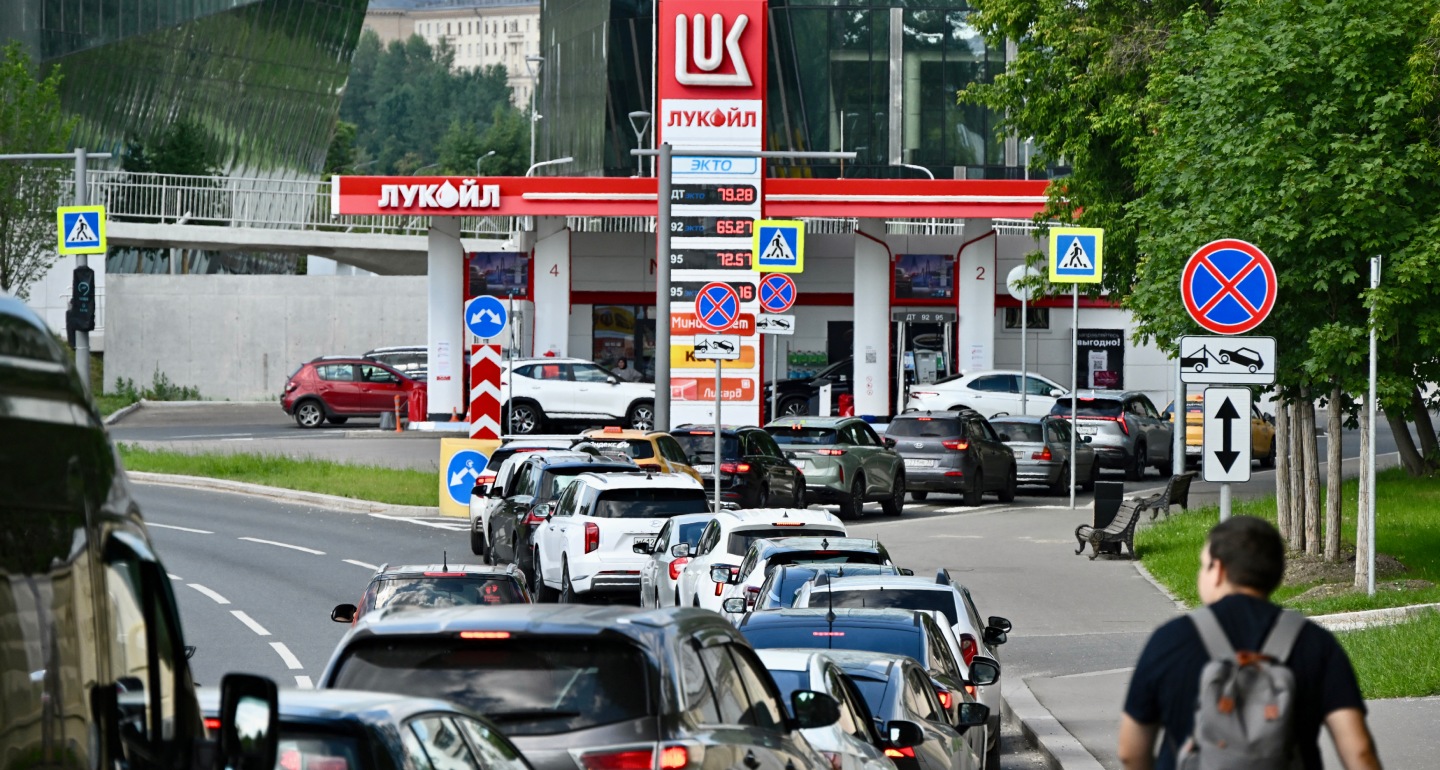
Official discussions about mini oil refineries are unlikely to come to anything—but the mere fact they’re happening reveals the regime is failing to deliver a functioning economy.

Sergey Vakulenko
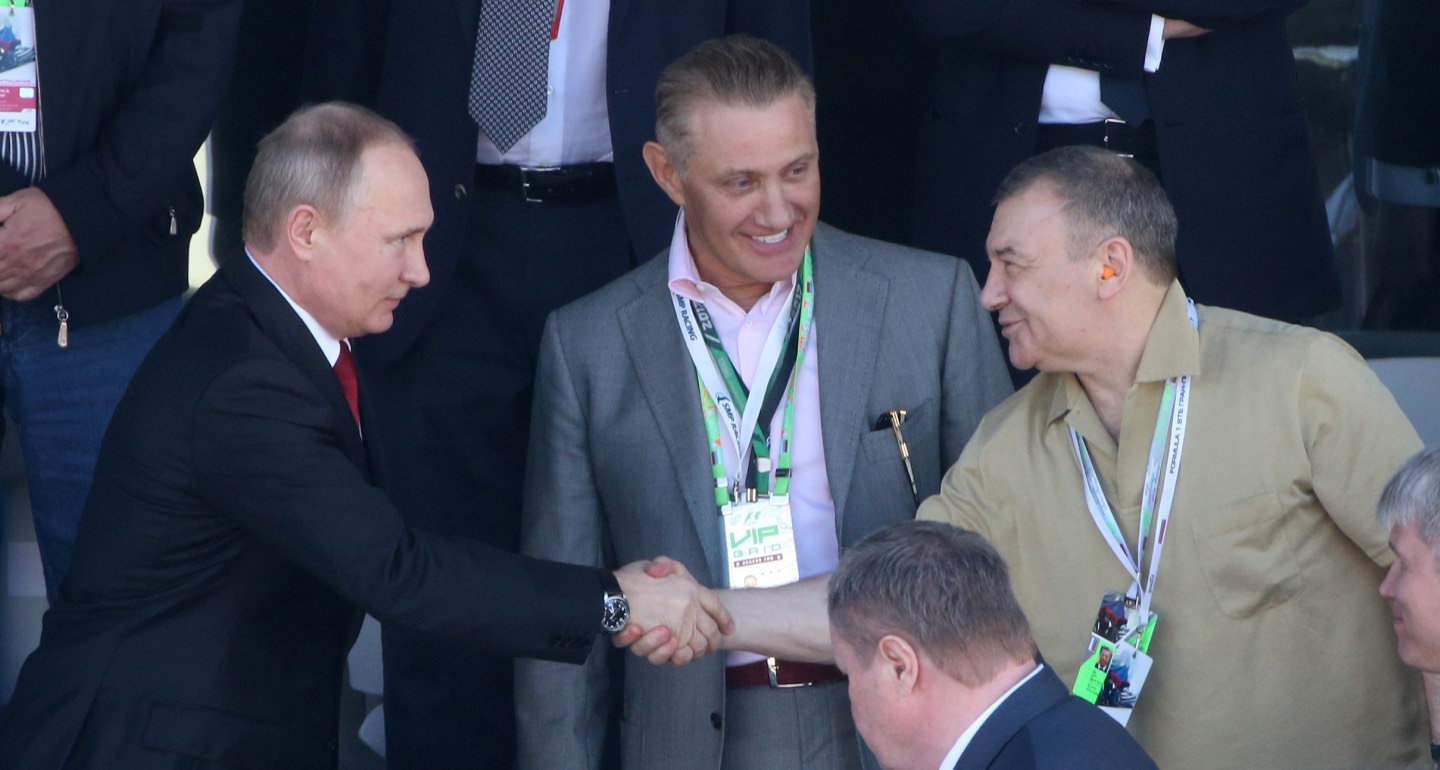
The security forces are targeting Arkady and Boris Rotenberg’s patronage network—and in Putin’s Russia, it’s extremely hard to stop a purge once it’s under way.
Mikhail Komin
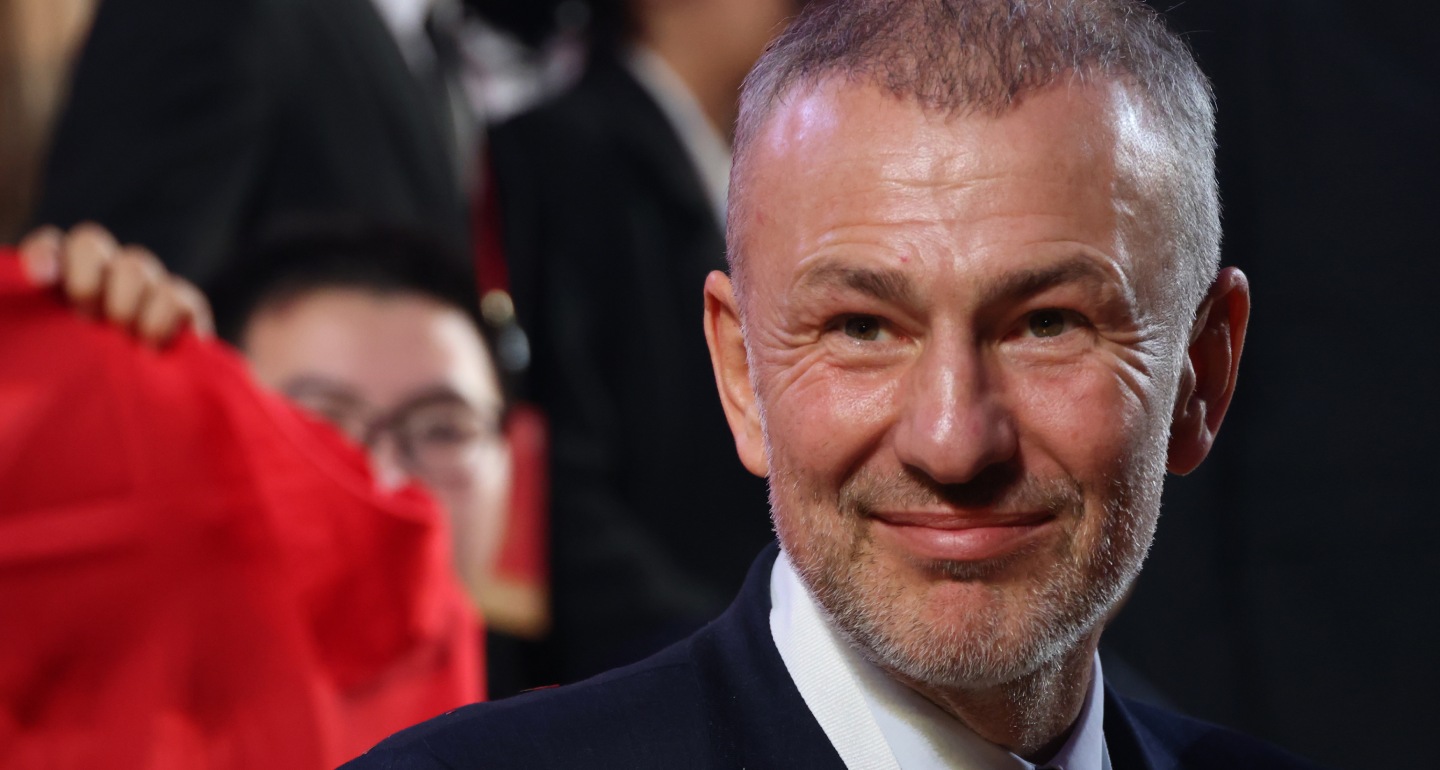
Andrey Melnichenko’s essay offers no answer to the fundamental question of how, under any kind of negotiated settlement, Europe can protect itself from the Russian ressentiment that is inevitable in all scenarios except for an outright victory for Putin.

Leonid Bershidsky