

Commentary
Tatiana Stanovaya
{
  "authors": [
    "Tatiana Stanovaya"
  ],
  "type": "commentary",
  "blog": "Carnegie Politika",
  "centerAffiliationAll": "",
  "centers": [
    "Carnegie Endowment for International Peace",
    "Carnegie Russia Eurasia Center"
  ],
  "englishNewsletterAll": "",
  "nonEnglishNewsletterAll": "",
  "primaryCenter": "Carnegie Russia Eurasia Center",
  "programAffiliation": "",
  "programs": [],
  "projects": [],
  "regions": [
    "Russia",
    "United States"
  ],
  "topics": [
    "Foreign Policy",
    "Global Governance",
    "Military"
  ]
}
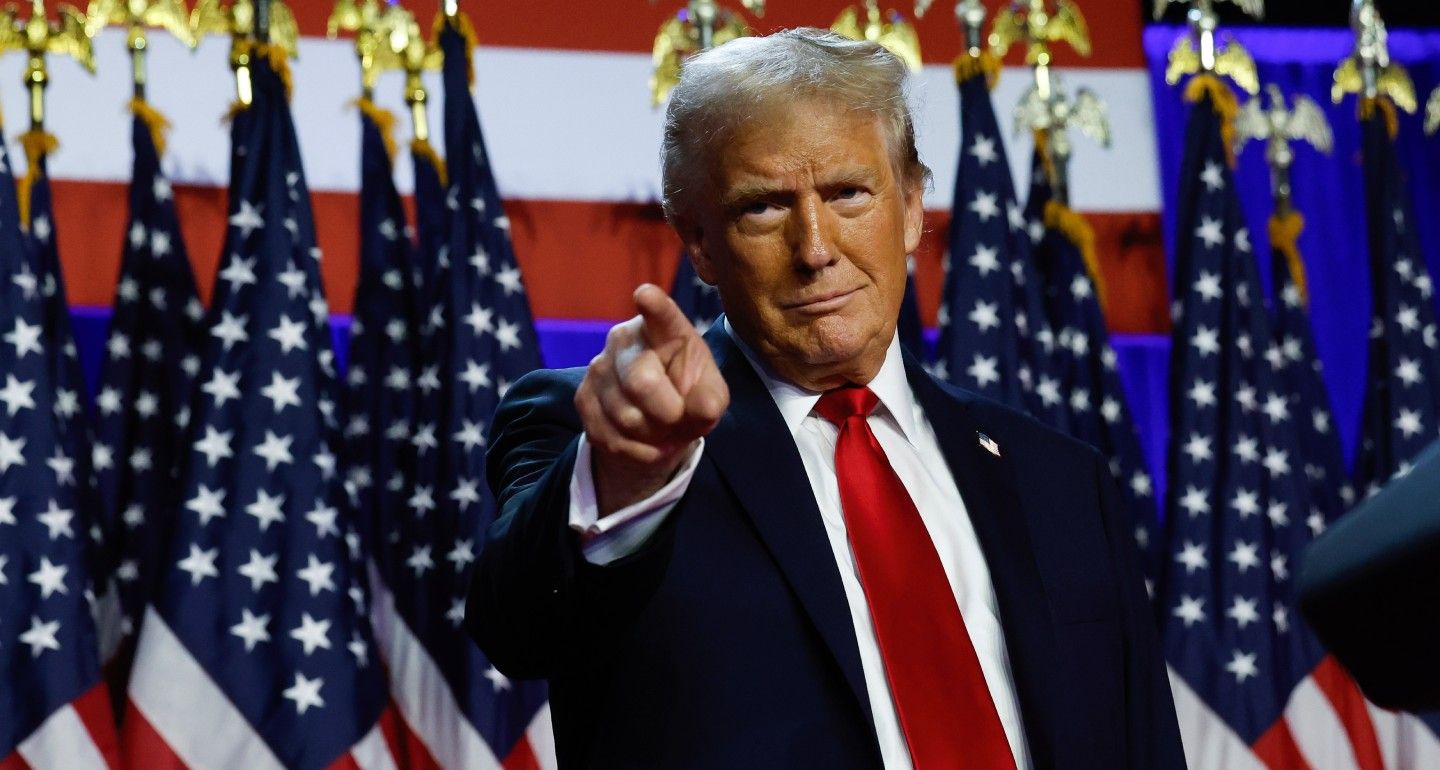
Source: Getty
Some in Moscow see a Trump presidency as a window of opportunity; others believe Russia should focus on pressing home its military advantage in Ukraine.
Russian President Vladimir Putin has looked like a lucky man in recent months. Western support for Ukraine is weakening; direct negotiations with Russia are no longer a fringe idea; and the rightward shift of Western politics has continued apace with the victory of Donald Trump in the U.S. presidential elections. It appears as if Moscow is on the verge of getting what it wants. However, this is misleading: Russia’s real position is much more complicated than it appears. There are actually few reasons for optimism in the Kremlin.
After almost three years of fighting in Ukraine, few people dispute that Russia has the upper hand on the battlefield. Russian forces are gradually moving forward; they have more weapons and soldiers; and they are also pressuring Kyiv by attacking the country’s critical infrastructure. The chances of another Ukrainian counteroffensive appear minimal, and there is no sign of a political crisis in Russia. Put simply, Putin is winning.
Many expect Trump’s victory to lead to a resumption of high-level contacts between Washington and Moscow, a reduction in U.S. aid for Ukraine, and dissension in NATO. However, this does not add up to victory for the Kremlin. The problem is that no Western leader—including Trump—has a plan for ending the war that would be remotely acceptable to Putin. None of the mooted solutions come close to meeting Russian demands: that NATO will never admit Ukraine, or that the government in Kyiv be pro-Russian.
While there are several paths Putin could try and pursue to achieve these objectives, none of them seem very likely to be successful. Obviously, the first is the military route. But leading experts agree that—despite recent advances—Russia does not have enough soldiers or equipment to seize Ukrainian cities. All that Moscow can do is slowly push the front westward while suffering a high rate of casualties.
The second path is Kyiv’s capitulation. In other words, President Volodymyr Zelensky would be replaced with a leader of dubious legitimacy prepared to hand the country to Putin on a platter. This sort of total surrender would not simply entail a ceasefire, but Ukraine’s accession to all the Kremlin’s demands, including neutral status, dramatic cuts to the size of its army, rewriting the constitution to favor pro-Russian groups, and, of course, forfeiting territory.
Indeed, Moscow has been trying to convince both Ukrainians and the West to “ditch” Zelensky and choose a more pliable leader. However, despite all the problems facing the government in Kyiv, there has been no noticeable movement in this direction. There seems to be little chance of political changes in Kyiv resulting in the emergence of a government that is prepared to seriously consider Putin’s demands.
The third path is major political changes in the West that lead to Western leaders pressuring Ukraine to form a government that would be acceptable to Moscow. Many believe this is the scenario on which the Kremlin is now counting. Nevertheless, if you actually look at what Western leaders—including Trump—are saying, then it’s clear that no one is even close to pressing for a change of government in Kyiv. Even those apparently happy to see negotiations do not want Ukraine’s capitulation, or a puppet regime in Kyiv.
The Kremlin has prepared Russians for a final push in Ukraine, hoping to achieve a strategic breakthrough that would lead to negotiations about Ukraine’s surrender. If this doesn’t happen soon, Russia will be obliged to launch mobilization, with all the attendant political risks, and seek more escalation on the battlefield. The Russian authorities have repeatedly raised the sign-on bonuses for new recruits, but Russia’s manpower shortage continues to worsen. Even the current rate of advance in Ukraine will become difficult to maintain if the significant losses of men and equipment continue.
All this means that the election of Trump puts the Kremlin in a difficult spot. As Putin’s spokesman Dmitry Peskov has already said, Russian officials will be watching the actions of the president-elect closely. They will want to see what Trump’s first steps will be in order to better understand whether the chatter about a “window of opportunity” will amount to anything.
In theory, this waiting game could mean Russia refrains from further escalation. The Kremlin might even reduce the pressure on Kyiv as a signal that it is open to fresh ideas. But there are also many Russian officials who believe there is no point in wasting time playing games with Trump. They argue that Russia shouldn’t squander its current battlefield advantage for the empty promise of talks with Washington. After all, according to their logic, the hawks in the U.S. political establishment always come out on top.
In the final analysis, Russia’s strategy for victory—like Ukraine’s—depends on processes over which it has no control. As a result, Moscow is oscillating between the possibility of a ceasefire, and further military escalation. Any false move by Moscow would entail enormous risks, which include being forced to launch a new round of mobilization, taking more radical measures to maintain control at home, and facing off directly against NATO soldiers. Despite the current bewilderment at Trump’s victory, the West still has a decisive role to play in determining the future of Ukraine.

Senior Fellow, Carnegie Russia Eurasia Center
Tatiana Stanovaya is a senior fellow at the Carnegie Russia Eurasia Center.
Recent Work
Tatiana Stanovaya
Tatiana Stanovaya
Carnegie does not take institutional positions on public policy issues; the views represented herein are those of the author(s) and do not necessarily reflect the views of Carnegie, its staff, or its trustees.

Russian strikes are weakening the economy sustaining Ukraine’s war effort. Closing the growing funding gap will require more European support and politically contentious reforms in Kyiv.

Balázs Jarábik

Despite a new textbook, an influx of Russian teachers and managers, and an end to the teaching of Ukrainian, the Kremlin is unlikely to have “reprogrammed” locals.

Konstantin Skorkin

For every ruble allocated to social policy, health, and education in 2027, double that amount is earmarked for the army, the police, and the security services.

Alexandra Prokopenko

Cargo traffic through Russia’s Northern Sea Route has increased because of the disruption caused by the conflict in the Middle East, the Ukraine war, and U.S.-China tensions.

Mikhail Korostikov
An analysis of traffic accident data suggests that Ukrainian drone attacks caused a material but not disastrous fall in Russian gasoline consumption over the summer.

Sergey Vakulenko