

Commentary
Andrey Pertsev
{
  "authors": [
    "Andrey Pertsev"
  ],
  "type": "commentary",
  "blog": "Carnegie Politika",
  "centerAffiliationAll": "",
  "centers": [
    "Carnegie Endowment for International Peace",
    "Carnegie Russia Eurasia Center"
  ],
  "englishNewsletterAll": "",
  "nonEnglishNewsletterAll": "",
  "primaryCenter": "Carnegie Russia Eurasia Center",
  "programAffiliation": "",
  "programs": [],
  "projects": [],
  "regions": [
    "Russia"
  ],
  "topics": [
    "Security",
    "Domestic Politics",
    "Political Reform"
  ]
}
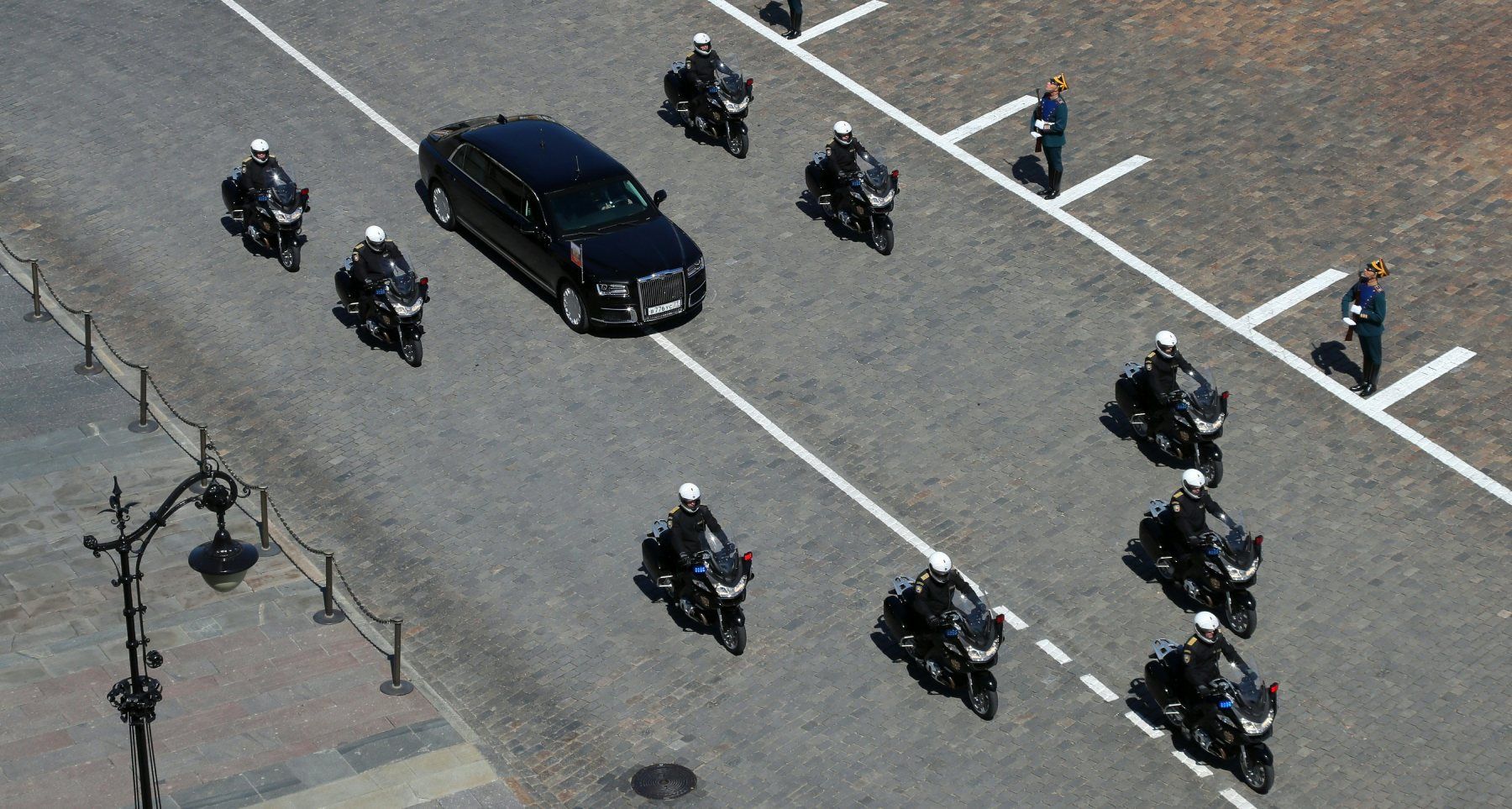
Source: Getty
Age and isolation are fueling Putin’s desire for greater control over Russia’s bureaucracy. Even long-standing colleagues are not above suspicion.
A new type of Russian bureaucrat has emerged in recent years: those appointed by President Vladimir Putin to oversee certain agencies or sectors, and keep an eye on the officials formally in charge—even those who ostensibly enjoy the Kremlin’s trust. These “auditors” can now be found everywhere: from the Russian delegation conducting negotiations with the United States to the Defense Ministry, the Emergencies Ministry, and the presidential administration.
It’s all strikingly reminiscent of the Soviet-era practice of installing KGB operatives in companies and government agencies. The only difference is that today these are not security officers, but men and women from the extended “Putin family” and his inner circle. While these appointments help to reassure Putin that he remains in control, they also threaten to undermine the viability of Russia’s power vertical.
For a long time, Russia’s bureaucracy functioned according to the principle of “one agency, one team.” Ministers or agency heads were given carte blanche to appoint whom they wanted. As a result, the Finance Ministry is staffed by those close to Finance Minister Anton Siluanov, and all the key positions in Russia’s Far East are controlled by the Kremlin’s representative to that region, Yuri Trutnev.
It’s recently become clear, however, that the president does not trust even long-serving officials, and has decided to create a new tier of bureaucracy to oversee them.
One example of such an “auditor” is Kirill Dmitriev, head of the Russian Direct Investment Fund (RDIF), who is closely involved in negotiations between Moscow and Washington over the war in Ukraine. In recent months, Dmitriev has been paving the way for talks to take place, seeking out areas of common ground between the Kremlin and the Trump administration. Dmitriev secured his spot in the delegation through being acquainted with U.S. President Donald Trump’s son-in-law, Jared Kushner. But he is also an old friend of Putin’s daughter, Yekaterina Tikhonova. In other words, he represents the Putin family at the negotiations.
In short, Dmitriev is there to keep an eye on the other members of the delegation (including long-serving and trusted associates of Putin like Foreign Minister Sergey Lavrov and Kremlin foreign policy adviser Yuri Ushakov). If necessary, Dmitriev will be able to provide an alternative analysis and put forward different options.
This is far from a unique case. Sergei Tsivilev, the husband of Putin’s first cousin once removed Anna Tsivileva, was made energy minister last year to oversee Putin’s old friends in the energy sector: Rosneft CEO Igor Sechin, Gazprom CEO Alexei Miller, and businessman Gennady Timchenko.
Putin’s hankering after ever-greater control means he has even appointed auditors to keep tabs on the auditors. Putin’s longtime adviser Andrei Belousov was made defense minister to oversee the agency’s huge wartime budget after a series of corruption scandals. However, Belousov did not receive full control over the ministry. In a break with tradition, he was not given free choice in the selection of his deputies, who include Putin’s cousin Anna Tsivileva, Pavel Fradkov (the son of former prime minister Mikhail Fradkov), and Leonid Gorin, who is close to Siluanov. As a result, the Defense Ministry is currently run by a group of auditors, each keeping tabs on another, instead of a unified team.
Something similar has happened at the Emergencies Ministry, which has been headed by Putin’s former bodyguard Alexander Kurenkov since 2022. Even though Kurenkov’s main qualification for the job is his loyalty to Putin, that was apparently not enough. At the beginning of 2025, Putin made Denis Popov, a former prosecutor, one of Kurenkov’s deputies. Popov quickly became the ministry’s point man for communication with other ministries, the Kremlin, and parliament. In other words, Putin appointed one trusted official to keep an eye on another trusted official.
There is an even more complicated setup at the presidential directorate for state humanitarian policy (a department of the presidential administration established in 2024). The man put in charge of overseeing this directorate was Vladimir Medinsky, a former culture minister close to Putin, and his informal brief was to oversee the work of Kremlin deputy chief of staff Sergei Kiriyenko, who is responsible for domestic policy and ideology. However, Medinsky was not allowed to choose who would run the directorate he was charged with monitoring, since he himself is under supervision. For this purpose, it has been entrusted to former security officer Vyacheslav Bocharnikov.
As a former security officer himself, Putin is very familiar with such arrangements. Every state agency and major enterprise in the Soviet Union had someone affiliated with the KGB on staff: to monitor the mood, hunt for dissidents, and report up the food chain. But the appointment of these modern “auditors” also reflects how age and isolation have amplified Putin’s already distrustful nature.
This practice will inevitably lead to the elite beginning to doubt the authority of ministers and agency heads and seeking out the shadowy figures who are “really” in charge. Such speculative conversations are already becoming more and more common. For example, who is really pulling the strings at the Defense Ministry: Belousov or presidential adviser Alexei Dyumin?
It will also lead to officials at all levels looking to those wielding informal power as likely successors to the heads of ministries and agencies. And that will create an atmosphere of suspicion, conflict, and denunciation.
For now, these “auditors” are only to be found in agencies (like the Emergencies Ministry and the Defense Ministry) or sectors (like negotiations with the U.S.) that are of particular importance to Putin. But the practice is spreading, and Putin’s paranoia risks endangering the system’s internal unity and cohesion.

Andrey Pertsev is a journalist with Meduza website.
Recent Work
Andrey Pertsev
Andrey Pertsev
Carnegie does not take institutional positions on public policy issues; the views represented herein are those of the author(s) and do not necessarily reflect the views of Carnegie, its staff, or its trustees.

If the Russian-speaking community in Latvia cannot articulate their interests without being seen as disloyal, they could end up embracing a pro-Kremlin agenda.

Sergejs Potapkins

Russia’s ruling party would have benefited from Putin appearing as its distant patron, but as an active frontman imposing his views on the public, he has done nothing but harm both the party’s election campaign and the ruling system overall.
Andrey Pertsev

Depleted financial reserves and a shrinking tax base mean it is no longer possible to simultaneously deliver high defense spending, price stability, and economic growth.

Alexandra Prokopenko
Blurring the line between humans and animals is a long-standing tradition in social utopian prose. In his latest novel, Leonid Bershidsky reminds us that in social experiments, people are often treated no differently than animals.

Alexander Baunov

In the tenth year of his presidency, President Mirziyoyev’s system is becoming even more personalized than that of his predecessor Karimov.

Galiya Ibragimova