

Commentary
Konstantin Skorkin
{
  "authors": [
    "Konstantin Skorkin"
  ],
  "type": "commentary",
  "blog": "Carnegie Politika",
  "centerAffiliationAll": "",
  "centers": [
    "Carnegie Endowment for International Peace",
    "Carnegie Russia Eurasia Center"
  ],
  "englishNewsletterAll": "",
  "nonEnglishNewsletterAll": "",
  "primaryCenter": "Carnegie Russia Eurasia Center",
  "programAffiliation": "",
  "programs": [],
  "projects": [],
  "regions": [
    "Ukraine"
  ],
  "topics": [
    "Political Reform",
    "Domestic Politics"
  ]
}
Source: Getty
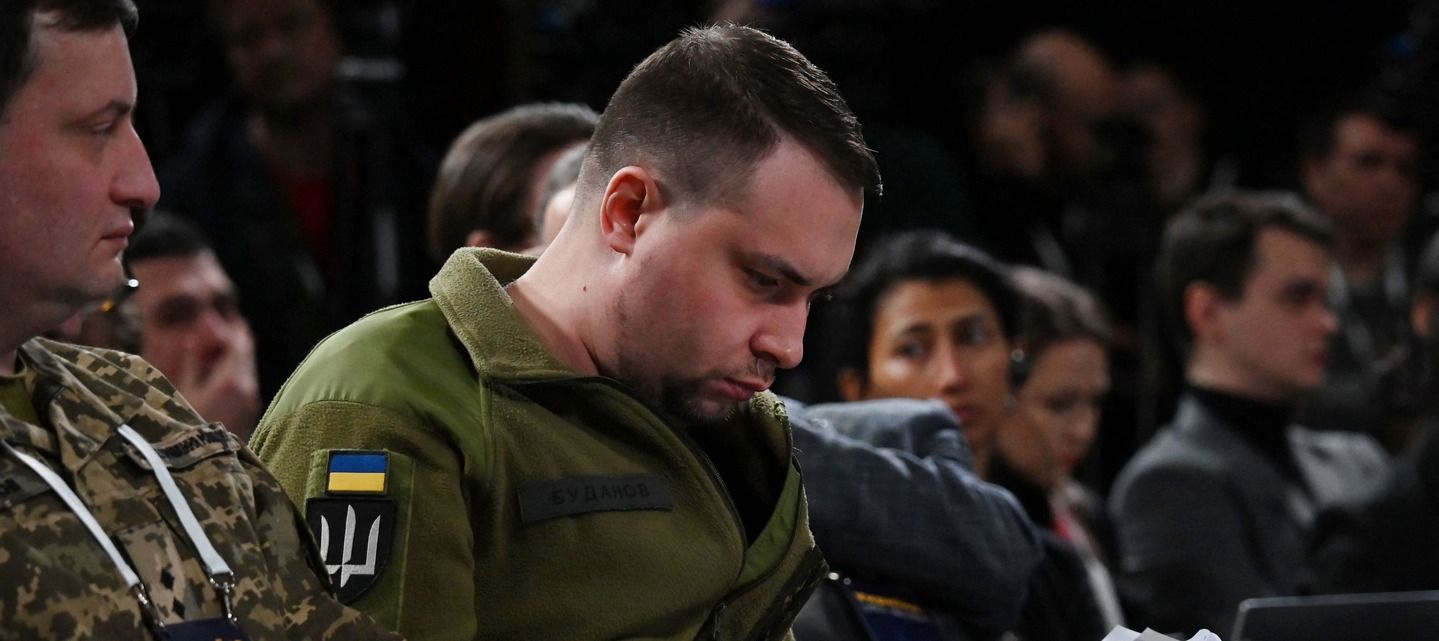
The war has boosted the popularity of top Ukrainian military commanders, raising the possibility of a political role for Kyrylo Budanov and fueling tension with President Volodymyr Zelensky.
In recent months, there has been much talk about the reanimation of domestic politics in Ukraine and the burgeoning political competition between Ukrainian President Volodymyr Zelensky and ex-commander-in-chief Valery Zaluzhny. Now Kyrylo Budanov, head of Ukraine’s military intelligence agency, has also emerged as a figure enjoying significant popular support, with some surveys showing his public trust rating to be higher than Zelensky’s.
War has traditionally provided military commanders with a political platform, but since the full-scale invasion of Ukraine in 2022, Budanov has achieved something akin to celebrity status. At thirty-nine years old, he is part of a new generation of Ukrainian security officials unencumbered by the baggage of the Soviet past.
All Budanov’s career has been in intelligence: after graduating from a military university, he was selected for training by the CIA. Likely, the Americans were impressed not only by his eagerness, but also his youth: older officers were deemed less reliable because they had once served with their Russian counterparts in Soviet agencies.
There is much about Budanov’s career that is classified, but we do know that he took part in a raid on Russia-controlled Crimea in 2016 when fire was exchanged with Russian special forces. By 2020, Budanov had risen to the rank of colonel and was deputy head of a department in Ukraine’s Foreign Intelligence Service.
He was made head of the Main Directorate of Intelligence of the Ukrainian Defense Ministry later that year following a scandal in which Ukrainian special services tried and failed to lure a group of Russian mercenaries from the Wagner private military company into traveling to Ukraine via Belarus. Budanov’s predecessor, Vasyl Burba, blamed the country’s leadership for the failure (most notably Zelensky’s chief of staff Andriy Yermak), and was subsequently removed from his position.
It's likely that Budanov’s career has been advanced by Roman Mashovets, his former commander, who was Zelensky’s deputy chief of staff between 2020 and 2024. But Yermak likely also saw Budanov’s appointment as a way to strengthen his influence over Ukraine’s intelligence agencies. There is one further link between Budanov and Zelensky: Budanov lives next door to Maria Levchenko, an assistant to Zelensky, whose husband, Oleksandr Hohilashvili, is a former deputy interior minister.
While Budanov has for the most part not been associated with any particular Ukrainian political clan, he obviously has close ties to the West. In an interview two months before Russia’s full-scale invasion, he revealed detailed knowledge of Russia’s intentions, describing the plan of attack that Moscow ended up using.
The war brought Budanov to the political fore. He led the defense of Kyiv from Russian sabotage groups, took part in the liberation of the Kyiv and Kharkiv regions, and planned the operation to regain Ukrainian control over the western part of the Black Sea. For these achievements, he was promoted to lieutenant general and made a Hero of Ukraine.
Despite being a spy, Budanov regularly gives interviews to both Western and Ukrainian journalists on a wide range of different topics. In particular, he loves opining on the inevitability of Russia’s defeat and disintegration. That irritates Moscow, and a Russian court arrested him in absentia in 2023, accusing him of organizing 104 terrorist attacks. In November that year, it emerged that Budanov’s wife had been poisoned as part of an assassination attempt on her husband.
All of this has only made Budanov more popular inside Ukraine. As early as October 2022, NV magazine included Budanov in a list of the country’s most influential military commanders, and in February 2023, he was floated as a possible defense minister. Ever since then, he has scored highly in national rankings of Ukraine’s most trusted politicians. In 2024, he was ranked at the same level of trust as Zelensky—and sometimes placed even higher. Polling at the beginning of 2025 showed that Budanov enjoyed the trust of 47 percent of Ukrainians, while Zelensky got 41 percent (Zaluzhny came top with 72 percent).
Budanov’s growing popularity has led to conflict with Zelensky’s team, which is wary of popular military commanders. Budanov was once considered Yermak’s protégé—but now it appears their relationship has soured. At the end of 2024, Ukrainian media reported rumors of a conflict between the two men, and the upcoming resignation of Budanov.
Budanov is often called an “alternative channel” of communication with Zelensky, bypassing Yermak, and he has good connections with other groups around the president (such as David Arakhamia, the head of Zelensky’s Servant of the People party faction in parliament).
While the rumors about Budanov’s exit have abated, political tension remains. When polling agency Rating failed to include Budanov in a survey about the most trusted Ukrainian officials in February 2025, it was immediately accused of political bias and of attempting to artificially boost Zelensky’s rating.
However, that story also revealed that Budanov’s supporters tend to switch to backing Zelensky if Budanov is removed from the field. In other words, Budanov is perceived as a part of Zelensky’s team—not a wholly independent figure. This was confirmed in a survey in February 2025 in which just 3.2 percent of respondents said they would support a presidential bid by Budanov.
Nevertheless, Budanov’s success in Ukrainian politics is both unprecedented and illustrative. Previously, Ukrainian spies found it extremely hard to forge political careers because people associated the intelligence agencies too closely with their predecessor, the Soviet KGB. Famously, Yevhen Marchuk, who founded the Security Service of Ukraine after the Soviet collapse, failed to get elected president. The only place where ex-intelligence officers succeeded in politics was eastern Ukraine: in 2002, for example, KGB veteran Yevhen Burlachenko was elected mayor of Luhansk under the slogan “Lugansk needs its own Putin.”
However, the public’s attitude toward the security services has changed dramatically since the Russian invasion began in 2014. Intelligence officers are now more often seen as heroic defenders of the fatherland than as repackaged KGB apparatchiks. It’s also true that the war has transformed Ukraine’s once corrupt and ineffective intelligence services into serious and effective organizations. It’s perfectly possible that a figure like Budanov could one day end up converting his popularity into a top political position.

An independent journalist.
Recent Work
Konstantin Skorkin
Konstantin Skorkin
Carnegie does not take institutional positions on public policy issues; the views represented herein are those of the author(s) and do not necessarily reflect the views of Carnegie, its staff, or its trustees.

Russia spent years building a “sovereign internet,” concentrating web infrastructure exclusively within Russian territory. Ukrainian drone attacks have shown how vulnerable that approach has left the Russian internet.

Maria Kolomychenko

Putin’s conservative staffing policies and search for ever greater control have cemented parliament’s transformation into a bureaucratic appendage of the executive branch.

Andrey Pertsev

Russian strikes are weakening the economy sustaining Ukraine’s war effort. Closing the growing funding gap will require more European support and politically contentious reforms in Kyiv.

Balázs Jarábik

Ex-president Gurbanguly Berdimuhamedov remains interested in politics, but his son Serdar, Turkmenistan’s current president, is becoming increasingly independent and willing to break with his father’s legacy. If their covert rivalry goes too far, both risk losing power.

Galiya Ibragimova

Despite a new textbook, an influx of Russian teachers and managers, and an end to the teaching of Ukrainian, the Kremlin is unlikely to have “reprogrammed” locals.
Konstantin Skorkin