

Commentary
Alexander Baunov
{
  "authors": [
    "Alexander Baunov"
  ],
  "type": "commentary",
  "blog": "Carnegie Politika",
  "centerAffiliationAll": "",
  "centers": [
    "Carnegie Endowment for International Peace",
    "Carnegie Russia Eurasia Center"
  ],
  "collections": [
    "Politika: The Best of 2025"
  ],
  "englishNewsletterAll": "",
  "nonEnglishNewsletterAll": "",
  "primaryCenter": "Carnegie Russia Eurasia Center",
  "programAffiliation": "",
  "programs": [],
  "projects": [],
  "regions": [
    "Russia",
    "Europe",
    "United States",
    "Ukraine"
  ],
  "topics": [
    "Foreign Policy",
    "EU Foreign Policy",
    "Military",
    "Security",
    "NATO",
    "Global Governance"
  ]
}
Source: Getty
There’s no guarantee that Russia won’t repeat the mistake it made in 2022. Back then, the Kremlin was counting on Ukraine to prove weak and futile. Now it is counting on NATO to be weak, divided, and indecisive.
While the war in Ukraine remains virtually at a standstill, Russia has crossed a new line in Europe. Since the meeting in Anchorage between Russian President Vladimir Putin and his U.S. counterpart Donald Trump, Russia has not only ramped up its attacks on Ukrainian cities, but has also, for the first time, attacked NATO countries in Europe—albeit without casualties.
Judging by his words and actions, Putin drew three conclusions from that summit. First, Trump is not prepared to hand victory to him and end the war solely at Ukraine’s expense. Second, Trump is willing to develop relations with Russia even without an end to the war, although he will not fully restore them until the fighting ends. Third, Trump does not rate Ukraine very highly and will only intervene to save it as a last resort, and not at any cost.
All of this gives Putin ample room for creativity between the current state of affairs and that same last resort. At Russia’s Valdai Discussion Club last week, the Russian leader’s opening remarks were that compared with the past, the new world order is a “creative space.”
To stop the Ukrainians from continuing to put up a fight, Moscow needs to knock Europe out of the game. Since the meeting in Anchorage, Russia has applied itself single-mindedly to this task. After all, in Russia’s calculations, Trump does not like Europe either, is convinced that people who think like him are prevented from coming to power there, and views NATO as a freeloader and the EU as a competitor.
Russia hasn’t only seen an opportunity to turn the screws on Ukraine by scaring Europe away. The very concept of victory has changed. Moscow is now feeling out opportunities to reverse the order: instead of defeating Ukraine and, through it, the collective West, it is seeking to inflict a kind of hybrid military-propaganda defeat on the collective West itself—Europe and NATO—and in that roundabout way, on Ukraine.
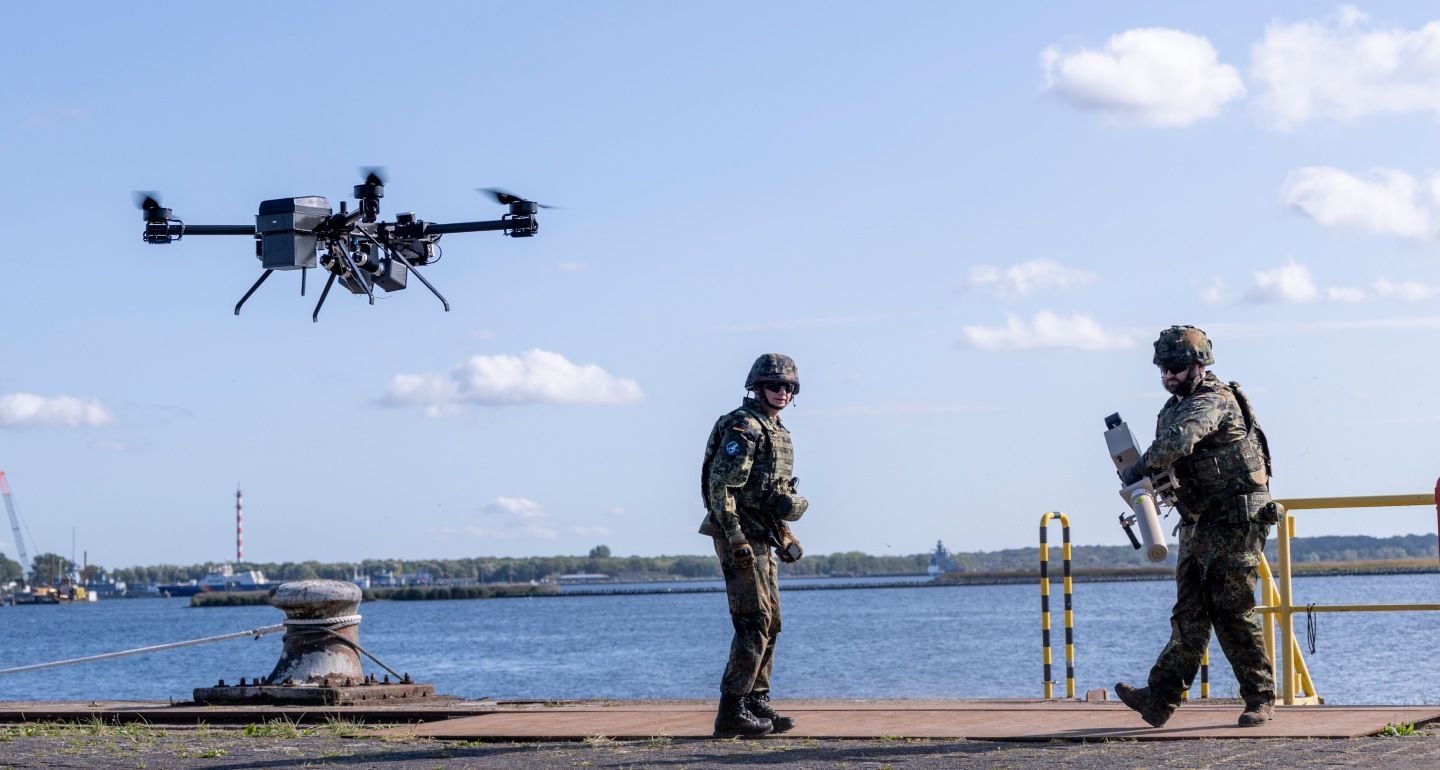
On the night of September 9, a squadron of Russian drones was spotted and partially intercepted in Poland. Since then, drones have flown into Romania, Germany, Norway, and Denmark, and planes have entered Estonian airspace. This was compounded by cyberattacks like the one that caused major and ongoing disruption to Berlin’s airport.
In a matter of weeks, by combining various methods and attack targets, Russia has created a new reality in Europe. Russia has long since learned to blame the West for the war in Ukraine: a huge section of the Valdai Forum Q&A was devoted to diligently transforming the consequences of the war into its causes. But with the United States no longer a primary enemy, Europe is the last remaining obstacle to a “Russian victory” while at the same time appearing to be increasingly isolated and defenseless. It needs to be shown that Europeans will now not just pay for their support of Ukraine with money: Russia is capable of ruining the established European order and turning the public’s anger against their politicians.
In recent months, Ukraine has forced the Russian public to feel the effects of war for itself. Ukrainian drones have shut down airports, set oil refineries on fire, and partially disabled a thermal power plant in Belgorod—not to mention attacks on military production facilities and depots. Threatening Ukraine with similar retaliation is futile: there has been no civil aviation there for four years now, and Russia began bombing Ukrainian thermal power plants and power stations—along with pretty much anything else—at the end of 2022.
Russia has largely exhausted its repertoire of ways to intimidate Ukraine, but the Europeans are a different story. If they don’t get the message from the airport disruption, it’s easy enough to move on to energy facilities.
By sending drones into European countries, Russia crossed a Rubicon. But it crossed it in such a way as to preserve the ability to make excuses and, as usual, to dissolve the facts in denials, ridicule, and alternative theories.
The purpose of the attacks is not just to scare the Europeans away from helping Ukraine. After four years of war, a Russian victory in Ukraine, if it’s even achievable, will have a very different significance than it would have at an earlier stage.
It is impossible to hide the simple fact that having declared NATO and all of Ukraine’s Western allies the true enemy, Moscow has only targeted Ukraine, carefully avoiding any attacks on those it has said are its real adversaries, even if they are clearly smaller and weaker than Russia and incapable of resisting Russian military force on their own. The protracted “special military operation” has only reinforced the impression that NATO remains a reliable—indeed the sole—security guarantor in Europe. And if Ukraine had been a member of NATO, like Poland or the Baltic states, this war, as Trump likes to say, would not have begun.
For this reason, Finland and Sweden hastily joined NATO following the full-scale invasion of Ukraine. Russia’s response was limited to some tweets by former president Dmitry Medvedev and an outdoor exhibition in Moscow about Finnish imperialism. Even Austria, unswervingly neutral for the past eighty years, has begun to move in the same direction.
Among Russian revanchists, there’s a growing feeling that in Ukraine, Russia has chosen an adversary that is too large, too powerful, and too motivated. A victory over Ukraine is, of course, important for restoring historical justice, but has very little to do with dismantling the NATO umbrella over Europe.
The new U.S. policy of indifference toward Europe has strengthened the position of those in Moscow who espouse the view that NATO’s Article 5, the collective defense clause, is purely decorative. According to this hypothesis, NATO members are divided into several classes, and neither the United States nor Western Europe will sacrifice their own people for “second class” allies. They’d even think twice about first-class allies.
The corresponding groups of Russian generals, intelligence officers, ideologists, and political managers see the Trump presidency as a window of opportunity to test their hypothesis in practice. At the beginning of his current term, Trump was more to the liking of Moscow’s pragmatist realists, who hoped the U.S. president would help an embroiled Putin exit the war on favorable terms for Russia.
But Trump’s abrupt turn away from Ukraine in the first months of his new term emboldened entirely different forces in Moscow, who managed to convince Putin that the time had come to destroy faith in NATO with direct attacks.
The problem with hybrid attacks is that they produce a similarly hybrid effect. Hybrid attacks seem to cross the red line of military aggression against NATO member states, but they do so cautiously, hesitantly, and inconclusively. Therefore, they are incapable of producing a conclusive, convincing result. They also allow the EU and NATO to respond in a mixed manner: using Russian attacks as a pretext for mobilization, but not recognizing them as attacks that trigger Article 5.
At the European Security Summit in Copenhagen on October 2, one of the subjects under discussion was Sweden’s proposal to devolve drone defense to the national level. That would not only shorten the chain of command for a response and support local defense industries, it would also eliminate the need to consider every drone flight over an airport an attack on all NATO countries. In other words, NATO is quite capable of sensibly raising its own pain threshold to a level that is safe for itself and its reputation.
As with the threat to invade Ukraine in the months before it happened, by trying to save face, Putin is slowly moving toward war. And since as with Ukraine, Russia’s stated goals may prove unachievable using the selected means, to avoid suffering a symbolic defeat, Russia will be forced to get closer to the fatal threshold in order to appear more convincing. It’s possible that by testing NATO and trying to scare Europe away from Ukraine, Putin will create his own equivalent of the assassination of Franz Ferdinand. Who knows where a stray drone might land?
There’s no guarantee that Russia won’t repeat the mistake it made in 2022. Back then, the Kremlin was counting on Ukraine, its army, population, and fake actor-president to prove weak and futile. Now it is counting on NATO to be weak, divided, and indecisive, and on the absence of any modern-day de Gaulle on the continent. Moscow is literally quoting its own propaganda, just as it did on the eve of its full-scale invasion of Ukraine.
For experts’ views on how NATO states should have responded, check out Carnegie Europe's 'Taking the Pulse' piece here.

Senior Fellow, Editor-in-Chief, Carnegie Russia Eurasia Center
Baunov is a senior fellow and editor-in-chief at the Carnegie Russia Eurasia Center.
Recent Work
Alexander Baunov
Alexander Baunov
Carnegie does not take institutional positions on public policy issues; the views represented herein are those of the author(s) and do not necessarily reflect the views of Carnegie, its staff, or its trustees.

Russia spent years building a “sovereign internet,” concentrating web infrastructure exclusively within Russian territory. Ukrainian drone attacks have shown how vulnerable that approach has left the Russian internet.

Maria Kolomychenko

Putin’s conservative staffing policies and search for ever greater control have cemented parliament’s transformation into a bureaucratic appendage of the executive branch.

Andrey Pertsev

Russia’s AI-driven propaganda campaigns operate in a fragmented, chaotic, and often illogical manner. That’s not necessarily a problem for the Kremlin, though: It’s much easier to mimic genuine public debate that way.

Ilya Klishin

Without a ceasefire with Ukraine on attacking each other’s energy infrastructure—to which the Kremlin is unlikely to agree—the diesel agreement between Putin and Trump is largely for show, rather than representing a genuine increase in the volumes of Russian diesel on the global market.

Sergey Vakulenko

Russian strikes are weakening the economy sustaining Ukraine’s war effort. Closing the growing funding gap will require more European support and politically contentious reforms in Kyiv.

Balázs Jarábik