

Commentary
Maria Kolomychenko
{
  "authors": [
    "Maria Kolomychenko"
  ],
  "type": "commentary",
  "blog": "Carnegie Politika",
  "centerAffiliationAll": "",
  "centers": [
    "Carnegie Endowment for International Peace",
    "Carnegie Russia Eurasia Center"
  ],
  "collections": [
    "Politika: The Best of 2025"
  ],
  "englishNewsletterAll": "",
  "nonEnglishNewsletterAll": "",
  "primaryCenter": "Carnegie Russia Eurasia Center",
  "programAffiliation": "",
  "programs": [],
  "projects": [],
  "regions": [
    "Russia"
  ],
  "topics": [
    "Domestic Politics",
    "Political Reform",
    "Civil Society",
    "Technology"
  ]
}

Source: Getty
In an attempt to stop Ukrainian drones from reaching their targets, the Russian authorities have significantly ramped up online repression.
Since May 2025, Russia has been regularly blocking mobile internet all over the country. There are currently an average of 2,000 such shutdowns a month—more than in the rest of the world combined in 2024. The official reason is that they are needed to hinder Ukrainian drones, which use cell towers for navigation. To mitigate the inconvenience of being unable to access the internet, the authorities have introduced what are known as whitelists of approved websites that are available even during a shutdown. However, many fear these whitelists could end up becoming the rule, rather than the exception.
Russia once liked to boast about its advanced digitalization. But the regular loss of mobile internet means people are now being told to download maps for use offline, use landline phones to order taxis, and send texts instead of using messaging apps. The amount of cash in circulation has increased almost fivefold in the last three months because card payment terminals in stores and banking apps require mobile internet and are often unavailable. Authorities in the central Ulyanovsk region—which does not even border Ukraine—have said mobile internet will be entirely blocked in some districts until the war in Ukraine comes to an end.
Whitelists were devised to prevent a public backlash by giving people access to shopping platforms and social media, ensuring businesses didn’t lose too much money, and helping mobile operators retain customers. Initially, the websites included on the whitelists were Gosuslugi, the widely used government portal; all the services offered by Russian internet companies Yandex and VK (including the new Russian messaging app MAX that is supposed to replace its Western equivalents); video hosting site Rutube; and online marketplaces Ozon and Wildberries. By December, the lists had been expanded to include the websites of the State Duma and government ministries, Russian Post, Alfa Bank, and some state-controlled news outlets.
However, it remains unclear how exactly companies get on a whitelist. There is no official procedure for applying, and so far, the only private companies that have been included are those with impeccable Kremlin connections (VK, for example, is headed by the son of Kremlin deputy chief of staff Sergei Kiriyenko). Companies unable to get a place are complaining about unfair competition.
In addition, the whitelists have been working patchily, with some of the approved websites plagued by malfunctions and accessibility problems. Their reach is also limited. According to Monitor Runet, whitelists have so far been introduced in fifty-seven of Russia’s eighty-plus regions—likely because not all telecom operators have yet installed Deep Packet Inspection (DPI) systems used to configure whitelisting.
The use of whitelists has not only failed to solve the problem of access to internet services during mobile internet blackouts; it has spawned a fear that the authorities will never restore full internet access—even after the end of the war—and that whitelists will end up becoming the new normal. The speed with which Russia is introducing new internet restrictions means such fears should not be dismissed.
Indeed, there have been discussions about introducing whitelists in Russia for over a decade. Back in 2014, the State Duma considered legislation on the subject—but it was not passed because back then there was no aspiration to digital isolation, and the Kremlin did not have the technological capacity required. Nor did it wish to provoke a surge of public outrage. Instead, the Kremlin opted for targeted bans, pressure on social media, and giving the security services extensive online powers.
However, much has changed over the last decade, and what was then considered impossible is now reality. Russia’s internet watchdog and censor, Roskomnadzor, has proved skeptics wrong by acquiring the technical know-how to block online content. Sites now inaccessible in Russia include YouTube, Facebook, Instagram, X (formerly Twitter), and Viber—and experiments are ongoing to partially block messaging apps Whatsapp and Telegram. Roskomnadzor has blocked nearly 2.5 million other websites, including those of independent media outlets and opposition parties. It also targets the Virtual Private Networks (VPNs) used to evade online restrictions.
Nevertheless, the Kremlin is unlikely to make whitelists the blanket norm in the near future. There are currently over 6 million legal entities and individual entrepreneurs in Russia, and most have their own websites, services, and apps. To avoid paralyzing the country’s economy, all these online resources would need to be added to a gigantic whitelist. It’s unlikely that modern DPI systems would be able to cope with such a task.
On top of this, a lot of Russia’s digital infrastructure is dependent on foreign services: hosting platforms, content delivery networks, SSL certificates, APIs from foreign companies, and software updates from foreign servers. If these weren’t included on a whitelist, then a lot of Russian companies would be unable to function. Finally, an enormous whitelist would need to be constantly updated as companies changed their domain names, IP ranges, and hosting providers. Any delay would lead to disruption in a company’s operations.
In other words, it’s likely the authorities will keep looking for different ways of combatting Ukrainian drones. One measure they have already introduced is a twenty-four hour internet block on foreign SIM cards after they first connect to a Russian network. Recently, this was expanded to include Russian SIM cards after they have used roaming services abroad. The logic is obvious: as a result of these “cooling-off” periods, Ukrainian drones that use SIM cards should lose signal once they cross the Russian border.
Legislation published this fall by the government had a similar aim. It mandated the creation of an International Mobile Equipment Identity (IMEI) database for Russian devices that would mean the signal inside Russia would only be available to devices whose IMEI is on that database. All “unknown” devices (including drones using SIM cards to navigate) will simply be unable to connect to the mobile networks of Russian operators.
While it’s unlikely that whitelists will become the default online experience for Russians anytime soon, the authorities’ readiness to implement such mechanisms shows that the parameters of what is possible when it comes to online repression have shifted. Even if there are technical, economic, and political reasons currently preventing the permanent adoption of whitelists, the emergence of such a practice means the Kremlin retains the option of implementing them at any moment. It would not be difficult for officials to find a suitable reason.

Special correspondent for The Bell
Recent Work
Maria Kolomychenko
Maria Kolomychenko
Carnegie does not take institutional positions on public policy issues; the views represented herein are those of the author(s) and do not necessarily reflect the views of Carnegie, its staff, or its trustees.

The truth of the strategic situation is that Europe and Russia are extremely unlikely to be able to “turn the page” on their confrontation within the next two decades.

Arkady Moshes
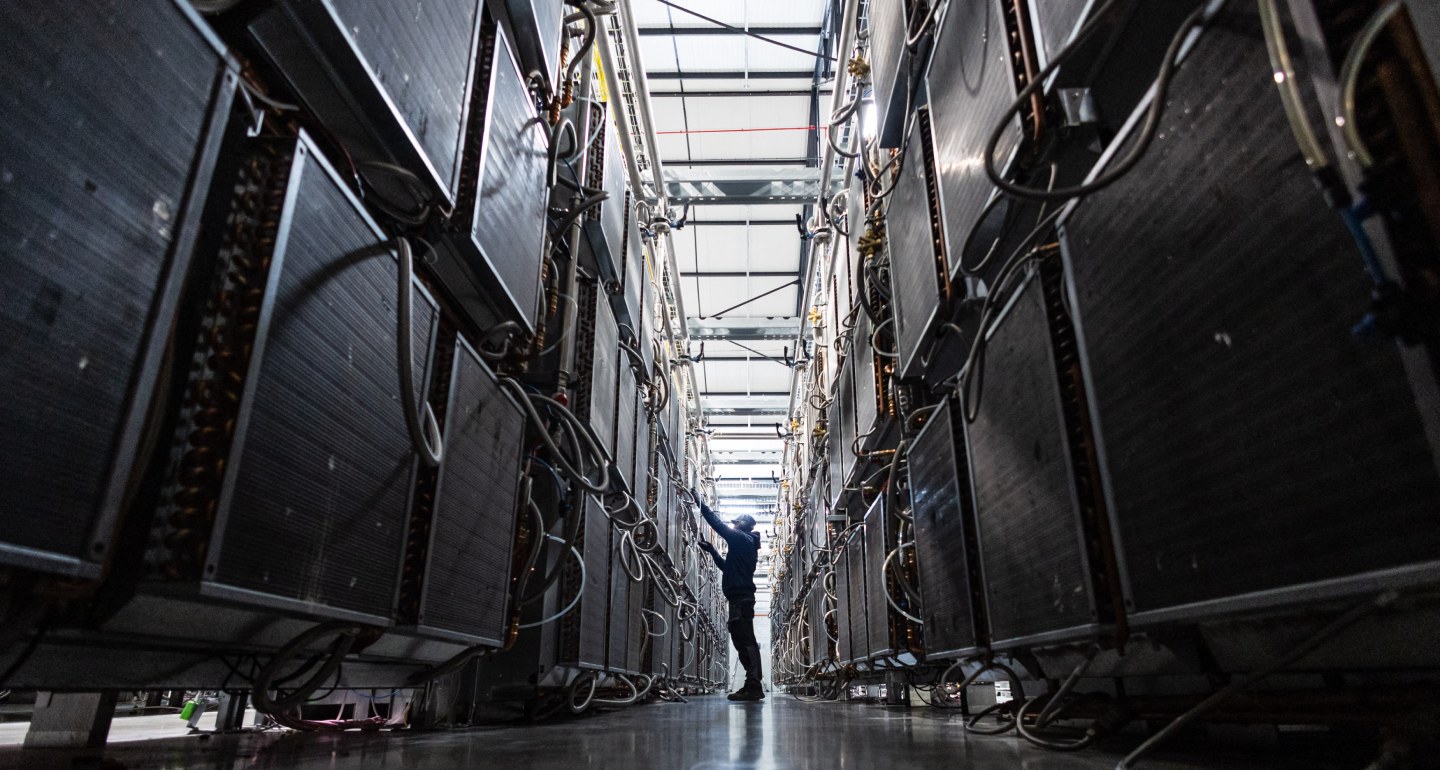
Russia spent years building a “sovereign internet,” concentrating web infrastructure exclusively within Russian territory. Ukrainian drone attacks have shown how vulnerable that approach has left the Russian internet.
Maria Kolomychenko

Putin’s conservative staffing policies and search for ever greater control have cemented parliament’s transformation into a bureaucratic appendage of the executive branch.

Andrey Pertsev

Russia’s AI-driven propaganda campaigns operate in a fragmented, chaotic, and often illogical manner. That’s not necessarily a problem for the Kremlin, though: It’s much easier to mimic genuine public debate that way.

Ilya Klishin

Russian strikes are weakening the economy sustaining Ukraine’s war effort. Closing the growing funding gap will require more European support and politically contentious reforms in Kyiv.

Balázs Jarábik