

In The Media
Michele Dunne, Robert Kagan
{
  "authors": [
    "Robert Kagan"
  ],
  "type": "legacyinthemedia",
  "centerAffiliationAll": "",
  "centers": [
    "Carnegie Endowment for International Peace"
  ],
  "collections": [],
  "englishNewsletterAll": "",
  "nonEnglishNewsletterAll": "",
  "primaryCenter": "Carnegie Endowment for International Peace",
  "programAffiliation": "",
  "programs": [],
  "projects": [],
  "regions": [
    "United States",
    "Middle East",
    "Iraq",
    "United Kingdom"
  ],
  "topics": [
    "Security",
    "Military",
    "Foreign Policy",
    "Nuclear Policy"
  ]
}
REQUIRED IMAGE
Source: Carnegie
Reprinted with permission from the Washington Post, November 27, 2001
Welcome to Phase II of the war on terrorism. Yesterday President Bush talked tough about Iraq, and you don't need to read tea leaves to sense the administration's shifting focus. Saddam Hussein senses it. According to news reports, he's begun hiding his military equipment.
Maybe it's when he heard Condoleezza Rice call him a "threat to us because he is determined to acquire weapons of mass destruction." Or when Undersecretary of State John Bolton declared that "beyond al Qaeda, the most serious concern is . . . Iraq's biological weapons program." Or when Donald Rumsfeld said there was "no question" about the "interaction" between "the al Qaeda and people in Iraq and . . . other terrorist-sponsoring states over the years." Or when President Bush proclaimed that "Afghanistan is just the beginning. . . . We will not be secure as a nation until all of these threats are defeated."
It's early days still, but some administration officials appear to be establishing what international lawyers call a casus belli, a legal predicate for going to war. And, significantly, it's not a case that requires linking Saddam directly to the Sept. 11 attack. The argument runs something like this: Saddam is building weapons of mass destruction. Terrorists like Osama bin Laden, and whoever takes his place in the future, want to get hold of such weapons to use against the United States and the West. Saddam and his regime have a history of cooperating with these types. Saddam may have provided al Qaeda with anthrax; someday he could provide other terrorists a nuclear bomb. For this reason, Saddam and his regime pose a direct and unacceptable threat to the United States. And therefore the United States has the right to take preemptive action. America need not wait "for terrorists to try to strike us again," the president said recently. We can take "the fight to the enemy" in order to "save ourselves and our children from living in a world of fear."
If Bush officials are building a case, one of their target audiences may be Europe, and especially Tony Blair. Before Sept. 11, clever Europeans used to argue that Saddam could never really pose a threat because, even if he were building weapons of mass destruction, he would never use them against the United States or one of its allies because he knew he would be destroyed. Since Saddam was not crazy, deterrence worked. Since deterrence worked, containment was good enough. It was unnecessary to get rid of Saddam.
The logic behind what Rice and other Bush officials are now saying is that Sept. 11 changed the equation. In the new world of massive terrorist attacks, a sane Saddam can covertly and deniably provide weapons, know-how or weapons material to terrorists like bin Laden or Son of bin Laden. Against them, deterrence demonstrably does not work. And since deterrence doesn't work against terrorists, mere containment of Saddam is no longer sufficient to guarantee U.S. security. You need to shut him down.
So the question Bush officials will start wrestling over in the coming weeks will be not whether to shut Saddam down, but how. Top Pentagon officials are already studying military options, and they will argue that nothing short of a change of regime in Baghdad can provide the kind of security President Bush has promised. The problem for them will be coming up with a convincing plan for getting the job done. Secretary of State Colin Powell recently complained to the New York Times' Bill Keller that "I never saw a plan that was going to take him out. It was just some ideas coming from various quarters about, let's go bomb." Powell is right that bombing alone won't work. Pentagon planners surely know this. At the very least they will propose supporting Iraqi opposition forces in addition to bombing. But probably nothing short of an American ground attack can take out Saddam, and his regime, and his weapons plants, with any degree of reliability. Will they have the guts to present that option to the president?
Powell will have his own problems in the Phase II debate. If it were up to him, he'd keep pressing to implement his "smart sanctions." When asked about Iraq, he still insists, "We'll continue to contain it." But Powell probably knows that tinkering with sanctions is no longer an option. Not if Rice isn't there with him.
Powell's fallback position may be to call for a new effort to get international inspectors back into Iraq: containment plus. After all, he can argue, if the problem is Saddam's weapons programs, then the best thing to do is let U.N. inspectors go back to finding and dismantling them. The Europeans will heartily endorse a new effort to get inspectors back into Iraq. Both Paris and Moscow, and maybe Tony Blair as well, will see a new push for inspections as the best way to forestall any American intervention against Iraq. They know from past experience with the Clinton administration that wrangling in the U.N. Security Council over the exact makeup and prerogatives of a new inspection team can go on for months. Nor will France and Russia merely be the transmitters of an American take-it-or-leave-it ultimatum to Baghdad. In the past, both France and Russia have done their best to satisfy Iraqi demands that the composition of any inspection team be acceptable to Baghdad and that the scope of its investigations be limited. As a result, even the Clinton administration ultimately decided it was impossible to reestablish a reliable monitoring system. Powell may claim he can do better.
So which route will President Bush take: Will he try to get Saddam out or try to get inspectors in? "Right now, the sumo wrestlers are just circling each other," one senior official told me. The president himself seems to be mulling both options. Yesterday Bush warned that Saddam had to let weapons inspectors back in the country or face the consequences. Asked what happens if Saddam refuses, the president replied: "He'll find out." Translation: Bush doesn't know yet.
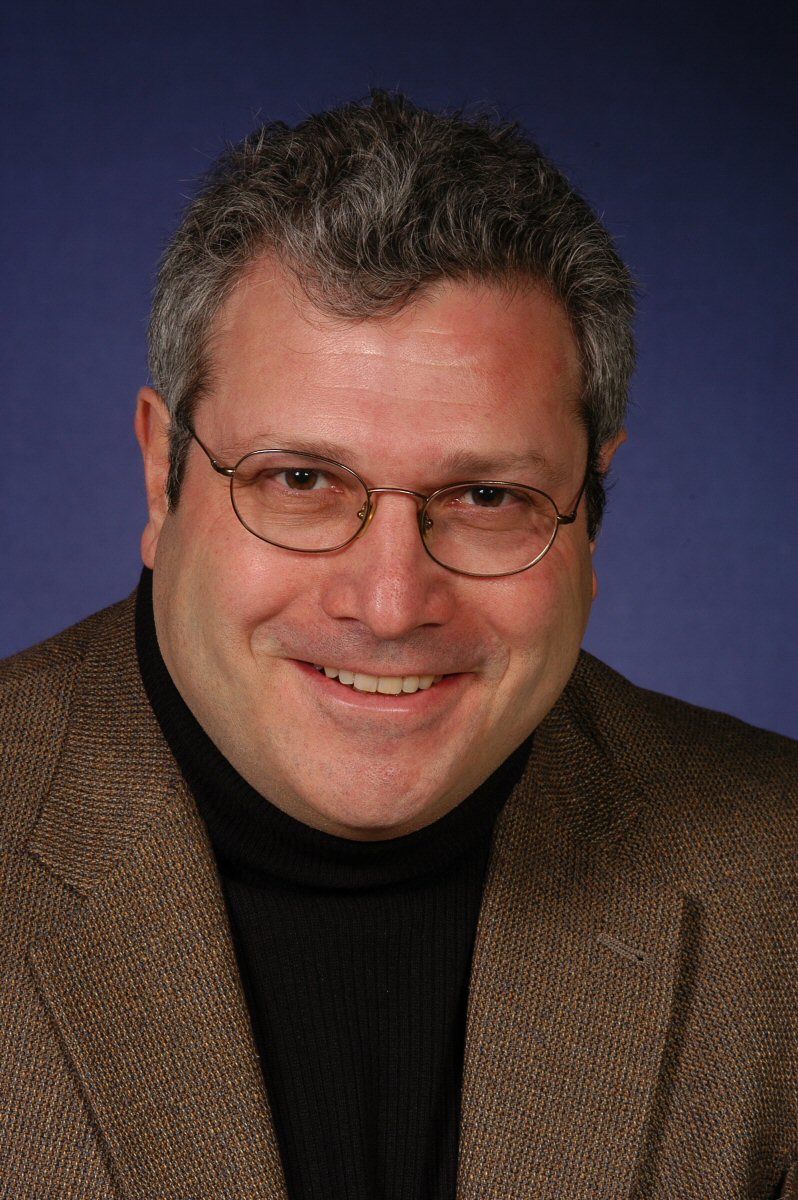
Former Senior Associate
Kagan, author of the recent book, The Return of History and the End of Dreams (Knopf 2008), writes a monthly column on world affairs for the Washington Post and is a contributing editor at both the Weekly Standard and the New Republic.
Recent Work

Michele Dunne, Robert Kagan
Robert Kagan, Michele Dunne
Carnegie does not take institutional positions on public policy issues; the views represented herein are those of the author(s) and do not necessarily reflect the views of Carnegie, its staff, or its trustees.

Minsk clearly expected the dialogue with Washington to yield more results, in particular the lifting of EU sanctions and permission to export potash.

Artyom Shraibman

With the growth in points of friction between the great powers, organizations like the SCO will continue to play a role in the strategic adaptation of the smaller powers caught between them.

Temur Umarov

When faced with fuel shortages in the past, Central Asian governments could always count on additional supplies from Moscow. That safety net no longer exists.

Galiya Ibragimova

Two divergent trends—Putin’s hardline vision of how to prosecute the war in Ukraine, and a growing desire for change in Russia—could tear the regime apart.

Tatiana Stanovaya

Andrey Melnichenko’s essay offers no answer to the fundamental question of how, under any kind of negotiated settlement, Europe can protect itself from the Russian ressentiment that is inevitable in all scenarios except for an outright victory for Putin.

Leonid Bershidsky