

Article
Marina Ottaway, Omar Hossino
{
  "authors": [
    "Marina Ottaway"
  ],
  "type": "legacyinthemedia",
  "centerAffiliationAll": "dc",
  "centers": [
    "Carnegie Endowment for International Peace"
  ],
  "collections": [],
  "englishNewsletterAll": "democracy",
  "nonEnglishNewsletterAll": "",
  "primaryCenter": "Carnegie Endowment for International Peace",
  "programAffiliation": "DCG",
  "programs": [
    "Democracy, Conflict, and Governance",
    "Middle East"
  ],
  "projects": [],
  "regions": [
    "Middle East",
    "Iraq"
  ],
  "topics": [
    "Political Reform",
    "Democracy",
    "Foreign Policy"
  ]
}
Source: Getty
Source: washingtonpost.com's Think Tank Town

There is no reason to believe that a few additional months and the threat of a decrease in the number of U.S. troops is going to lead to an agreement. In Iraq, ethnic groups are fighting for what they see as their vital interests and even their own identity. Sunni Arabs want the recognition of Iraq's Arab identity. Kurds want complete autonomy for the Kurdish nation. Shiites turn to an array of Shiite clerics for leadership. Sunnis resent the present government as representing a Shiite/Kurdish alliance, not a true Iraqi government. It is not surprising that months of talking have not even produced the outline of a compromise on major issues.
It is time to acknowledge that the past failure to act is not the result of Maliki's weak leadership or the parliament's dilly-dallying while the country burns. The failure reflects the reality of a country deeply divided on fundamental issues, indeed a country at war with itself. Of the benchmarks that have been discussed as conditions for continued funding of the war past September, the only one on which Iraqis might reach an agreement is the holding of provincial elections. And that is not necessarily a good idea if the goal is to overcome sectarian conflicts. Even if elections could be held in the current, badly deteriorated security conditions, they would probably accentuate rather than attenuate sectarian divisions within and among provinces. This is what elections in divided societies do -- the lesson the United States claimed to have learned in Bosnia, but which it has apparently forgotten.
The other conditions simply cannot be met. There cannot be an agreement on constitutional amendments when Iraqis disagree on the nature of their state. There cannot be an agreement on an oil law when Kurds are convinced that the oil fields of Kurdistan are theirs -- and this includes Kirkuk. They have stated repeatedly that they will generously agree to share the revenue from those fields, but not ownership and control.
And then there is the problem of militias. The U.S. government made a conscious decision in 2004 not to disarm the militias because it was too difficult and too dangerous -- and the militias were much smaller and weaker at the time, and operating in an environment in which there was still some order. How can the Iraqi government disarm the militias by force under present conditions and without resources? And how can any group be convinced to disarm voluntarily in the situation of complete insecurity that prevails in the country?
The impossibility of a political solution along the lines the United States favors does not necessarily mean that no political solution is possible in Iraq. Bosnians could not agree to forget their differences, but ceased fighting each other after the Dayton agreement, which recognized the differences were real and sought to create a framework to accommodate them. Albanians and Serbs are facing the same problems now in Kosovo, and the international community is trying to create another framework for managing differences. But in Iraq, the Bush administration is insisting that the only alternative to its plan is a bloodbath.
If we want to restore stability in Iraq we need to help Iraqis negotiate a framework that recognizes and manages the divisions that exist in the country. It does not matter whether the framework is complex, or whether it is the most favorable to U.S. interests and plans. The bloodbath has already started, and we will not stop it with a military surge and a tired, failed political strategy.
The author is the director of the Middle East Program at the Carnegie Endowment for International Peace.
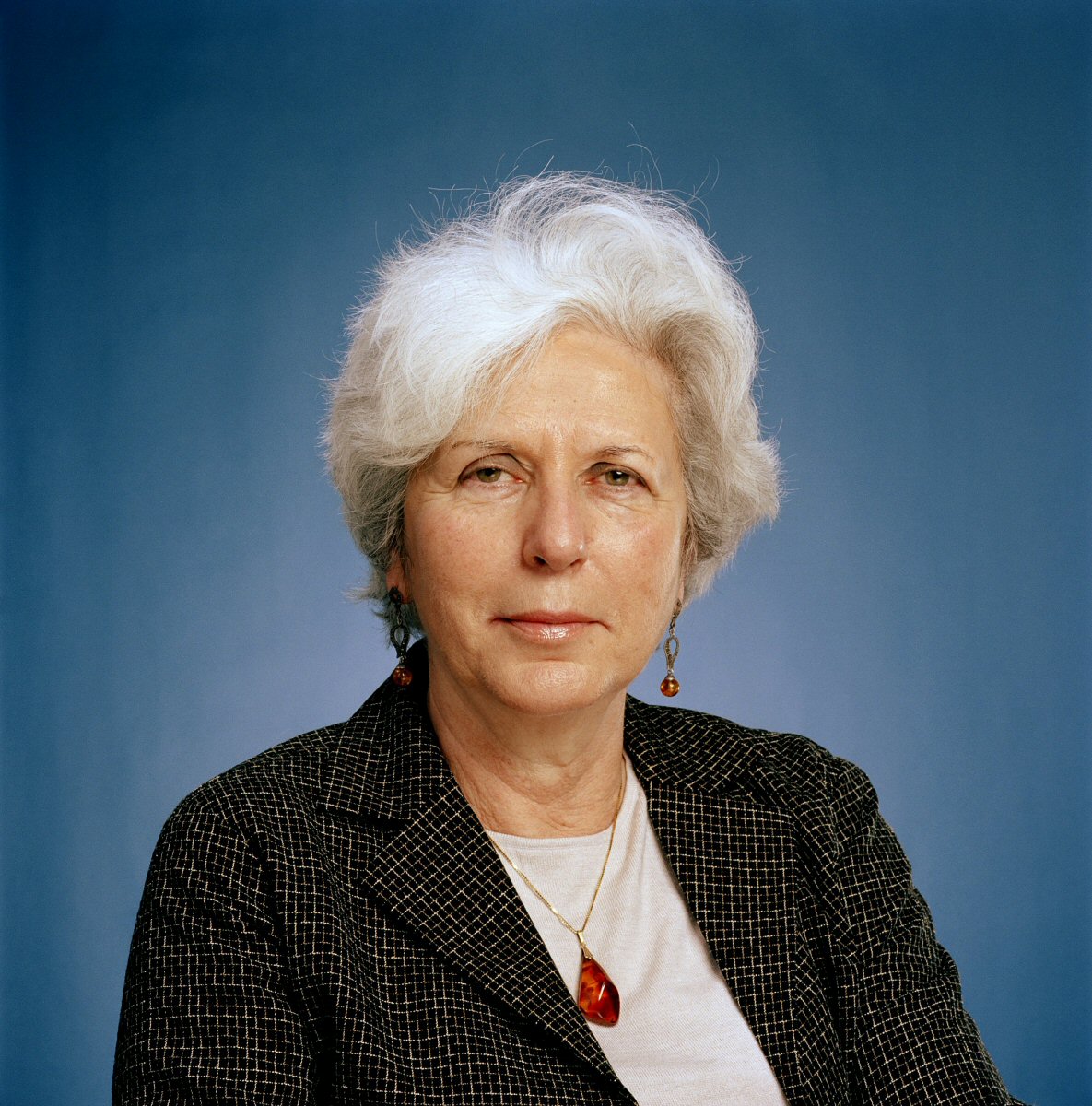
Former Senior Associate, Middle East Program
Before joining the Endowment, Ottaway carried out research in Africa and in the Middle East for many years and taught at the University of Addis Ababa, the University of Zambia, the American University in Cairo, and the University of the Witwatersrand in South Africa.
Recent Work
Marina Ottaway, Omar Hossino
Marina Ottaway
Carnegie does not take institutional positions on public policy issues; the views represented herein are those of the author(s) and do not necessarily reflect the views of Carnegie, its staff, or its trustees.

Despite a new textbook, an influx of Russian teachers and managers, and an end to the teaching of Ukrainian, the Kremlin is unlikely to have “reprogrammed” locals.

Konstantin Skorkin

Cargo traffic through Russia’s Northern Sea Route has increased because of the disruption caused by the conflict in the Middle East, the Ukraine war, and U.S.-China tensions.

Mikhail Korostikov

Sergei Kiriyenko used Russia’s parliamentary vote to further hone his strategy of corporate mobilization that is designed to maximize votes for United Russia.

Andrey Pertsev

The European far right might fail to steer EU policy in the direction Russia wants, but they will create enough chaos inside Europe to benefit the Kremlin.

Dimitar Bechev

Minsk clearly expected the dialogue with Washington to yield more results, in particular the lifting of EU sanctions and permission to export potash.

Artyom Shraibman