• Research
  • Politika
  • About
Carnegie Russia Eurasia center logoCarnegie lettermark logo
  • Donate
{
  "authors": [
    "Dmitri Trenin"
  ],
  "type": "legacyinthemedia",
  "centerAffiliationAll": "",
  "centers": [
    "Carnegie Endowment for International Peace",
    "Carnegie Russia Eurasia Center"
  ],
  "collections": [],
  "englishNewsletterAll": "",
  "nonEnglishNewsletterAll": "",
  "primaryCenter": "Carnegie Russia Eurasia Center",
  "programAffiliation": "",
  "programs": [],
  "projects": [],
  "regions": [
    "Caucasus",
    "Russia"
  ],
  "topics": [
    "Economy",
    "Climate Change"
  ]
}
Source: Getty

In The Media
Carnegie Russia Eurasia Center

The 2009 Time 100: Alexander Medvedev

Europe's security requires Russia's integration into a common compact with the countries of NATO and the European Union, as well as with newer states like Ukraine, Georgia and others. And a stable security arrangement needs to be flanked by an economic one encompassing the entire continent.

Link Copied
By Dmitri Trenin
Published on May 11, 2009

Source: Time

The 2009 Time 100: Alexander Medvedev
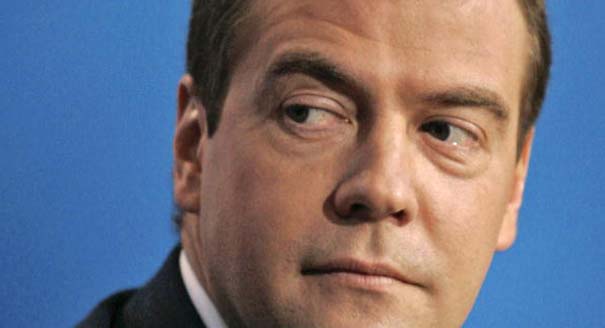
If Alexei Miller, Gazprom's CEO, is the company's public face and conduit to the Russian political leadership, Alexander Medvedev, head of Gazprom Export, is its link to the outside world. One-third of the gas consumed in Europe passes through Medvedev's hands, and 60% of Gazprom's total revenues come from exports.

Medvedev, 53, believes that Russia's business is predominantly business. Medvedev also believes in a bright future for natural gas and looks beyond the present crisis to the day when Gazprom's capitalization will shoot to a trillion dollars. Last summer it stood at a mere third of that amount.

Yet as the recurrent gas wars between Russia and Ukraine demonstrate, Europe's energy security is an area of high tension. After four decades of being Europe's main gas provider, Russia has seen its originally stellar reputation — it pumped away even as the Soviet Union was disintegrating — become severely damaged. Medvedev can give brilliant rejoinders to critics, but more and more people are talking about how to ensure Europe's energy security against the whims of Russia, its lead supplier.

Those thinking strategically about energy, however, need to think outside the box. Europe's security requires Russia's integration into a common compact with the countries of NATO and the European Union, as well as with newer states like Ukraine, Georgia and others. And a stable security arrangement needs to be flanked by an economic one encompassing the entire continent. After World War II, the nucleus of what later became the European Union was formed around the European Coal and Steel Community. With luck, a European Energy Community will be a similar catalyst for the E.U. and its post-Soviet neighbors, including Russia. Alexander Medvedev of Gazprom and President Dmitri Medvedev of the Kremlin have their work cut out for them.
 
This article originally appeared in Time
Dmitri Trenin
Former Director, Carnegie Moscow Center
EconomyClimate ChangeCaucasusRussia

Carnegie does not take institutional positions on public policy issues; the views represented herein are those of the author(s) and do not necessarily reflect the views of Carnegie, its staff, or its trustees.

More Work from Carnegie Russia Eurasia Center

  • Commentary
    Carnegie Politika
    Signs of an Imminent End to the Ukraine War Are Deceptive

    The main source of Russian aggression is a profound mistrust of the West and the firm belief that it intends to inflict a “strategic defeat” on Russia. As long as this fear persists, the war will not end.

      Tatiana Stanovaya

  • Commentary
    Carnegie Politika
    Does Russia Have Enough Soldiers to Keep Waging War Against Ukraine?

    The Russian army is not currently struggling to recruit new contract soldiers, though the number of people willing to go to war for money is dwindling.

      Dmitry Kuznets

  • Commentary
    Carnegie Politika
    Russia’s Unspoken Condition for Ending the War Is Zelensky’s Resignation

    Insisting on Zelensky’s resignation is not just a personal vendetta, but a clear signal that the Kremlin would like to send to all its neighbors: even if you manage to put up some resistance, you will ultimately pay the price—including on a personal level.

      Vladislav Gorin

  • Commentary
    Carnegie Politika
    For Putin, Increasing Russia’s Nuclear Threat Matters More Than the Triad’s Modernization

    For Putin, upgrading Russia’s nuclear forces was a secondary goal. The main aim was to gain an advantage over the West, including by strengthening the nuclear threat on all fronts. That made growth in missile arsenals and a new arms race inevitable.

      Maxim Starchak

  • Commentary
    Carnegie Politika
    Japan’s “Militarist Turn” and What It Means for Russia

    For a real example of political forces engaged in the militarization of society, the Russian leadership might consider looking closer to home.

      James D.J. Brown

Get more news and analysis from
Carnegie Russia Eurasia Center
Carnegie Russia Eurasia logo, white
  • Research
  • Politika
  • About
  • Experts
  • Events
  • Contact
  • Privacy
Get more news and analysis from
Carnegie Russia Eurasia Center
© 2026 Carnegie Endowment for International Peace. All rights reserved.