• Research
  • Politika
  • About
Carnegie Russia Eurasia center logoCarnegie lettermark logo
  • Donate
{
  "authors": [
    "Ashley J. Tellis"
  ],
  "type": "other",
  "centerAffiliationAll": "dc",
  "centers": [
    "Carnegie Endowment for International Peace"
  ],
  "collections": [],
  "englishNewsletterAll": "ctw",
  "nonEnglishNewsletterAll": "",
  "primaryCenter": "Carnegie Endowment for International Peace",
  "programAffiliation": "SAP",
  "programs": [
    "South Asia"
  ],
  "projects": [],
  "regions": [
    "North America",
    "United States",
    "South Asia",
    "India"
  ],
  "topics": [
    "Economy",
    "Climate Change",
    "Foreign Policy",
    "Nuclear Policy"
  ]
}
Source: Getty

Other

Manmohan Singh Visits Washington: Sustaining U.S.–Indian Cooperation Amid Differences

The United States and India should use Singh’s forthcoming visit to showcase the promise of bilateral cooperation and to foster enhanced partnership in key areas such as nonproliferation and climate change.

Link Copied
By Ashley J. Tellis
Published on Nov 18, 2009

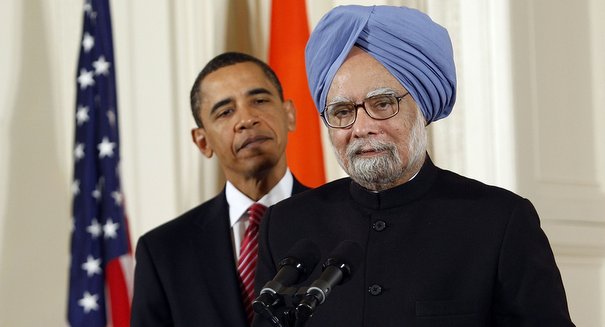
The Obama administration should announce its support for a permanent seat for India on the United Nations Security Council during Indian Prime Minister Manmohan Singh’s visit to the White House next week, contends a new policy brief by Ashley J. Tellis. Although it would produce no immediate results, the bold declaration would signal New Delhi’s growing importance to Washington, and the Obama administration’s recognition of the changing global center of gravity.

During Singh’s visit, both countries will likely announce new programs on areas ranging from agriculture and counterterrorism to medicine, energy, trade, and more. Tellis identifies two areas where cooperation will be most challenging, and most vital: nonproliferation and climate change.

Nonproliferation

  • India is unlikely to sign the Comprehensive Test Ban Treaty (CTBT), leaving a strong possibility that even if the United States ratifies the agreement, it will never come into force. 

  • India’s integration into the global nonproliferation regime remains incomplete. The United States should work to integrate India into global nonproliferation institutions, including the Proliferation Security Initiative, the Nuclear Suppliers Group, Australia Group, and the Zangger Committee.

  • Though it shares American concerns over Iran’s nuclear ambitions, India has not been asked to do much about the Iranian program. The Obama administration should persuade New Delhi to pressure Tehran to remain engaged in international negotiations, in hopes of achieving a peaceful resolution.

  • Obama’s nuclear security summit next year will be a golden opportunity for the United States and India to collaborate on universal nuclear security standards, but New Delhi will need to overcome its misplaced anxieties about discussing its nuclear program in public.

Climate Change

  • If Obama focuses on persuading Singh to commit to a binding CO2 emissions cap or a multilateral treaty, there will be little hope for cooperation on climate change. Instead, the United States and India should focus on practical initiatives to reduce emissions and improve efficiency in the realms of agriculture, transportation, and infrastructure.

  • The United States should give India access to priority technologies that could reduce its emissions growth.

  • India is not yet convinced that it can play an important role in combating climate change, and does not want to jeopardize its economic growth. But economic progress and sustainable development are compatible, as little-noticed programs by the Singh government have proven. 

About the Author

Ashley J. Tellis

Former Senior Fellow

Ashley J. Tellis was a senior fellow at the Carnegie Endowment for International Peace.

    Recent Work

  • Paper
    Multipolar Dreams, Bipolar Realities: India’s Great Power Future

      Ashley J. Tellis

  • Commentary
    India Sees Opportunity in Trump’s Global Turbulence. That Could Backfire.

      Ashley J. Tellis

Ashley J. Tellis
Former Senior Fellow
EconomyClimate ChangeForeign PolicyNuclear PolicyNorth AmericaUnited StatesSouth AsiaIndia

Carnegie does not take institutional positions on public policy issues; the views represented herein are those of the author(s) and do not necessarily reflect the views of Carnegie, its staff, or its trustees.

More Work from Carnegie Russia Eurasia Center

  • Commentary
    Carnegie Politika
    Why Has Kazakhstan Started Deporting Political Activists?

    The current U.S. indifference to human rights means Astana no longer has any incentive to refuse extradition requests from its authoritarian neighbors—including Russia.

      Temur Umarov

  • Commentary
    Carnegie Politika
    Why Are China and Russia Not Rushing to Help Iran?

    Most of Moscow’s military resources are tied up in Ukraine, while Beijing’s foreign policy prioritizes economic ties and avoids direct conflict.   

      • Alexander Gabuev

      Alexander Gabuev, Temur Umarov

  • Commentary
    Carnegie Politika
    Georgia’s Fall From U.S. Favor Heralds South Caucasus Realignment

    With the White House only interested in economic dealmaking, Georgia finds itself eclipsed by what Armenia and Azerbaijan can offer.

      Bashir Kitachaev

  • Commentary
    Carnegie Politika
    What Does War in the Middle East Mean for Russia–Iran Ties?

    If the regime in Tehran survives, it could be obliged to hand Moscow significant political influence in exchange for supplies of weapons and humanitarian aid.

      Nikita Smagin

  • Commentary
    Carnegie Politika
    How Trump’s Wars Are Boosting Russian Oil Exports

    The interventions in Iran and Venezuela are in keeping with Trump’s strategy of containing China, but also strengthen Russia’s position.

      • Mikhail Korostikov

      Mikhail Korostikov

Get more news and analysis from
Carnegie Russia Eurasia Center
Carnegie Russia Eurasia logo, white
  • Research
  • Politika
  • About
  • Experts
  • Events
  • Contact
  • Privacy
Get more news and analysis from
Carnegie Russia Eurasia Center
© 2026 Carnegie Endowment for International Peace. All rights reserved.