

Commentary
Fabrice Pothier
{
  "authors": [
    "Fabrice Pothier"
  ],
  "type": "legacyinthemedia",
  "centerAffiliationAll": "",
  "centers": [
    "Carnegie Endowment for International Peace",
    "Carnegie Europe"
  ],
  "collections": [],
  "englishNewsletterAll": "",
  "nonEnglishNewsletterAll": "",
  "primaryCenter": "Carnegie Europe",
  "programAffiliation": "",
  "programs": [],
  "projects": [],
  "regions": [
    "Europe"
  ],
  "topics": [
    "Foreign Policy"
  ]
}
Source: Getty
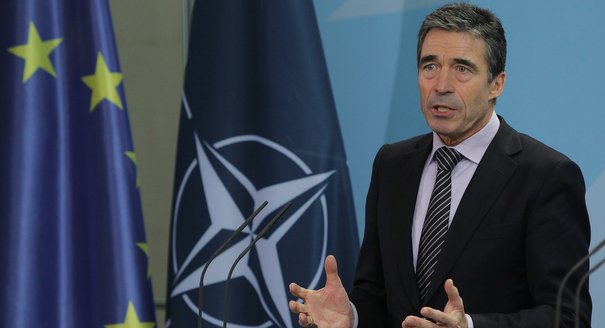
Two decades after the end of the Cold War, NATO must demonstrate that it can adapt to the security challenges of the 21st century, including nuclear weapons proliferation, terrorism and cyber-warfare.
Source: Global Europe

The predicament NATO faces in the coming decade boils down to one simple truth: it is not enough to share values; you must share the will to fight for and defend those values. Two decades after the end of the Cold War, the moment of truth has finally arrived for NATO: it must demonstrate that it can adapt to the security challenges of the 21st century.
The alliance must begin by identifying these challenges, and defining the role it can play in tackling them. From the threat of nuclear weapons proliferation to terrorism and cyber-warfare, NATO needs to pick its issues. It is only then, when the alliance faces the task of shaping its capabilities according to these threats, that the real work will begin.
NATO members are ill-equipped to deal with the emerging threats of the 21st century. The United States, for example, is wholly unprepared to respond to cyber-threats, while Europe can barely deploy 30 percent of its troops, few of whom are equipped or trained for modern warfare and training missions.
Finally, a 21st century NATO must be prepared to reach out to other regional and multilateral organizations. This would necessarily involve other organizations, such as the United Nations, improving their own effectiveness, but would make interventions in complex theatres like Afghanistan as comprehensive and legitimate as possible. Ultimately, the early 21st century is a time when NATO needs to fight for both effectiveness and relevance.
This article first appeared in Global Europe.

Former Director, Carnegie Europe
Pothier, director of Carnegie Europe, is a noted commentator on European policy in Afghanistan and Pakistan, transatlantic issues, and global drug policy.
Recent Work
Fabrice Pothier
Fabrice Pothier
Carnegie does not take institutional positions on public policy issues; the views represented herein are those of the author(s) and do not necessarily reflect the views of Carnegie, its staff, or its trustees.

With the growth in points of friction between the great powers, organizations like the SCO will continue to play a role in the strategic adaptation of the smaller powers caught between them.

Temur Umarov

When faced with fuel shortages in the past, Central Asian governments could always count on additional supplies from Moscow. That safety net no longer exists.

Galiya Ibragimova
Andrey Melnichenko’s essay offers no answer to the fundamental question of how, under any kind of negotiated settlement, Europe can protect itself from the Russian ressentiment that is inevitable in all scenarios except for an outright victory for Putin.

Leonid Bershidsky

Despite unhappiness on the ground, Moscow is determined to use both carrot and stick to ensure there is record support for United Russia in occupied Ukraine.

Konstantin Skorkin
Whether PAS can refocus on the unfinished business of state-building may ultimately prove more consequential for Moldova’s European future than the pace of its accession negotiations.

Balázs Jarábik