

Paper
Paul Salem
{
  "authors": [
    "Paul Salem"
  ],
  "type": "legacyinthemedia",
  "centerAffiliationAll": "",
  "centers": [
    "Carnegie Endowment for International Peace",
    "Malcolm H. Kerr Carnegie Middle East Center"
  ],
  "collections": [],
  "englishNewsletterAll": "",
  "nonEnglishNewsletterAll": "",
  "primaryCenter": "Malcolm H. Kerr Carnegie Middle East Center",
  "programAffiliation": "",
  "programs": [],
  "projects": [],
  "regions": [
    "Egypt",
    "Gulf",
    "Levant",
    "Maghreb"
  ],
  "topics": [
    "Political Reform"
  ]
}
Source: Getty
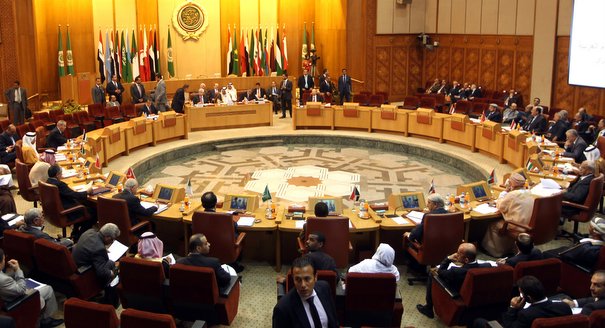
A national coalition government, such as the one in Switzerland, could allow the Arab world to include a wide cross-section of parties and groups in a power-sharing government that would increase the sense of security and participation for all.
Source: Al Hayat

The heart of Switzerland’s success is in its state institutions that are built on a concern for internal and external security coupled with political institutions of permanent power-sharing. But also, it has developed a political culture that tolerates diversity, a strong civil society, and strong common economic interests.
The benefits of power-sharing formulas are not limited to Switzerland, but have also evolved in Belgium, Holland, Austria, Germany, Northern Ireland, India, and South Africa, among other countries.
Neither Lebanon nor any other Arab country is the Switzerland of the Middle East; every society has its own specificities and no lessons can be transported directly from one country to another. But the Arab world can do well to examine some of the benefits of political power-sharing.
Switzerland has not always been stable and prosperous. Its internal divisions are deep and numerous: between protestant and catholic; french-speaking and German-speaking; rural and urban; liberal and conservative; labor and capital. And these differences have led to numerous civil wars, the last of which was in 1847. The constitution of 1848 created a new set of political institutions: a federal council of 7; a bicameral parliament; extensive decentralization; and direct democracy—what has come to be known as a consociational democracy. A majoritarian democracy would have led Switzerland back into civil war.
The main principal of Swiss central government is that of a permanent national coalition government. With this form of government, no group can win everything, but no group gets nothing. No group fears that it will be left out, nor can any group nurse the ambition to dominate and exclude the others.
National coalition government does not mean government by consensus but by changing decision-making coalitions, as decisions in the federal council are always taken by majority. The system encourages understanding and accepting the other, because your opponent in a decision today, might be your ally in another decision next month.
This form of government has had important effects in Switzerland: the inclusion of all major groups in government means that no group has to resort to secession or armed insurrection. It has also boosted national stability in a country without a strong cultural identity, because individuals and groups now feel part of the state. Although government by coalition is slow, it also means that decisions that are finally taken have a broad support in society, and are more effectively implemented and sustained. The participation of multiple groups in government creates understanding and acceptance of the other, and this culture of understanding and accepting the other permeates into society. The success of the Swiss state gradually allowed the individual a high measure of security and freedom, which enabled him, in turn, to reduce his dependence on his community for protection or advancement.
With regard to the Arab world, power-sharing government is not only relevant to obvious cases like Lebanon or Iraq, where no other viable alternative exists; it is also relevant more widely. Majoritarian democracy is not a realistic option for most countries in the region. Regimes are too afraid to risk full defeat in real majoritarian elections; societies are too divided for losers not to risk real oppression from winners; and violence is too close to the surface. The Arab world can only proceed toward some form of coalition government that will include a wide cross-section of parties and groups in national government, and increase the sense of security and participation for all.
In very divided societies like Lebanon and Iraq—as in historic Switzerland—the path forward is not easy. External intervention and internal conflict stymied Swiss development for many years. But as the Swiss experience showed, full participation in national government should enable the building of a strong national army and strengthening internal security. Iraq is trying to do that today; and the fact that Lebanon did not develop this security aspect earlier was not inevitable but was a tragic mistake of the Lebanese elites of the 1940s and 1950s. Only today is the Lebanese state beginning to take its national and internal security obligations seriously.
For many authoritarian regimes in the Arab world, power-sharing might be a necessary way forward. By bringing groups and parties into the government, regimes can help defuse tension, build stability, negotiate social and economic policies, and gain more support for government policies and decisions. It might also be a form of political participation they might be willing to tolerate, since they are not willing to contemplate full democratization at this point.
This form of power-sharing has been used in Europe even in countries and periods in which democracy was absent, because it was recognized that modern societies and states require a high level of real political participation in order to preserve national stability and security and develop sustainable socio-economic policies.
Even in the absence of full democracy, it is necessary that Arab authoritarian regimes be encouraged to widen the space of participation by creating national coalition governments that include, alongside the ruling party, other parties from the opposition and a wide cross-section of groups and communities. These governments would not directly threaten the hold of the president or monarch, but would get ruling regimes to become more accustomed to—and less afraid of—sharing power, would increase the public sense of participation, encourage parties to learn how to work together, encourage moderation, and encourage different groups and communities to understand and accept others. Although it might slow down decision making, it will create a process in which government decisions are more attuned to public needs and in which there is much more public support for government decisions.
The practice of power-sharing in government—even in the absence of full democracy—might be an important path toward boosting political participation, and developing the political culture of mutual respect and absence of fear that would enable more steps toward real democracy in the future.
The current dead-end of democratization in most of the Arab world should not deter us from continuing to push for it. But nor should it deter us from learning from other countries' innovative and creative ways to build political participation even in the midst of a broad authoritarian reality. At the end of the day, although every country’s experience is different, we might have a lot to learn from Switzerland.
Senior Fellow at the Middle East Institute
Paul Salem is a senior fellow at the Middle East Institute.
Recent Work
Paul Salem
Paul Salem
Carnegie does not take institutional positions on public policy issues; the views represented herein are those of the author(s) and do not necessarily reflect the views of Carnegie, its staff, or its trustees.
The use of technology to mobilize Russians to vote—a system tied to the relative material well-being of the electorate, its high dependence on the state, and a far-reaching system of digital control—is breaking down.

Andrey Pertsev
As discussions about settlement and elections move from speculation to preparation, Kyiv will have to manage not only the battlefield, but also the terms of political transition. The thaw will not resolve underlying tensions; it will only expose them more clearly.

Balázs Jarábik

Despite its reputation as an island of democracy in Central Asia, Kyrgyzstan appears to be on the brink of becoming a personalist autocracy.

Temur Umarov

Having failed to build a team that he can fully trust or establish strong state institutions, Mirziyoyev has become reliant on his family.

Galiya Ibragimova
For a real example of political forces engaged in the militarization of society, the Russian leadership might consider looking closer to home.

James D.J. Brown