• Research
  • Politika
  • About
Carnegie Russia Eurasia center logoCarnegie lettermark logo
  • Donate
{
  "authors": [
    "Paul Salem"
  ],
  "type": "legacyinthemedia",
  "centerAffiliationAll": "",
  "centers": [
    "Carnegie Endowment for International Peace",
    "Malcolm H. Kerr Carnegie Middle East Center"
  ],
  "collections": [
    "Arab Awakening"
  ],
  "englishNewsletterAll": "",
  "nonEnglishNewsletterAll": "",
  "primaryCenter": "Malcolm H. Kerr Carnegie Middle East Center",
  "programAffiliation": "",
  "programs": [],
  "projects": [],
  "regions": [
    "Egypt",
    "North Africa"
  ],
  "topics": [
    "Political Reform"
  ]
}
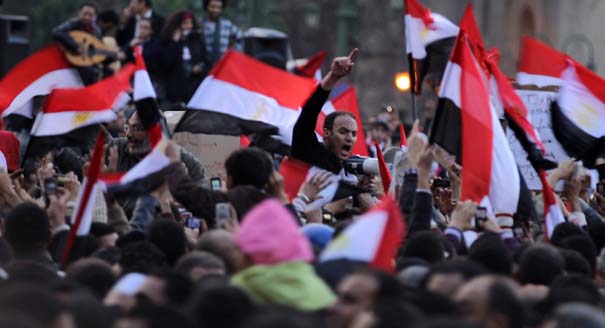
Source: Getty

In The Media
Malcolm H. Kerr Carnegie Middle East Center

Egypt Needs a National Security Council and Proportional Representation

In order to secure a successful political transition, Egypt should establish a national security council to guarantee the military's role in providing stability and implement a proportional electoral system to ensure political and legislative pluralism.

Link Copied
By Paul Salem
Published on Feb 4, 2011

Source: Los Angeles Times

Egypt Needs a National Security Council and Propor
The Egyptian protesters and opposition have proposed a set of demands and reforms to resolve the current crisis and create a new political order: the departure of President Hosni Mubarak, his family and close associates; the cancellation of the state of emergency; the formation of a coalition government; amendment of the constitution; dissolution of the parliament and Shura council; and the organization of fresh parliamentary and presidential elections.
 
These are necessary steps in building a new, democratic Egypt.
 
But two additional ideas might be useful in engineering Egypt's future: the creation of a national security council and a proportional representation system in parliament.
 
The first relates to the relationship between the armed forces and the civilian political system, and it comes from the experience of Turkey. The Egyptian army is learning what other armies around the world -- including Turkey's -- grew to understand in previous decades: It is in their own best interest to step back from the difficult and corrupting challenges of day-to-day politics and maintain a leading role in security and strategic matters, but otherwise encourage and ensure the creation of a civilian political space where the population can elect parliaments and governments and hold them accountable.
 
In Turkey, a national security council was created in the 1960s and included the army chiefs of staff as well as the civilian president and key members of the civilian council of ministers. The council maintained the army's influence in setting national security policy. Although it was occasionally abused, it was a key institution in negotiating the difficult transition from military to civilian rule. And as Turkey's democratic transition has matured, the council has acquired a civilian majority and now a civilian head.
 
Egypt, in its transition, needs a similar institution.
 
This institution would not only reassure the military that it had an important stake in an emerging democratic order, it would organize the military's important role in providing stability in this precarious period. It would reassure those -- inside Egypt and internationally -- who are afraid the transition might lead to chaos or be hijacked by radical forces.
 
The second idea relates to proportional representation. One of the main fears of groups inside and outside Egypt is that free and fair elections will be swept by the Muslim Brotherhood. This will be the case if the electoral system remains as it is today: a majoritarian system.
 
The Brotherhood is indeed the most powerful opposition movement, and far outstrips other opposition parties in terms of organization and ability to mobilize resources and votes. In a majoritarian system, it can beat other parties in the bulk of the districts, even if it does not have an outright majority in society.
 
In such a situation, a proportional representation electoral system is a necessity. With this system in place, the Muslim Brotherhood will get its fair and exact share of representation in parliament -- probably well short of a majority -- but other parties and movements will be fully represented as well.
 
And it's even possible that the religious vote will splinter. Proportional representation is also appropriate because it encourages new parties, ensures the representation of all trends -- many of which have not yet even established parties -- in the new parliament and creates a very pluralistic political reality.
 
As Egypt charts a new course for itself, it is important for reformers inside the country and friends of Egypt in the Arab and international community to get the institutional formulas right -- this will help achieve a smooth and effective transition from authoritarianism to pluralistic participatory democracy.

About the Author

Paul Salem

Senior Fellow at the Middle East Institute

Paul Salem is a senior fellow at the Middle East Institute.

    Recent Work

  • Paper
    Iraq’s Tangled Foreign Interests and Relations

      Paul Salem

  • Article
    Bracing for Impact in Syria

      Paul Salem

Paul Salem
Senior Fellow at the Middle East Institute
Paul Salem
Political ReformEgyptNorth Africa

Carnegie does not take institutional positions on public policy issues; the views represented herein are those of the author(s) and do not necessarily reflect the views of Carnegie, its staff, or its trustees.

More Work from Carnegie Russia Eurasia Center

  • Commentary
    Carnegie Politika
    Ten Years After Karimov’s Death, How Much Has Uzbekistan Really Changed?

    In the tenth year of his presidency, President Mirziyoyev’s system is becoming even more personalized than that of his predecessor Karimov.

      Galiya Ibragimova

  • Commentary
    Carnegie Politika
    As a Former Defense Minister Revolts in Ukraine, Is Zelensky’s System Fracturing?

    The greater threat to Zelensky comes not from Fedorov alone, but from the convergence between the former defense minister’s political campaign and the anti-corruption investigations moving ever closer to the presidential administration.

      Balázs Jarábik
  • Commentary
    Carnegie Politika
    Fedorov’s Challenge to Zelensky Could Upend Ukrainian Politics

    With his public call for new elections in Ukraine, ex-defense minister Mykhailo Fedorov has opened Pandora’s box.

      Konstantin Skorkin
  • Commentary
    Carnegie Politika
    Russia’s Rubber-Stamp Duma Elections Are Exposing Schisms in Putin's Regime

    In the discussions made possible by the State Duma election campaign, one question is being asked more and more loudly. “What next?”

      Andrey Pertsev

  • Commentary
    Carnegie Politika
    Russia Is Approaching a Political Crossroads

    Two divergent trends—Putin’s hardline vision of how to prosecute the war in Ukraine, and a growing desire for change in Russia—could tear the regime apart. 

      Tatiana Stanovaya

Get more news and analysis from
Carnegie Russia Eurasia Center
Carnegie Russia Eurasia logo, white
  • Research
  • Politika
  • About
  • Experts
  • Events
  • Contact
  • Privacy
  • For Media
Get more news and analysis from
Carnegie Russia Eurasia Center
© 2026 Carnegie Endowment for International Peace. All rights reserved.