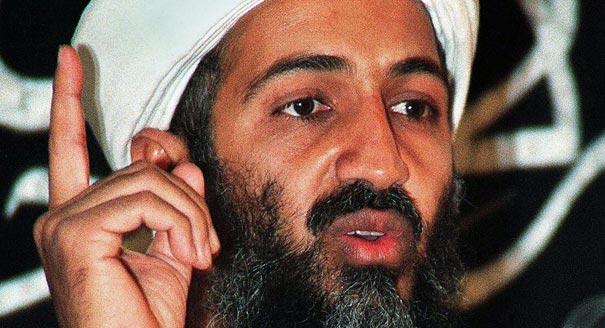
The killing of the most-wanted man in global terrorism came amid a wave of upheaval sweeping across the Arab world. While it is too early to tell how Osama bin Laden’s demise will impact al-Qaeda, it is clear that it is a new Middle East.
In a Q&A, Marwan Muasher analyzes extremism in the Arab world and the implications of bin Laden’s death for the changing region and the West. Muasher argues that the ideology of violence and terrorism has peaked and is visibly on the way down, but the war on al-Qaeda and terror is far from over. The United States needs to rethink its previous strategy and strongly support political reform that runs counter to the extremism bin Laden preached.
What is the significance of Osama bin Laden’s death?
Osama bin Laden’s killing should be seen as a psychological victory. Bin Laden’s success in evading capture for nearly ten years after 9/11 dismayed Americans and the international community, and his death brings a great deal of understandable relief.
But this doesn’t mean that al-Qaeda is finished. It is a decentralized organization—while many affiliates voiced allegiance to bin Laden, they do not rely on centralized direction and operate largely on their own. Splinter groups formed in the Arab world—from Iraq to Yemen to Morocco—and remain a distinct threat to the region and the West.
With this in mind, bin Laden’s end in no way spells the end of the war on al-Qaeda and terror.
How has bin Laden’s sudden demise been perceived across the region?
The majority of the Arab world welcomed bin Laden’s death, as he was largely seen as a terrorist. While there is inarguably a small minority that saw him in a positive light because he stood up to America, the simple fact is that he killed more Muslims than anyone else—and this was widely acknowledged in the region.
During his life, bin Laden was able to exploit grievances and recruit militants who were frustrated by the Arab-Israeli conflict and the poor conditions in their countries, particularly the lack of political rights and economic opportunities. Al-Qaeda, however, did not actually work to resolve the Arab-Israeli problem or improve the lives of people in the region, but directed terrorist activities that targeted both non-Muslims and Muslims alike.
Bin Laden was not a leader of an organization just fighting the West—he basically took on the entire world. The attacks on September 11 were certainly the most spectacular of his terrorist activities, but in the end he killed more Muslims than any other religion, sect, or specific nationality combined.
How have the uprisings across the Middle East and North Africa influenced al-Qaeda?
Bin Laden used the argument that violence was the only way to achieve his aims, but the peaceful uprisings across the Middle East and North Africa run contrary to al-Qaeda doctrine. The Arab Spring sends a strong signal against violence and bin Laden’s way of thinking.
In mere months, Arabs have demonstrated—to themselves and to the entire world—that they can affect change through nonviolent efforts. I believe the recent uprisings will have an impact on Palestinians who will not sit still and accept the continuation of the Israeli occupation, but will increasingly rely on peaceful means to call for change.
What is the current state of extremism in the Arab world? Is extremism on the rise?
It is important to remember that there is a distinction between an al-Qaeda organization that is far outside the mainstream of Islam and the overwhelming majority of political Islamist groups that rely on peaceful means to call for change. Al-Qaeda hijacked the religion because of its loud and outrageous actions, but the organization is actually a very small minority of all political Islamist groups.
There are three general categories of political Islamist groups. The first is al-Qaeda and similar violent outfits whose theater of operation is the entire world. They are extremely ideological and uninterested in compromise. According to their logic, whoever is not with them is against them and therefore must die—there is no room for dialogue with these groups.
We have seen al-Qaeda’s influence wane in Iraq, Morocco, and many places around the world. The doctrine of terrorism and violence has peaked and is on its way down, but that doesn’t mean al-Qaeda and other militant groups have disappeared. Al-Qaeda has always thrived in countries that lack total control over their entire territory—that was the case in Iraq and is the case in Yemen today. Weak states continue to provide fertile ground for al-Qaeda to operate.
The second category of political Islamists uses violence, but the theater of operation is limited to the countries where there is an occupation. Hamas and Hezbollah are the prime examples. These groups have one leg outside of the system and one inside, as they have members in the parliament in Palestine or Lebanon.
And finally, the third category is the vast majority of political Islamist groups, like the Muslim Brotherhood, in Egypt, Jordan, Kuwait, Morocco, and Yemen. These groups do not use violence and are part of the political processes in their own countries. While the size and number of nonviolent groups easily outstrips other categories, the loudest voice has been al-Qaeda, given its sensational terrorist acts.
Will the successful raid on bin Laden’s hiding spot change the perception of the United States in the region? What should the United States do next?
The perception of the United States in the Arab world is tarnished for two main reasons—the stalled Arab-Israeli peace process and the Iraq war. The Arab-Israeli conflict is the single most damaging issue to the American image in the region. And the invasion of Iraq was not seen as a war on al-Qaeda, but as an illegitimate occupation, particularly when al-Qaeda was not present in Iraq prior to the war.
While the United States has had clear policies against al-Qaeda and terrorism, Washington obviously prioritized stability over democracy in the Arab world at the same time. The Obama administration needs to reassess this strategy in the face of revolutionary change in the Arab world and bin Laden’s killing.
The challenge for the United States is not to have a singular focus on terrorist organizations like al-Qaeda, but to have a policy that recognizes that stability, reform, peace, and security are all interlinked—and must be pursued simultaneously. Instead of pursuing a policy that seeks stability over reform, it should follow one that seeks stability through reform and peace.
Washington now needs to engage emerging Arab regimes that will be more democratic and want to establish a good relationship with the United States. But the new governments won’t necessarily agree with the United States on everything and will undoubtedly pursue interests that are more responsive to their citizens—this is just how it should be. The majority of the Arab public rejects al-Qaeda’s tactics, but increasingly won’t accept leaders who are seen as sell-outs, like former Egyptian President Hosni Mubarak.
A new U.S. strategy can establish relations in the region that will be both helpful for the West and take into account the interests of those countries.